interrupted fern Care (Osmunda claytoniana)

interrupted fern

About interrupted fern

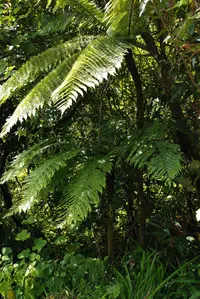
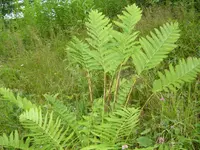
Interrupted fern, Osmunda claytoniana, is a hardy deciduous fern native to forests and stream banks across eastern North America and parts of eastern Asia. It forms upright clumps with tall, arching fronds that appear “interrupted” by a band of fertile, spore-bearing leaflets in the middle of each frond.

This species prefers cool, moist, humus-rich soil and thrives in partial to full shade, making it well suited to woodland and shade gardens. Its strong seasonal rhythm and need for steady moisture influence how to care for interrupted fern, but once established it is long-lived and relatively low maintenance in suitable conditions.

Main Plant Requirements

Care Difficulty

Moderate Care

Light Preference

Partial Shade

Water Requirements

Keep Soil Moist

Temperature Preference

Cold Hardy

Hardiness Zone

3–8

Soil Texture

Loamy, Silty, Organic-rich

Soil pH

Acidic (5.5–6.5)

Soil Drainage

Moist but well-drained

Fertilization

Minimal (feed rarely)

Get Personalized Care Plan

Scan your plant to receive care tips personalized for your specific plant

Available on iOS and Android

How to Care for the interrupted fern

This woodland fern prefers cool, filtered light similar to a moist forest edge.

  • Provide 2–4 hours of soft morning sun with dappled or full shade the rest of the day for healthiest fronds.
  • The interrupted fern tolerates bright shade and north or east exposure; avoid harsh midday and afternoon sun that can cause leaf scorch.
  • In summer, increase shade or mulch to reduce reflected heat; in early spring and fall, slightly more indirect light supports sturdy new growth.

This fern thrives in consistently moist, humus-rich soil that never fully dries out.

  • Aim for soil that feels evenly damp at 3–5 cm depth; in the ground, use rainfall plus supplemental watering during dry spells longer than 3–4 days.
  • Increase watering frequency in hot, windy weather, and reduce slightly in cool fall conditions while keeping the root zone moist, not soggy.
  • Watch for crisping frond tips and drooping as signs of underwatering, and yellowing, limp fronds or foul-smelling soil as signs of overwatering or poor drainage.

This hardy fern is adapted to cool to mild climates with cold winters and moderate summers.

  • Active growth is strongest at 55–75°F (13–24°C), with stable moisture and shelter from hot, drying winds.
  • Dormant crowns tolerate cold down to about -20°F (-29°C) under mulch or natural leaf litter, making outdoor overwintering feasible in many temperate regions.
  • In heat above 85°F (29°C), provide deep shade and ample soil moisture to prevent stress, and avoid planting near heat-reflective surfaces that raise crown temperature.

This fern prefers consistently moist air but adapts if the soil never dries out completely.

  • Aim for 50–70% humidity, similar to a shaded woodland edge.
  • In drier air, leaf tips may brown and fronds may feel crisp along the edges, especially on interrupted fern in full sun or wind.
  • Use grouped plantings, a shaded, wind-sheltered spot, or a nearby water feature to raise local humidity outdoors.

This species thrives in cool, consistently moist, organic-rich soil that mimics a woodland streambank.

  • Use a loose, humus-rich mix such as 2 parts composted bark or leaf mold, 1 part loam, and 1 part coarse sand for structure.
  • Soil should drain slowly but never stay waterlogged; it needs to feel springy and aerated rather than heavy and compacted.
  • Aim for slightly acidic to neutral pH, roughly 5.5–7.0, which supports root function and nutrient uptake.
  • Avoid dense clay, pure sand, or mixes dominated by peat alone, and always incorporate coarse particles to prevent suffocation of the shallow rhizomes of Osmunda claytoniana.

This fern can be grown in containers, but only when the pot setup supports its moisture-loving, spreading root system.

  • Choose a deep, wide container that allows the rhizomes to spread horizontally while holding enough soil volume to stay evenly moist between waterings.
  • Use a heavy or broad-based pot if placed outdoors so the tall fronds do not act as a sail and tip the container in wind.
  • Select a moisture-retentive but not glazed pot material, such as thick terracotta lined with a plastic nursery pot, to balance evaporation and root coolness.

Osmunda claytoniana is a woodland fern that thrives in humus-rich soil and usually needs only light supplemental feeding.

  • Use a thin layer of compost or leaf mold in spring as the primary nutrient source for interrupted fern.
  • If growth is weak, apply a balanced, dilute liquid fertilizer (around 1/4 strength) once in late spring and once in mid-summer.
  • Avoid slow-release or high-salt synthetic fertilizers that can burn sensitive roots in moist, organic soils.
  • Do not feed during fall and winter dormancy, when fronds die back and nutrient uptake is minimal.

Pruning Osmunda claytoniana is minimal and focuses on keeping the clump clean and healthy.

  • Cut back dead or brown fronds at the base in late fall or very early spring using clean, sharp pruners.
  • Remove damaged or diseased fronds promptly during the season to limit fungal spread in dense plantings.
  • Thin out a few crowded, old fronds from the center to improve air flow without changing the natural shape.
  • Disinfect tools between plants, especially in damp, shaded beds where fungal issues are more common.

This fern is more often transplanted in gardens than repotted, since it prefers stable, cool, moist soil clumps.

  • Plan transplanting for early spring just as new croziers emerge, or early fall while soil is still warm.
  • Move plants only when growth declines, crowns become congested, or roots circle a container and dry out fast.
  • Lift the root mass with a wide spade, keeping as much soil as possible around the fibrous rhizomes to limit stress.
  • Replant at the same depth in a shaded, moist site, water thoroughly, and keep evenly damp for several weeks.

Propagation of Osmunda claytoniana is usually done by careful division rather than from spores in home gardens.

  • Divide mature clumps in early spring, just before new fronds unfurl, when soil is moist and workable.
  • Lift the plant and split the crown into several sections, each with healthy buds and roots attached.
  • Replant divisions immediately at original depth in humus-rich, consistently moist, shaded soil.
  • Keep new divisions evenly damp and sheltered from strong sun or wind until vigorous new fronds appear.

This fern is very cold hardy in much of North America and usually needs little specific winter care outdoors.

  • Tolerates freezing temperatures once established, with fronds naturally dying back after hard frosts.
  • Leave spent fronds in place until late winter to provide light insulation and habitat for beneficial organisms.
  • Apply a 5–7 cm layer of leaf mulch around the crown in colder regions to buffer freeze–thaw cycles.
  • If grown in containers, overwinter pots in a sheltered, unheated space to prevent repeated root freezing and thawing.

Care Tips

Rhizome-friendly mulching

Apply a 5–8 cm layer of leaf mold or shredded hardwood mulch around but not directly on top of the rhizomes to keep the root zone cool, conserve moisture, and mimic its natural woodland floor habitat.

Seasonal frond cleanup

Cut back dead or badly damaged fronds at ground level in late winter before new croziers unfurl so light and airflow reach emerging growth while still leaving some old leaf litter as protection.

Moisture basin shaping

Shape a shallow basin in the soil around the plant, outside the crown, so irrigation or rain collects and soaks in slowly instead of running off on sloped or fast-draining sites.

Companion groundcover use

Plant low, non-invasive shade groundcovers such as wild ginger or foamflower nearby to help stabilize moisture and soil temperature without crowding the fern’s crown.

Division timing strategy

If dividing a mature clump, schedule the work for early spring just as new fronds start to push, and replant divisions at the same depth, then keep them evenly moist for 4–6 weeks to reduce stress when growing interrupted fern.

Common Pests and Diseases

Fern aphids

These insects feed on sap from tender fronds and rachises, causing curling, distortion, and sticky honeydew on the foliage. Symptoms include slow growth and occasional sooty mold growing on the honeydew in humid sites.

Solution

Rinse colonies off with a firm stream of water and remove heavily infested fronds. For persistent issues, use insecticidal soap or a light horticultural oil, applied in the early morning and repeated as needed, and reduce excess nitrogen fertilizer that encourages soft, aphid-prone growth.

Fern scale

This pest appears as small, flat, tan to brown bumps on frond stalks and lower leaf surfaces, where it feeds on plant sap. Symptoms include yellowing, weakened fronds and occasional sticky residue.

Solution

Prune and discard badly infested fronds and gently scrape individual scales from remaining tissue. For larger infestations, apply horticultural oil to thoroughly coat stems and fronds during mild weather, repeating according to label directions, and improve plant vigor with consistent moisture and partial shade to help it recover.

Slugs and snails

These pests chew irregular holes and notches in young fronds, especially in moist, shaded beds with leaf litter. Symptoms include shredded new growth and shiny slime trails on or near the plant.

Solution

Hand-pick slugs and snails at dusk, use simple traps such as boards or inverted pots to collect them, and reduce hiding spots by limiting thick debris directly around crowns. Where damage is heavy, apply iron phosphate slug bait according to label directions, keeping the product away from direct contact with the fern crowns.

Crown rot

This disease occurs in poorly drained, waterlogged soils, leading to browning, collapse, and death of central fronds from the base. Symptoms include a soft, dark, foul-smelling crown that pulls apart easily.

Solution

Remove and discard affected plants and any obviously rotted crown material, and avoid replanting in the same saturated spot without improving drainage. For future plantings, keep soil evenly moist but not waterlogged, plant slightly raised in heavy soils, and avoid piling mulch directly over the crown to encourage air flow.

Leaf spot

This disease causes small brown to black spots or blotches on fronds, sometimes with a yellow halo, and can merge to create larger dead patches in warm, wet weather. Symptoms include premature browning and early death of affected fronds in dense plantings or low-airflow sites.

Solution

Cut and discard affected fronds to reduce spore spread and water at soil level rather than overhead so foliage dries quickly. Improve spacing and airflow, remove heavy thatch around the plant, and in severe, recurring cases consider a labeled fungicide for ferns, applied according to local guidelines as part of broader Osmunda claytoniana plant care.

Interesting Facts

Interrupted frond pattern

This fern gets its common name because its fertile pinnae, which bear spores, are clustered in the middle of the frond, creating a visually obvious gap between sterile leaflets above and below.

Glacial-age relict

Fossil evidence shows that this species has changed very little since the Miocene, so it is often cited as a living fossil that has persisted through major climatic shifts in eastern North America.

Specialized forest habitat

In the wild it is strongly associated with cool, moist, acidic soils in deciduous and mixed forests, often occurring along seepage slopes and stream terraces where groundwater keeps the root zone consistently damp.

Botan icon

Did you know?

Osmunda claytoniana is one of the few temperate ferns documented as an obligate host for the early developmental stages of some mycorrhizal fungi, forming stable belowground partnerships that can influence soil microbial communities in its forest habitats.

FAQs about interrupted fern

This species spreads slowly by short rhizomes and by spores over time. It forms clumps rather than running colonies, so it is unlikely to become aggressive in typical garden or woodland plantings.

Grow Healthy Plants with Botan Care

Keep your plants happy and healthy with plant identification, disease detection, and easy care guidance.

Botan plant care app — identify plants on mobile

Explore More Plants