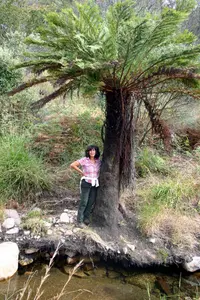
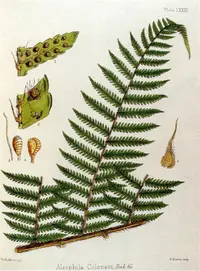
flying spider-monkey tree fern Care (Alsophila spinulosa)

flying spider-monkey tree fern

About flying spider-monkey tree fern

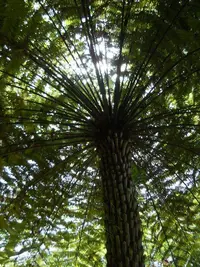
The flying spider-monkey tree fern (Alsophila spinulosa) is an evergreen tree fern with a single trunk and a symmetrical crown of finely divided fronds. It has an architectural, tropical look that suits shaded gardens and sheltered patios in mild climates.

This species is native to humid forests in parts of Asia, where it grows under taller trees and enjoys steady moisture and filtered light. It is moderately demanding, as it dislikes drying out, strong sun, and harsh wind.

Gardeners who care for flying spider-monkey tree fern should provide consistently moist soil, high humidity, and protection from extremes of heat or cold.

Main Plant Requirements

Care Difficulty

Moderate Care

Light Preference

Partial Shade

Water Requirements

Keep Soil Moist

Temperature Preference

Warm Climate

Hardiness Zone

8–10

Soil Texture

Loamy, Peaty, Organic-rich

Soil pH

Acidic (5.5–6.5), Slightly acidic (6.5–7.0)

Soil Drainage

Moist but well-drained

Fertilization

Light (every 4–6 weeks)

Get Personalized Care Plan

Scan your plant to receive care tips personalized for your specific plant

Available on iOS and Android

How to Care for the flying spider-monkey tree fern

This tree fern prefers bright, indirect light that mimics a lightly shaded forest understory.

  • Provide 2–4 hours of gentle morning sun with dappled or filtered light for the rest of the day; avoid harsh midday and afternoon sun that can scorch fronds.
  • Tolerates partial to full shade, but in very dense shade fronds become sparse and elongated, signaling the need for slightly more light.
  • Outdoors, site the flying spider-monkey tree fern under high tree canopy or shade cloth, especially in summer when sun angles are high.

This species needs consistently moist but not waterlogged soil around its fibrous root system and trunk base.

  • Water whenever the top 2–3 cm of soil feels barely dry, aiming to keep the root zone evenly damp while avoiding standing water.
  • In warm growth periods, increase frequency and humidity; in cooler seasons, let the surface dry slightly more while ensuring the core soil never dries out completely.
  • Watch for yellowing, limp fronds and sour-smelling soil as signs of overwatering, and crisp, browning frond tips as indicators of underwatering or prolonged dryness.

This fern grows best in mild, frost-free conditions typical of sheltered, humid woodland climates.

  • Aim for 60–77°F (16–25°C) for steady growth, with slightly cooler nights improving vigor if the soil and humidity remain stable.
  • Protect from frost; sustained exposure below 28–30°F (-2 to -1°C) can damage the crown, so use mulch and overhead cover in cold snaps.
  • In hot weather above 86°F (30°C), provide extra shade, mulch, and moisture, since high temperatures combined with dry air can scorch fronds and stress the plant.

This fern needs consistently high humidity to maintain healthy fronds and avoid browning.

  • Aim for 60–80% humidity; prolonged levels below 50% often cause frond tips to dry and curl.
  • The flying spider-monkey tree fern dislikes dry, heated indoor air and may shed older fronds under it.
  • Increase humidity with grouped plants, daily fine misting of fronds, and a wide pebble tray kept filled with water below the pot.

This species prefers a moist, airy, organic-rich medium that mimics a forest floor.

  • Use a loose mix of roughly 50% peat or coco coir, 25% fine bark, and 25% perlite or pumice for structure and drainage.
  • Aim for slightly acidic soil, pH 5.5–6.5, which supports nutrient uptake and root health in Alsophila spinulosa.
  • Ensure water drains freely; waterlogged or compacted soil quickly leads to root rot and stunted frond growth.
  • Improve aeration by adding extra bark or perlite if the mix feels dense or stays wet longer than 3–4 days.

This tree fern can be grown in containers when given a stable, deep pot that respects its eventual size.

  • Choose a tall, heavy container to counter the plant’s top-heavy crown and prevent tipping in wind or on balconies.
  • Select thick-walled plastic or glazed ceramic pots to slow moisture loss while still relying on a freely draining mix.
  • Use feet or pot risers so the drainage holes stay clear and excess water drains rapidly away from the root zone.

This tree fern benefits from light, consistent feeding during active growth but is sensitive to excess salts.

  • Use a balanced liquid fertilizer (for example 10-10-10) at 1/4–1/2 strength every 4–6 weeks in spring and summer.
  • Alternatively, apply a thin layer of well-rotted compost around the root zone, keeping it off the trunk.
  • For container plants, slow-release pellets can be mixed into the top 2–3 cm of potting mix once per growing season.
  • Stop feeding the flying spider-monkey tree fern in fall and winter, when growth slows and nutrient demand decreases.

Pruning Alsophila spinulosa focuses on cleanliness and maintaining a single, attractive trunk.

  • Best time is late winter to early spring, before strong new growth begins.
  • Remove dead, yellowing, or storm-damaged fronds at their base using clean, sharp pruners or a pruning saw for thick stalks.
  • Thin out overcrowded lower fronds to improve air circulation and highlight the tree-like form.
  • Avoid cutting into the crown, as damaging the growing tip can permanently deform or kill the plant.

This fern prefers stable conditions, so repotting or transplanting should be infrequent and carefully planned.

  • Look for roots circling the pot, escaping drainage holes, or slowed growth as signs it needs a larger container or site.
  • Aim to transplant or repot in early spring, allowing the plant a full growing season to recover.
  • For containers, move up only 1 pot size every 3–4 years, using a moisture-retentive, well-drained mix rich in organic matter.
  • Handle the root ball gently, keep it at the same soil level, water thoroughly, and shade the plant for 1–2 weeks to reduce transplant shock.

Starting new Alsophila spinulosa plants is possible but slow and best suited to patient growers.

  • Spore propagation is the standard method; collect mature brown spores from the underside of fronds in late summer.
  • Sow spores on sterile, fine, moist medium and cover to maintain 90–100% humidity with bright, indirect light.
  • Keep temperatures around 70–77°F and avoid surface drying, as gametophytes and young ferns are highly sensitive.
  • Division of trunks is rarely recommended because it often damages the single growing point and risks plant loss.

Cold sensitivity means this fern needs thoughtful winter care in many climates.

  • It tolerates brief light frost, but sustained temperatures below about 25°F can damage fronds and the crown.
  • In-ground plants benefit from 5–10 cm of mulch over the root zone, kept away from the trunk to prevent rot.
  • Wrap the trunk and crown with breathable frost cloth or burlap during hard freezes, especially on young plants.
  • Move container plants indoors or to a frost-free greenhouse, maintaining cool (45–55°F), humid, bright-indirect conditions.

Care Tips

Gradual Acclimation

When moving a plant from nursery shade to a brighter garden spot, increase light exposure over 2–3 weeks by shifting it a little closer to the final location every few days to prevent frond scorch and shock.

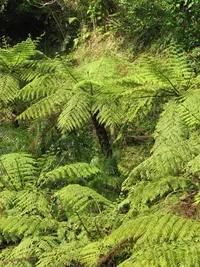
Stable Trunk Support

In windy or exposed sites, install 2–3 discreet stakes around the trunk with soft, wide ties placed loosely around the fibrous stem so the plant stays upright while roots anchor more deeply.

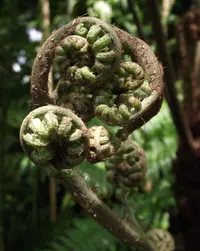
Protecting Emerging Croziers

Shield newly unfurling fronds (croziers) with temporary shade cloth or a simple windbreak during dry, windy periods, as these tender structures are easily desiccated and can deform if damaged early.

Mulch Collar Management

Maintain a 5–8 cm deep ring of fine, soft mulch around the base but keep it 5–8 cm away from the trunk itself to preserve moisture while avoiding rot at the crown area.

Cold-Weather Hardening

Before expected cold snaps, reduce any light pruning and avoid division or disturbance for at least 4–6 weeks, allowing the plant to harden and store reserves, which is critical for caring for flying spider-monkey tree fern in marginal climates.

Common Pests and Diseases

Scale insects

This pest attaches to the frond midribs and stipes, sucking sap and causing yellowing, weak growth, and sticky honeydew that can promote sooty mold.

Solution

Wipe or gently scrub affected stipes and frond bases with a soft cloth or brush dipped in dilute insecticidal soap, then rinse with water; for heavier infestations, repeat weekly and improve air movement and light levels to keep surfaces drier and reduce reinfestation when caring for flying spider-monkey tree fern.

Fern aphids

These insects cluster on young croziers and frond undersides, distorting new growth and excreting honeydew that can attract ants and mold.

Solution

Rinse the fronds thoroughly with a strong but gentle stream of water, then spot-treat remaining colonies with insecticidal soap or horticultural oil, taking care to reach the undersides of emerging fronds and repeating every 5–7 days until populations drop.

Rhizoctonia leaf spot

This disease produces irregular brown spots along the pinnae that may coalesce, leading to patches of dead tissue, especially in humid, poorly ventilated conditions.

Solution

Remove and discard affected fronds, avoid overhead watering, increase airflow around the crown, and keep foliage dry; if the plant is repeatedly affected, apply a fern-safe fungicide according to label directions and reduce overcrowding near the plant.

Bacterial blight

Symptoms include water-soaked lesions on young fronds that quickly turn dark and may cause the whole frond to collapse, often starting where water sits on the leaf surface.

Solution

Promptly prune and dispose of affected fronds, keep water off the foliage, improve air circulation, and avoid splashing from contaminated soil; disinfect cutting tools with alcohol or a 10% bleach solution between cuts to prevent spread.

Interesting Facts

Living fossil lineage

This tree fern belongs to an ancient fern lineage that has changed relatively little since the Mesozoic era, which is why paleobotanists often use it as a model to understand prehistoric forest structure.

Spiny trunk defense

The trunk and lower frond stalks are armed with stiff, dark spines that help protect the plant from herbivores and may also reduce damage from falling debris in steep, rocky habitats.

Shade-tolerant canopy former

In its native subtropical forests of China and parts of Southeast Asia, this species can form dense, fern-dominated understories, creating a cooler, moister microclimate that shelters shade-adapted plants and small animals.

Botan icon

Did you know?

In parts of China, mature specimens are sometimes transplanted and used as living ornamental structures in traditional gardens, where their palm-like crowns and ancient appearance are valued as a visual link to fossil-age vegetation.

FAQs about flying spider-monkey tree fern

Growth is moderate. In suitable outdoor conditions it may add about 15–30 cm of trunk per year once established, sometimes a bit more in warm, humid climates. Young plants focus on building a strong root system first.

Grow Healthy Plants with Botan Care

Keep your plants happy and healthy with plant identification, disease detection, and easy care guidance.

Botan plant care app — identify plants on mobile

Explore More Plants