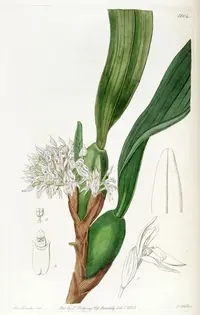
Blackboard tree Care (Alstonia scholaris)

Also known as: White Cheesewood, Indian devil tree, Milkwood Pine, Devil Tree, Common Alstonia, Pulai Tree
Blackboard tree

About Blackboard tree

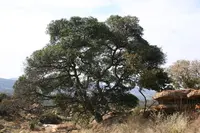
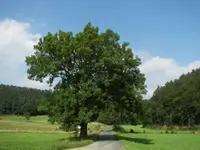
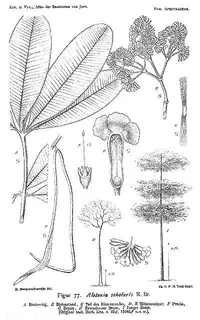
Blackboard tree, Alstonia scholaris, is a fast-growing evergreen tree valued for its upright habit and dense, glossy foliage. It develops a straight trunk with whorled branches and narrow, leathery leaves arranged in circular clusters.

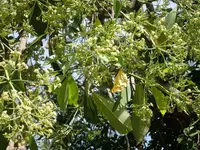
This species is native to South and Southeast Asia and commonly used as an avenue or shade tree in warm climates. It produces clusters of small, fragrant white flowers followed by long, slender seed pods.

Alstonia scholaris is generally considered easy to grow in frost-free regions, as it tolerates heat, seasonal dryness, and urban conditions. It prefers bright light, moderately moist but well-drained soil, and benefits from basic guidance on how to care for Blackboard tree in landscape settings.

Main Plant Requirements

Care Difficulty

Moderate Care

Light Preference

Full Sun

Water Requirements

Moderate Water

Temperature Preference

Tropical / Frost Sensitive

Hardiness Zone

10–12

Soil Texture

Sandy, Loamy, Organic-rich

Soil pH

Slightly acidic (6.5–7.0), Neutral (7.0)

Soil Drainage

Moist but well-drained

Fertilization

Minimal (feed rarely)

Get Personalized Care Plan

Scan your plant to receive care tips personalized for your specific plant

Available on iOS and Android

How to Care for the Blackboard tree

This tropical evergreen needs bright outdoor light with some protection from intense midday sun.

  • Provide 4–6 hours of direct morning sun with light shade or filtered light in early afternoon, especially in hot climates.
  • Young Blackboard tree plants tolerate partial shade but become fuller with more light; dense shade leads to sparse growth and fewer flowers.
  • In summer, protect from harsh western sun to avoid leaf scorch; in winter, ensure at least 3–4 sun hours by pruning nearby shade or adjusting planting aspect.

This tree prefers consistently moist, well‑drained soil rather than extremes of drought or saturation.

  • Water when the top 3–5 cm of soil feels dry, allowing deeper soil to stay slightly moist without becoming muddy.
  • During hot, dry seasons, increase watering frequency and observe for slight leaf droop or dull color as early signs of thirst.
  • Avoid standing water around roots; yellowing, soft leaves and dieback of small roots often indicate overwatering, while crispy leaf edges suggest underwatering.

This tropical species grows best in warm, frost‑free climates with only moderate temperature swings.

  • Optimal growth occurs around 70–90°F (21–32°C), where Alstonia scholaris maintains active leaf and stem development.
  • The tree is very sensitive to frost; growth slows below 55°F (13°C), and damage can occur near 40°F (4°C) and lower.
  • Mature trees tolerate short heat spikes up to about 100°F (38°C) if soil moisture is maintained, but young plants benefit from light afternoon shade in extreme heat.

This species prefers moderately humid air but usually adapts to typical indoor levels.

  • Aim for 40–60% humidity to reduce leaf edge browning and tip dieback.
  • It tolerates short dry-air periods, but consistently low humidity with warm temperatures can cause curled, dull leaves and slowed growth.
  • Increase humidity by grouping plants, placing the pot on a pebble tray with water below the pot base, or using a small room humidifier near the Blackboard tree.

Alstonia scholaris prefers deep, well-drained, moderately fertile mineral soil for long-term health.

  • Use a loose loam-based mix with 50–60% mineral topsoil, 20–30% compost, and 10–20% coarse sand or perlite for structure and aeration.
  • Ensure fast drainage so water does not stand longer than a few minutes, as prolonged saturation promotes root rot in this tree species.
  • Keep pH slightly acidic to neutral, roughly 6.0–7.5, which supports nutrient availability and stable growth.
  • Avoid very compacted clay, heavy peat-only mixes, or constantly soggy spots; improve such soils by incorporating coarse sand, fine bark, or perlite to open the structure.

This tree can be grown in containers when kept pruned and given a stable, spacious pot.

  • Select a wide, heavy container to prevent tipping as the woody trunk thickens and the canopy becomes top-heavy.
  • Choose a pot material with moderate moisture retention, such as thick-walled terracotta, to balance drying between waterings in warm weather.
  • Use a pot deep enough to accommodate a strong taproot and lateral roots, allowing at least 35–45 cm of internal depth for structural stability.

Alstonia scholaris benefits from moderate feeding when grown in containers or nutrient-poor urban soils.

  • Use a balanced granular or liquid fertilizer (around 10-10-10 NPK) or well-rotted compost during active growth.
  • Feed every 4–6 weeks in spring and summer, focusing on the drip line rather than the trunk base.
  • Dilute liquid fertilizers to 1/2 strength to avoid salt buildup and root burn.
  • Stop feeding in late fall and winter, when growth naturally slows, to prevent weak, tender shoots.

Pruning Alstonia scholaris is mainly used to manage size, structure, and safety rather than to stimulate flowering.

  • Carry out light structural pruning at the end of the dry or cool season, before strong new growth begins.
  • Remove dead, diseased, crossing, or storm-damaged branches first to reduce pest and decay risks.
  • Thin congested interior branches to improve airflow and light penetration, helping maintain a stable framework.
  • Use clean, sharp loppers or a pruning saw, making smooth cuts just outside the branch collar without leaving stubs.

Transplanting this fast-growing tree needs planning to avoid root damage and transplant shock.

  • Look for roots circling the container, frequent wilting, or slow growth as signs a young Blackboard tree needs shifting to a larger site or pot.
  • Plan transplanting for late winter to early spring, when temperatures are mild and rainfall can support root re-establishment.
  • Move young trees every 2–3 years at most, stepping up only 1–2 pot sizes or into a well-prepared ground site with good drainage.
  • Water deeply before and after moving, keep the root ball intact, shade the canopy for 1–2 weeks, and maintain even soil moisture until new growth appears.

Alstonia scholaris is usually raised from seed, with vegetative methods used less often in home settings.

  • Collect ripe seed pods and sow fresh seeds in late spring in a sterile, free-draining mix kept at 70–80°F.
  • Press seeds lightly onto the surface, as many require light to germinate, and keep the medium evenly moist but not waterlogged.
  • Provide bright, indirect light and good airflow; expect germination over several weeks rather than days.
  • Semi-hardwood stem cuttings taken in warm weather may root under high humidity and bottom heat, but success rates vary.

This tropical tree is frost-sensitive and needs protection in climates with cold winters.

  • In USDA zones below 10, grow in large containers and move indoors or into a heated greenhouse before temperatures drop near 40°F.
  • Provide bright light and reduced watering indoors, allowing the top soil layer to dry slightly between waterings.
  • For in-ground trees in marginal climates, apply a 5–8 cm mulch layer over the root zone to buffer temperature swings and conserve moisture.

Care Tips

Wind-firm training

In the first 2–3 years, lightly stake young trees and regularly remove or shorten competing leaders so a single, straight trunk develops that will better resist storm winds later.

Root space planning

Plant away from foundations, drains, and small paved areas, as the vigorous root system can lift hardscape; allow at least 5–6 m clearance from buildings and underground services.

Trunk flare protection

Keep mulch and soil pulled back 5–8 cm from the trunk to prevent bark rot at the root flare and discourage pests that shelter against constantly moist bark.

Seasonal litter management

Schedule regular raking of fallen leaves, flowers, and seed pods during peak drop periods to reduce fungal buildup on the soil surface and keep nearby hardscape from becoming slippery.

Canopy health monitoring

Inspect the canopy 2–3 times per year for scale insects, sooty mold, or sudden thinning, and consult local arborist services early if caring for Blackboard tree in high-traffic or public areas where branch failure is a safety concern.

Common Pests and Diseases

Bark-boring beetles

This pest tunnels into the trunk and branches, causing frass (wood dust), wilting, sparse foliage, and branch dieback.

Solution

Prune and destroy heavily infested or dead branches to remove larvae, and keep the tree well watered and unstressed to improve natural resistance; in landscapes, a certified arborist may apply a systemic insecticide to the trunk during active beetle periods for targeted control.

Leaf miners

These insects feed inside the leaves, creating pale, winding trails and blotches that reduce photosynthetic area and may cause premature leaf drop.

Solution

Remove and destroy affected leaves to reduce larvae numbers, avoid excessive nitrogen fertilization that encourages tender growth, and if damage is severe use a systemic insecticide or neem-based product timed to young flushes of foliage.

Scale insects

This pest appears as small bumps on stems and leaf undersides, often accompanied by sticky honeydew and black sooty mold on foliage.

Solution

Wipe or gently scrub accessible stems with a cloth dipped in mild soapy water, encourage natural predators such as lady beetles where possible, and use targeted horticultural oil or systemic insecticides for heavier infestations, following local guidelines for Alstonia scholaris care.

Sooty mold

This disease is a black, powdery or velvety fungal growth that develops on leaves and stems growing on the sugary honeydew secreted by sap-sucking insects like scale or aphids.

Solution

Control the underlying insect infestation first, then wash affected leaves with water or a mild soapy solution to remove the mold, and improve airflow and light penetration through careful pruning so new foliage stays cleaner.

Leaf spot

Symptoms include small brown to dark lesions on leaves that may enlarge and merge, leading to yellowing and premature leaf shedding in humid, wet conditions.

Solution

Collect and destroy fallen leaves, avoid overhead watering that keeps foliage wet, prune to increase airflow through the canopy, and in persistent or severe cases apply a copper-based or other registered fungicide according to label directions for ornamental trees.

Interesting Facts

Distinctive milky latex

The tree produces a white, sticky latex in its bark and leaves, a typical feature of the dogbane family Apocynaceae, which helps seal wounds and deter herbivores.

Strong, straight trunk

It naturally forms a tall, straight bole with whorled horizontal branches, which makes it a characteristic avenue and shade tree in many South and Southeast Asian cities.

Seasonal white flowering

It bears clusters of small, white, fragrant flowers typically in late summer to autumn in tropical Asia, and these are followed by paired, slender follicle fruits containing numerous wind-dispersed seeds with tufts of silky hairs.

Botan icon

Did you know?

The common name blackboard tree comes from historical use of its soft, workable wood for making school blackboards and writing slates in parts of South and Southeast Asia, linking the species closely to traditional education in the region.

FAQs about Blackboard tree

This species is generally fast-growing, often adding 60–100 cm per year in warm, frost-free climates. Growth slows in cool or dry conditions, in poor soil, or when container-bound, but resumes once conditions improve.

Grow Healthy Plants with Botan Care

Keep your plants happy and healthy with plant identification, disease detection, and easy care guidance.

Botan plant care app — identify plants on mobile

Explore More Plants