Early staking
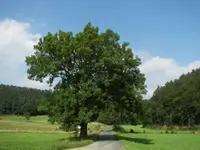
Install a sturdy stake or post while the tree is still young and loosely tie the trunk in 2–3 places with soft, flexible ties to keep it upright and reduce wind rock as it establishes a deep root system.

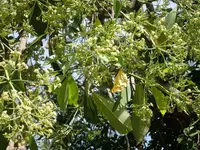
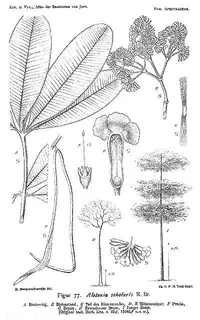
Cheese wood, Alstonia boonei, is a fast-growing evergreen tree from tropical West and Central Africa. It is mainly known as a large forest tree, not a typical houseplant. The tree has smooth gray bark, whorled glossy leaves, and produces clusters of small, fragrant white flowers. In nature it can form a tall, straight trunk used for timber in its native range. For those interested in how to care for cheese wood in cultivation, it prefers warm, humid conditions, consistent moisture, and freely draining soil. Its size and climate needs make it more suitable for large tropical gardens or specialized collections than for small homes.

Care Difficulty
Moderate Care

Light Preference
Full Sun

Water Requirements
Regular Water

Temperature Preference
Tropical / Frost Sensitive

Hardiness Zone
11–13

Soil Texture
Loamy, Sandy, Organic-rich

Soil pH
Acidic (5.5–6.5), Slightly acidic (6.5–7.0)

Soil Drainage
Moist but well-drained

Fertilization
Minimal (feed rarely)
Scan your plant to receive care tips personalized for your specific plant
Available on iOS and Android
Alstonia boonei prefers bright, warm, tropical light conditions without harsh exposure.
Alstonia boonei prefers evenly moist, well-drained soil rather than constant saturation.
This tropical tree needs consistently warm conditions to grow well and avoid cold damage.
Alstonia boonei prefers moderately humid air but usually tolerates typical household levels if not kept too warm.
Alstonia boonei grows best in deep, slightly moist, well-drained, organically enriched soil.
This species can be grown in large containers for some years if root space and stability are carefully managed.
Alstonia boonei grown as cheese wood in cultivation benefits from light, steady nutrition rather than heavy feeding.
Alstonia boonei benefits from light structural pruning to maintain a safe, balanced canopy in managed landscapes.
This species is usually field-grown, so care focuses more on transplanting young trees than on frequent repotting.
Alstonia boonei is most often propagated from seed under controlled conditions, as vegetative methods are less common.
This tropical tree is not frost-tolerant and needs cold-season protection wherever temperatures fall near or below 40°F.

Plant Health Check
Not sure what's wrong with your plant? Check your plant's health inside the app.
The tree exudes a white, sticky latex from its bark and leaves, which deters many herbivores and helps seal wounds after physical damage.
It produces long, slender, paired follicles that split open to release many small seeds, each equipped with silky hairs that aid wind dispersal in forest habitats.
New leaves often emerge in lighter green flushes at branch tips, forming tight whorls that gradually darken as they mature, a growth pattern typical of many members of the Apocynaceae family.

In parts of West Africa, large, straight boles of this species have traditionally been selected for carved drums and ceremonial objects because the wood is relatively light, workable, and available in substantial trunk diameters.
This species is moderately fast-growing under warm, moist, lowland tropical conditions, often adding 30–60 cm of height per year outdoors. Growth slows in containers, cooler climates, or with poor soil fertility, limited water, or restricted root space.
Keep your plants happy and healthy with plant identification, disease detection, and easy care guidance.