Early structure training
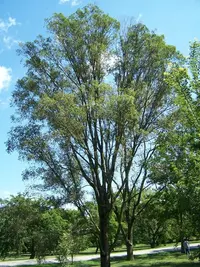
During the first 3–4 years, select 3–5 well-spaced main branches and remove steep, crossing, or duplicated shoots to build an open vase shape that improves light penetration and reduces future limb breakage.

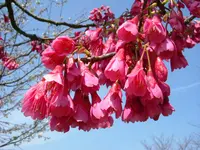
Taiwan cherry, Prunus campanulata, is a small deciduous tree valued for very early, deep pink blossom. It typically forms a rounded crown with fine branching and smooth bark. Flowers appear in late winter to early spring before the leaves, attracting pollinators and adding strong seasonal interest.
This species is native to Taiwan and parts of East Asia, where it grows in mild, temperate climates. It prefers full sun, moderate moisture, and well-drained soil, which helps explain how to care for Taiwan Cherry in gardens and landscapes.
Growth is usually fast when conditions are suitable, but the tree can be short-lived and somewhat sensitive to heat, drought, and poor drainage. These traits make siting and basic maintenance important for long-term success.

Care Difficulty
Moderate Care

Light Preference
Full Sun

Water Requirements
Moderate Water

Temperature Preference
Warm Climate

Hardiness Zone
8–11

Soil Texture
Sandy, Loamy, Organic-rich

Soil pH
Acidic (5.5–6.5), Slightly acidic (6.5–7.0)

Soil Drainage
Moist but well-drained

Fertilization
Minimal (feed rarely)
Scan your plant to receive care tips personalized for your specific plant
Available on iOS and Android
This flowering cherry needs full sun for reliable bloom and compact growth.
This cherry prefers evenly moist, well-drained soil that never stays soggy for long periods.
This cherry species is adapted to mild climates with cool winters and moderate summers.
Humidity is not a major factor for outdoor Prunus campanulata growth in typical temperate climates.
Prunus campanulata prefers moderately moist, well-drained, fertile ground with stable structure.
This species can be grown in large containers for several years with careful moisture and stability management.
This flowering cherry benefits from light, targeted feeding rather than heavy fertilization.
Prunus campanulata responds well to light structural pruning to maintain health and flowering.
This cherry is most often grown in the ground, so focus on careful transplanting rather than frequent repotting.
New plants are usually raised from seed or grafting, with cuttings less reliable for home growers.
This cherry is moderately cold hardy but benefits from basic winter management in cooler climates.

Plant Health Check
Not sure what's wrong with your plant? Check your plant's health inside the app.
Taiwan cherry flowers very early in late winter to early spring, providing one of the first rich nectar and pollen sources for bees and other pollinators in many of the regions where it has been introduced.
In places like Hawaii and parts of the southern United States, its deep pink, bell-shaped blossoms are a documented favorite of nectar-feeding birds such as Japanese white-eye and certain hummingbird species, which regularly visit trees in full bloom.
This species has been used in breeding ornamental cherries, most notably as a parent of some low-chill and warm-climate flowering cherry hybrids, helping extend cherry blossom displays into subtropical areas.

In parts of New Zealand and Hawaii, Taiwan cherry is officially listed or treated as an invasive species because it escapes cultivation, forms dense stands in native forests, and competes strongly with local tree species, leading to active control and removal programs.
Lack of bloom often relates to insufficient winter chill, too much shade, heavy pruning at the wrong time, or nutrient imbalance with excess nitrogen. Improve light, avoid pruning after midspring, and use a balanced fertilizer to support flower bud formation.
Keep your plants happy and healthy with plant identification, disease detection, and easy care guidance.