Wind-firm training
In the first 3–4 years, selectively shorten or remove competing upright shoots and favor a single, well-spaced framework of main branches to reduce wind damage and breakage later in the tree’s life.

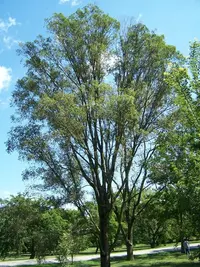
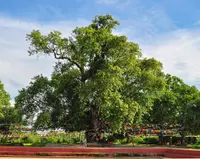
Siberian elm, Ulmus pumila, is a fast-growing deciduous tree often used as a windbreak or hardy landscape tree. It develops a rounded crown with many fine twigs and small, serrated leaves that turn yellow in autumn.
This species is native to eastern and central Asia but has been widely planted and naturalized in North America. It is valued for its ability to tolerate drought, cold, poor soils, and urban pollution, which makes care for Siberian elm relatively straightforward.
The tree grows quickly and can become invasive in some regions, so location and long-term size should be considered before planting. It generally prefers full sun, well-drained soil, and moderate moisture but adapts to a wide range of conditions.

Care Difficulty
Easy Care

Light Preference
Full Sun

Water Requirements
Moderate Water

Temperature Preference
Cold Hardy

Hardiness Zone
3–9

Soil Texture
Sandy, Loamy, Clay

Soil pH
Slightly acidic (6.5–7.0), Slightly alkaline (7.0–7.5)

Soil Drainage
Well-drained

Fertilization
Minimal (feed rarely)
Scan your plant to receive care tips personalized for your specific plant
Available on iOS and Android
Ulmus pumila grows best in open, bright conditions with plenty of direct sun for strong structure and dense canopy.
Ulmus pumila prefers deep, infrequent watering that encourages a strong, drought-tolerant root system.
This hardy elm tolerates a wide temperature range but grows most vigorously in moderate spring and early summer conditions.
Ulmus pumila tolerates a wide humidity range, so humidity management is rarely critical.
Ulmus pumila adapts to many soils but grows best in moderately fertile, well-structured mineral soil.
This species can be grown in containers short-term, but it is not ideal as a long-term potted tree.
This hardy tree needs only modest feeding under typical landscape conditions.
Thoughtful pruning keeps Ulmus pumila structurally sound and easier to manage.
Ulmus pumila is usually grown in-ground, so transplant timing and root handling matter more than container repotting.
Propagation of Ulmus pumila is common in both nursery production and restoration plantings.
Established Ulmus pumila trees are very cold hardy and usually need minimal winter care in most climates.

Plant Health Check
Not sure what's wrong with your plant? Check your plant's health inside the app.
This species survives both very low winter temperatures and summer heat in continental climates, which helps explain its spread across large parts of northern Asia and later North America.
Its seeds develop in thin, papery winged fruits called samaras that ripen and drop early in spring, allowing wind to carry them long distances before many other trees leaf out.
The tree tolerates dry soils and higher soil salinity than many temperate trees, so it often establishes along roadsides, in compacted urban ground, and in disturbed construction sites.

Ulmus pumila was widely used in the mid‑20th century as a replacement for American elm in shelterbelts and street plantings after Dutch elm disease, but its tendency to self-seed aggressively and form dense thickets later led many regions to restrict or discourage new plantings.
This species is very fast-growing, commonly adding 0.6–1 m (2–3 ft) per year in favorable conditions. Growth may slow with drought, poor soil, root restriction, or heavy pruning, but it generally remains vigorous and quick to establish.
Keep your plants happy and healthy with plant identification, disease detection, and easy care guidance.