Wind-hardening seedlings
If starting from seed, expose young plants to gradually increasing wind and full sun over 2–3 weeks so their trunks and leaf bases lignify (harden) and better resist permanent site winds.

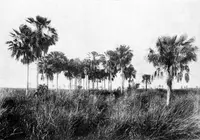
Copernicia alba, commonly called caranday palm or wax palm, is a medium to large fan palm native to seasonally flooded plains of Paraguay, Argentina, Brazil, and Bolivia. It often forms dense stands in open, sunny landscapes with wet summers and dry winters.
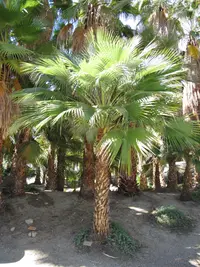
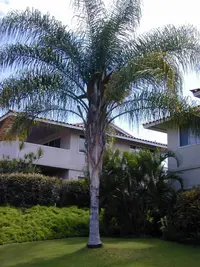
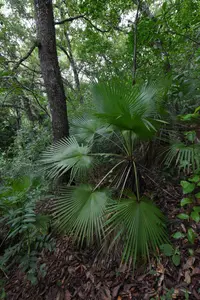
The palm has a slender, upright trunk with a rounded crown of stiff, blue-green fan leaves, giving it a very architectural look. Growth is moderate and it becomes quite tall over time, so it suits spacious gardens rather than small containers.
Copernicia alba prefers full sun, warmth, and moist but well-drained soils, and it tolerates brief flooding once established. These traits make care for copernicia manageable for growers in suitable warm climates, but challenging indoors or in cool regions.

Care Difficulty
Moderate Care

Light Preference
Full Sun

Water Requirements
Regular Water

Temperature Preference
Warm Climate

Hardiness Zone
9–11

Soil Texture
Sandy, Loamy, Clay

Soil pH
Slightly acidic (6.5–7.0), Neutral (7.0)

Soil Drainage
Waterlogged tolerant

Fertilization
Minimal (feed rarely)
Scan your plant to receive care tips personalized for your specific plant
Available on iOS and Android
This palm prefers strong light and performs best in open, sunny sites.
This species is naturally adapted to seasonal flooding and drying, so it prefers deep but not constant moisture.
This palm thrives in warm, frost-free climates with distinct warm and cooler seasons.
This palm tolerates a wide humidity range but prefers moderately dry air.
This species prefers mineral, fast-draining soils that stay aerated around the roots.
This slow-growing palm can be grown in containers when provided with a stable, heavy pot.
This palm grows slowly and needs only modest feeding in cultivation.
Pruning Copernicia alba focuses on safety and cleanliness rather than shaping.
This palm is usually grown in the ground and dislikes frequent disturbance once established.
New Copernicia alba plants are almost always raised from seed and the process is slow.
This palm is moderately cold tolerant but benefits from some winter attention in cooler regions.

Plant Health Check
Not sure what's wrong with your plant? Check your plant's health inside the app.
This palm naturally grows in the Gran Chaco wetlands of Argentina, Paraguay, Bolivia, and Brazil and tolerates long periods of seasonal flooding followed by pronounced drought, a combination that many other tree species cannot survive.
C. alba is adapted to soils that are often saline and alkaline, which allows it to form near-monodominant stands in areas where less tolerant woody plants are excluded.
Dense stands of this palm create a characteristic landscape known as palmares, which strongly influence local microclimate, fire behavior, and habitat structure for birds, mammals, and insects.

The tall, straight, and very hard trunk of this species has been traditionally used as durable fence posts and rural construction timber in the South American Chaco because it resists decay for many years, even in seasonally waterlogged soils.
Growth is slow. Young plants usually add about 10–20 cm of trunk per year once established, often taking 8–12 years to form a clearly visible trunk under warm, bright, well-drained conditions.
Keep your plants happy and healthy with plant identification, disease detection, and easy care guidance.