queen palm Care (Syagrus romanzoffiana)

queen palm

About queen palm

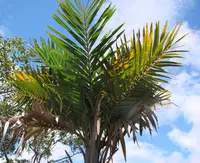
The queen palm, Syagrus romanzoffiana, is a fast-growing, feather-leaved palm commonly used in warm-climate landscapes. It forms a slender, ringed trunk topped with a full, arching crown.

This species is native to South America, especially Brazil, Argentina, and surrounding regions, where it grows in subtropical to tropical conditions. In suitable climates it becomes a tall, elegant focal point.

Its smooth trunk, dense canopy, and clusters of orange fruits make it highly ornamental but also mean it needs space and regular debris cleanup. Understanding how to care for queen palm starts with providing ample sun, consistent moisture, and well-drained soil.

In cooler or marginal climates it can be more challenging, as it is sensitive to prolonged cold and nutrient-poor conditions, especially deficiencies in potassium and magnesium.

Main Plant Requirements

Care Difficulty

Moderate Care

Light Preference

Full Sun

Water Requirements

Moderate Water

Temperature Preference

Warm Climate

Hardiness Zone

9–11

Soil Texture

Sandy, Loamy, Organic-rich

Soil pH

Acidic (5.5–6.5), Slightly acidic (6.5–7.0)

Soil Drainage

Well-drained

Fertilization

Light (every 4–6 weeks)

Get Personalized Care Plan

Scan your plant to receive care tips personalized for your specific plant

Available on iOS and Android

How to Care for the queen palm

This palm thrives in bright outdoor conditions with ample direct sun.

  • Provide 6–8 hours of direct sun daily; full sun is ideal for strong trunk and frond development.
  • Young or newly planted queen palm benefits from light afternoon shade or filtered light to reduce leaf scorch in very hot climates.
  • In dense shade, growth becomes thin and fronds sparse; aim for at least 4 hours of morning sun, especially in winter when days are shorter.

Syagrus romanzoffiana prefers steady soil moisture without staying saturated.

  • In the ground, water deeply when the top 5–8 cm of soil feels dry; sandier soils may need more frequent deep soakings than clay soils.
  • Reduce watering in cool seasons when growth slows, but do not allow prolonged drought that causes folded, browning lower fronds.
  • Ensure free-draining soil to avoid root rot; signs of overwatering include yellowing, limp fronds, while crisp browning tips and drooping fronds suggest underwatering.

This palm grows best in warm, frost-free climates.

  • Optimal growth occurs around 70–90°F (21–32°C); it tolerates short hot spells to about 100°F (38°C) if soil moisture is adequate.
  • The palm can survive brief drops to about 25°F (−4°C), but tissue damage often begins below 28°F (−2°C), especially on young plants.
  • In regions with cool winters, protect the crown from frost with breathable covers and avoid planting in low pockets where cold air collects.

This palm tolerates a wide humidity range but benefits from slightly moist air in heated or air-conditioned spaces.

  • Aim for 40–60% humidity; short periods below 30% are usually tolerated without serious stress.
  • Crisping leaflet tips, brown edges, and slowed new growth can indicate air that is too dry over time.
  • Increase humidity by grouping plants outdoors near other vegetation or placing large trays of water and stones nearby to raise local moisture.

Syagrus romanzoffiana prefers deep, well-drained, slightly sandy soil that still holds some moisture.

  • Use a mix such as 50–60% coarse sand or sandy loam, 20–30% compost, and 10–20% pine bark or similar chunky material to support root structure.
  • Ensure fast drainage so water moves through within a few seconds; waterlogged or compacted ground increases risk of root and crown rot.
  • Aim for slightly acidic to neutral pH around 6.0–7.0, avoiding strongly alkaline soils that can cause nutrient lockout and leaf yellowing.
  • Improve aeration and drainage in heavy clay by raising the planting area, incorporating coarse sand and fine gravel, and avoiding sites where water stands after rain.

This species can be grown in large containers for several years, especially while young.

  • Choose a tall, heavy pot that resists tipping to support the fast, top-heavy canopy as it gains height.
  • Select thick-walled clay or concrete containers in hot climates to moderate root-zone temperature and slow water loss.
  • Elevate the pot slightly on feet or blocks so drainage holes stay clear and excess water escapes quickly after irrigation.

Queen palm benefits from moderate, steady nutrition during the warm growing season.

  • Use a slow-release palm fertilizer or balanced NPK (such as 10-10-10) with added magnesium and micronutrients.
  • Feed every 2–3 months in spring through early fall for in-ground plants; container specimens may need slightly more often.
  • Apply at the recommended label rate or slightly weaker for sandy soils to reduce salt buildup.
  • Stop or greatly reduce feeding in late fall and winter, when growth slows and nutrient demand drops.

Pruning Syagrus romanzoffiana is mainly hygiene and safety work rather than shaping.

  • Carry out pruning in late winter or early spring, avoiding active flowering and fruiting periods.
  • Remove only dead, diseased, broken, or severely drooping fronds; leave all green fronds to maintain vigor.
  • Use clean, sharp loppers or a pruning saw, cutting close to the trunk without damaging the trunk tissue.
  • Limit crown thinning; excessive frond removal weakens the palm, increases sun stress, and may reduce long-term health.

Transplanting or moving queen palm is infrequent and should be done carefully to limit root stress.

  • Look for roots circling the pot, water running straight through, or slowed growth as cues a container plant needs a larger pot.
  • Plan major transplanting for late spring or early summer when soil is warm and the palm can re-establish quickly.
  • Expect container-grown plants to need upsizing roughly every 2–3 years, increasing pot diameter by 5–10 cm each time.
  • Reduce stress by watering deeply before and after moving, keeping the root ball intact, and shading the palm for several weeks post-transplant.

New Syagrus romanzoffiana plants are almost always raised from seed rather than division or cuttings.

  • Harvest fully ripe, orange fruits, clean off the pulp, and sow seeds promptly for best viability.
  • Warm conditions of 75–85°F and evenly moist, well-drained substrate support germination, which may take several weeks to months.
  • Sow seeds 1–2 cm deep in a coarse mix of sand and peat or similar low-organic medium to prevent rot.
  • Provide bright, indirect light, consistent warmth, and avoid overwatering while the slow, fibrous root system establishes.

Winter care for this palm depends strongly on climate, because it is only moderately cold tolerant.

  • Mature trees tolerate brief drops near 25°F, but young plants are more sensitive and may suffer leaf damage.
  • Apply a 5–8 cm layer of organic mulch around the root zone in late fall, keeping it slightly away from the trunk.
  • Wrap the crown and upper trunk of small palms with frost cloth or burlap during freezing nights in marginal climates.
  • Move container-grown palms indoors or into a bright, sheltered garage or greenhouse when extended cold spells are forecast.

Care Tips

Root-ball stabilization

When planting, drive 3–4 sturdy stakes just outside the root ball and strap the trunk loosely with wide, soft ties to keep the palm stable for 6–12 months while new anchoring roots form.


Seasonal frond thinning

In hurricane- or storm-prone areas, remove only the lowest, already-declining fronds before storm season to reduce wind drag while still preserving enough green canopy for healthy growth.

Salt and wind buffering

In coastal sites, plant a first row of tough shrubs or small trees as a windbreak on the ocean-facing side to reduce salt spray burn and mechanical wind damage to the fronds.

Fruit and litter management

If fallen fruits create slip hazards or attract pests, cut off flower stalks or immature fruit clusters early with clean tools, rather than letting full clusters ripen and drop.

Mulch ring maintenance

Maintain a 5–10 cm deep mulch ring that extends at least 60–90 cm from the trunk, but always keep mulch pulled back 10–15 cm from the base to prevent trunk rot, which is essential when caring for queen palm in irrigated landscapes.

Common Pests and Diseases

Ganoderma butt rot

This disease causes internal decay of the lower trunk, often with a hard, shelf-like white or brown conk at the base of the palm. Symptoms include slow decline, reduced new fronds, and eventual trunk failure.

Solution

There is no curative treatment; remove and destroy severely affected palms and do not replant another queen palm in the same spot. Prevent spread by avoiding trunk wounds, improving drainage, and disposing of stumps and infected wood away from healthy palms.

Fusarium wilt

This disease leads to one-sided yellowing and browning of fronds, often starting on older leaves and progressing upward, with dead leaflets on one side of the frond. Over time the canopy thins and the palm declines.

Solution

Prune and dispose of affected fronds carefully, disinfecting tools between cuts with a 10% bleach solution or 70% alcohol. Avoid overhead irrigation wetting the crown, reduce stress with proper fertilization and watering, and replace severely affected palms as there is no reliable cure.

potassium deficiency

Symptoms include leaf tip necrosis, orange or bronze spotting, and general frond thinning, especially on older leaves, even when the palm appears otherwise healthy. This is one of the most common nutritional problems in growing queen palm in landscapes with poor or sandy soils.

Solution

Apply a slow-release palm fertilizer with high potassium and adequate magnesium 3–4 times per year, following label rates, and avoid using general-purpose lawn fertilizers near the root zone. Remove only completely dead fronds so the palm can continue to recycle nutrients from older leaves while it recovers.

royal palm bug

These insects feed on unfolded spear leaves, causing new fronds to emerge distorted, stiff, and with brown or gray, scorched-looking leaflet tips. Damage is usually confined to the newest growth but can make the canopy look thin and tattered.

Solution

Inspect spear leaves and young fronds in spring and early summer and prune out heavily deformed new leaves if practical. For recurring problems, target the emerging spear with a systemic insecticide labeled for palms, applied according to local regulations and label directions.

scale insects

This pest group includes several armored and soft scales that attach to fronds and leaf stalks, sucking sap and causing yellow spotting, sticky honeydew, and sooty mold growth. Infestations can weaken the palm and reduce vigor over time.

Solution

Rinse foliage with a strong but controlled stream of water to dislodge crawlers and remove honeydew, and prune heavily infested fronds if there are enough healthy leaves remaining. For persistent infestations, use a horticultural oil or systemic insecticide labeled for palms, applied during crawler stages and repeated as directed to protect beneficial insects as much as possible.

Interesting Facts

Natural forest pioneer

In its native range in southern Brazil, Argentina, Paraguay, and Uruguay, this palm often colonizes disturbed forest edges and gaps, helping to stabilize soil and create shade that allows other tree species to establish.

Wildlife food source

Its fleshy orange fruits are a key food for many birds and mammals, including toucans and capuchin monkeys, which disperse the seeds over long distances after feeding.

Cold-tolerant tropical palm

Although a tropical species, it tolerates brief drops close to freezing better than many palms of similar appearance, which has allowed it to become a widely planted ornamental in warm-temperate coastal regions.

Botan icon

Did you know?

In parts of southern Brazil, large individuals form almost pure stands known as palmares, where the dense canopy and abundant fruit strongly shape the local ecosystem by attracting specialized wildlife and influencing which understory plants can grow.

FAQs about queen palm

In warm climates with adequate water and fertilizer, this species usually grows about 0.6–1 m per year when young, then slows slightly with age. Growth is much slower in cool, windy, or nutrient-poor sites.

Grow Healthy Plants with Botan Care

Keep your plants happy and healthy with plant identification, disease detection, and easy care guidance.

Botan plant care app — identify plants on mobile

Explore More Plants