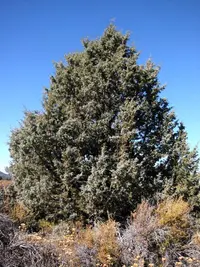
American chestnut Care (Castanea dentata)

American chestnut

About American chestnut

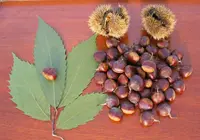
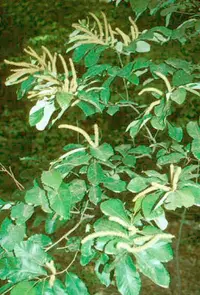
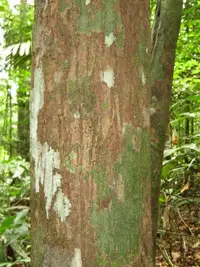
American chestnut, Castanea dentata, is a large deciduous tree once common in forests of eastern North America. It naturally forms a tall, straight trunk with a broad, rounded crown.

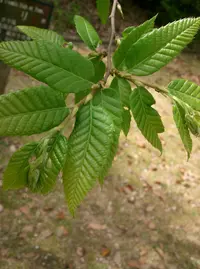
Leaves are long, sharply toothed, and glossy, turning warm yellow-brown in fall, while spiny burrs hold the edible nuts. In the wild it prefers well-drained, slightly acidic soils and a temperate climate.

Modern trees often grow as smaller, blight-affected sprouts, so they may be more demanding to maintain in the long term. Anyone wanting to learn how to care for American chestnut should understand its need for full sun, good air flow, and non-waterlogged soil.


Main Plant Requirements

Care Difficulty

Moderate Care

Light Preference

Full Sun

Water Requirements

Moderate Water

Temperature Preference

Cold Hardy

Hardiness Zone

4–8

Soil Texture

Sandy, Loamy, Organic-rich

Soil pH

Strongly acidic (4.5–5.5), Acidic (5.5–6.5)

Soil Drainage

Well-drained

Fertilization

Minimal (feed rarely)

Get Personalized Care Plan

Scan your plant to receive care tips personalized for your specific plant

Available on iOS and Android

How to Care for the American chestnut

Castanea dentata performs best in full sun but tolerates some light shade, especially when young.

  • Provide 6–8 hours of direct sun daily for strong growth and nut production; 4–5 hours can sustain growth but may reduce yield.
  • Allow young trees partial shade with morning sun and light afternoon shade during the first 2–3 years to reduce leaf scorch.
  • Ensure the American chestnut canopy is not permanently shaded by buildings or taller trees, which leads to sparse foliage and weak shoots.

Castanea dentata prefers evenly moist, well-drained soil rather than frequent shallow watering.

  • Water when the top 3–5 cm of soil feels dry, applying a deep soak that penetrates 15–20 cm to encourage a deep root system.
  • Increase watering during hot, dry periods if leaves droop or curl slightly, and reduce in cool, rainy seasons to avoid waterlogging.
  • Watch for yellowing leaves and soft new growth as signs of overwatering, and crisp leaf edges plus slow growth as signs of drought stress.

This species is a cold-hardy temperate tree that needs a pronounced winter chill and moderate summer heat.

  • Optimal growing-season temperatures are around 65–80°F (18–27°C), supporting steady shoot extension and leaf development.
  • Dormant trees tolerate cold down to about -20°F (-29°C); young saplings benefit from protection below -10°F (-23°C).
  • Mature trees handle summer heat up to about 90–95°F (32–35°C) if soil moisture is maintained, but prolonged hotter, dry periods can slow growth and stress foliage.

This species is adaptable and does not have strict humidity requirements in most outdoor settings.

This tree prefers deep, well-aerated, slightly acidic mineral soils that stay evenly moist but never waterlogged.

  • Aim for a loamy or sandy-loam soil enriched with 10–20% compost to support root development and nutrient availability.
  • Maintain pH around 5.0–6.5; avoid strongly alkaline soils that can limit nutrient uptake for Castanea dentata.
  • Ensure rapid drainage by incorporating coarse sand or fine gravel where native soil is heavy or tends to puddle.
  • Avoid compacted clay, poorly drained low spots, or sites where water stands longer than 24 hours after rain.

This species is only moderately suitable for container growing and usually performs best as a temporary young tree in a large pot.

  • Select a tall, heavy container that resists tipping as the trunk elongates and canopy mass increases.
  • Use a coarse, bark-based potting mix that stays aerated under weight, preventing chronic saturation around deep roots.
  • Position the container where wind exposure is reduced, since the combination of height and limited root anchorage increases instability.

Castanea dentata benefits from light, targeted feeding rather than heavy fertilization.

  • Use a balanced, slow-release granular fertilizer (around 10-10-10) or well-rotted compost once in early spring as growth starts.
  • Apply only to established trees in nutrient-poor soils; skip feeding on rich, healthy sites to avoid excessive, weak growth.
  • During the growing season, avoid more than 1–2 light applications and never exceed label rates or full-strength doses.
  • Do not fertilize in late summer or winter, since extra nitrogen then can reduce cold hardiness and encourage dieback.

Pruning Castanea dentata focuses on structural safety and removal of unhealthy wood.

  • Plan main pruning for late winter to very early spring, before bud break, when branch structure is visible.
  • Remove dead, diseased, rubbing, or storm-damaged branches first, cutting back to the branch collar with clean, sharp tools.
  • Thin crowded interior branches on young trees to develop a strong central leader and well-spaced scaffolds.
  • Limit pruning in summer to light corrective cuts, avoiding heavy canopy reduction that stresses the tree.

American chestnut is usually grown in the ground, so care centers on staged transplanting from young containers.

  • Transplant seedlings after 1–2 years in pots, once roots circle the container or growth slows despite good care.
  • Move trees in late fall after leaf drop or very early spring while dormant to reduce shock.
  • Choose a sunny, well-drained site and plant at the same depth, spreading roots outward and backfilling with native soil.
  • Water deeply after planting, then keep soil evenly moist for the first 1–2 growing seasons, using mulch to reduce stress.

Castanea dentata is most often propagated from seed for restoration and orchard planting.

  • Collect ripe nuts in fall, discarding any that float in water, as these are usually non-viable.
  • Cold-stratify seeds 2–3 months at 34–41°F in slightly moist medium to break dormancy.
  • Sow in deep pots or nursery beds in spring, 2–5 cm deep, in well-drained, slightly acidic soil.
  • Protect germinating seedlings from rodents and heavy browsing with cages or mesh, and maintain consistent but not waterlogged moisture.

Mature Castanea dentata is cold hardy in much of its range and needs minimal winter care once established.

  • Young trees benefit from 5–8 cm of organic mulch over the root zone, kept away from the trunk to prevent rot.
  • In very windy or exposed sites, use tree guards or wraps on young stems to limit bark injury and sunscald.
  • Container-grown seedlings in cold regions should overwinter in an unheated but sheltered space or be heeled into the ground.

Care Tips

Plan for Blight

Before planting, consult local extension services or state forestry agencies for the latest blight-resistant selections and management recommendations, since long-term success often depends more on disease strategy than on general caring for American chestnut.

Use Paired Plantings

Plant at least 2–3 genetically distinct trees within 15–30 m of each other to ensure good cross-pollination and significantly better nut set than a single isolated specimen.

Protect Tender Bark

Install a light-colored tree guard or hardware cloth cylinder around young trunks, leaving a gap for air circulation, to prevent rodent girdling, sunscald, and mechanical damage from tools or mowers.

Maintain Deep Rooting

Keep a wide, grass-free mulch ring around the tree and avoid frequent shallow cultivation so the roots extend deeply and widely, which improves drought resilience and anchorage as the tree matures.

Monitor Nut Production

If nut harvest is a goal, record flowering and nut set yearly and thin overcrowded branches in late winter based on these observations to maintain good light penetration into the canopy and consistent yields.

Common Pests and Diseases

Chestnut blight

This disease is caused by the fungus Cryphonectria parasitica, which infects bark and cambium and forms orange cankers that girdle stems. Symptoms include wilting, branch dieback, and sunken lesions with orange fungal pads.

Solution

Prune out infected branches well below visible cankers during dry weather and destroy removed material. Disinfect pruning tools between cuts, avoid wounding trunks, favor resistant hybrids where possible, and in young or high-value trees monitor regularly so infections are removed early as part of long-term Castanea dentata care instructions.

Ink disease

This disease is caused by soilborne Phytophthora species that attack roots and lower stems, leading to foliage yellowing, wilting, and sudden decline. Symptoms include dark, water-soaked lesions at the root collar and blackened, decaying roots that resemble ink-stained tissue.

Solution

Plant in well-drained soil, avoid overwatering and standing water, and do not plant chestnuts in known Phytophthora-infested sites. Remove and destroy severely affected trees, improve drainage with raised beds or mounds, and in orchards consider resistant rootstocks and strict sanitation of tools and equipment to avoid spreading contaminated soil.

Chestnut gall wasp

This pest is a tiny wasp (Dryocosmus kuriphilus) whose larvae induce galls on buds and young shoots, causing swelling, leaf distortion, and reduced shoot growth. Symptoms include green to reddish galls on leaves and twigs that can weaken the tree over time.

Solution

Inspect trees regularly in late spring and early summer and prune off and destroy galled shoots before adult wasps emerge. Avoid moving infested plant material to new sites, encourage natural enemies by minimizing broad-spectrum insecticides nearby, and in orchard settings use resistant cultivars where available.

Chestnut weevils

These insects are nut-feeding beetles (such as Curculio spp.) whose larvae tunnel inside developing nuts, leading to reduced yield and wormy, prematurely dropping nuts. Symptoms include small exit holes in nuts and low nut fill when cracked open.

Solution

Collect and destroy dropped nuts promptly in late summer and fall to break the life cycle. In orchard situations, use trunk banding or ground sanitation (such as frequent raking and removal of debris) and, where warranted, time targeted insecticide sprays to adult emergence based on local extension recommendations.

Leaf spot diseases

These diseases are usually caused by fungi that create brown or tan spots on leaves, sometimes with purple borders or tiny black fruiting bodies. Symptoms include premature leaf yellowing and drop when infections are heavy, especially in warm, wet weather.

Solution

Rake and remove fallen leaves to reduce overwintering spores and improve air circulation by avoiding overcrowded plantings. Water at soil level rather than overhead, and in severe, recurring cases consider a preventative fungicide labeled for chestnuts, applied according to local extension guidance and only when environmental conditions favor infection.

Interesting Facts

Once-dominant US tree

Before chestnut blight, American chestnut formed an estimated quarter or more of all large trees in parts of the Appalachian forests, creating a canopy that strongly shaped eastern North American woodland ecosystems.

Blight-tolerant hybrids

Modern breeding programs cross American chestnut with Asian chestnut species and then backcross to retain the tall, straight form and nut qualities of Castanea dentata while adding heritable blight tolerance.

High-energy wildlife food

The nuts of American chestnut are small, thin-shelled, and carbohydrate-rich, and historically provided a major seasonal food source for wildlife such as wild turkey, black bear, white-tailed deer, and many small mammals.

Botan icon

Did you know?

A genetically engineered American chestnut line called 'Darling 58' was developed using a single wheat gene that helps the tree detoxify the oxalic acid produced by the blight fungus, and it has been proposed as one of the first forest trees to be restored in the wild using biotechnology.

FAQs about American chestnut

Growth is relatively rapid for a hardwood tree, often 30–60 cm per year in good conditions, sometimes more when young. Growth slows as it matures, and disease pressure or poor soil can reduce this rate significantly.

Grow Healthy Plants with Botan Care

Keep your plants happy and healthy with plant identification, disease detection, and easy care guidance.

Botan plant care app — identify plants on mobile

Explore More Plants