

American chestnut Identification (Castanea dentata)

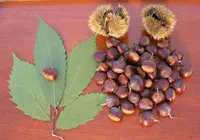
Recognize American chestnut by its long, narrow, alternate leaves, usually 5 to 10 inches (13 to 25 cm) long, with sharp forward-pointing teeth.

Mature trees often have straight trunks, and the nuts form in round burs lined with many dense spines.

Castanea dentata Identification

Identify Your Plant with Botan

Upload a plant photo and check the identification in seconds.

Clear images work best. Avoid photos taken too close or too far away

Check the leaves, burrs, and bark on Castanea dentata.

  • Leaves are simple and alternate, long and narrow, usually 5-10 inches (13-25 cm) long, with many straight side veins ending at sharp teeth.
  • Leaf bases are mostly tapered or rounded, not strongly heart-shaped; tips are long-pointed.
  • Fruits sit inside round, very spiny green burrs that split open; each burr commonly holds 2-3 glossy brown nuts.
  • Bark on older trunks is gray-brown with long, shallow ridges and flat-topped plates.

Use several traits together, especially leaf shape and the spiny burrs.

Castanea dentata shows clear visual changes from early shoots to spiny fruiting branches.

  • Seedling: Seedlings usually have a single upright stem with a few alternate leaves. Early leaves are thinner, smaller, and less strongly toothed than later growth.
  • Young plant: Young plants form a narrow sapling with long, lance-shaped leaves often 5-10 inches (13-25 cm) long, and more obvious parallel side veins.
  • Flowering stage: Flowering branches carry many pale, upright catkins near the ends of new shoots, making the crown look temporarily fuzzy and lighter than nonflowering growth.
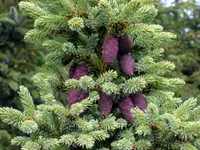
  • Fruiting stage: Fruiting twigs show round, densely spiny burs that replace catkins. These burs hang among leaves and make branch tips look heavier and more textured.

In spring, Castanea dentata leafs out with long, sharply toothed leaves, and by early summer it shows pale, upright flower spikes that can make a tree stand out from nearby hardwoods. By fall, the foliage turns yellow to yellow-brown before dropping. Spiny burs become obvious in late summer into fall, then split open to reveal the chestnuts. Winter exposes the straight twigs and furrowed bark more clearly.

Several chestnut relatives and one common tree can be mistaken for American chestnut.

Chinese chestnut(Castanea mollissima)

Similar long, toothed leaves and spiny burs. Chinese chestnut usually has broader, thicker leaves with a more rounded base, and its twigs and leaf undersides are noticeably hairy.

sweet chestnut(Castanea sativa)

Also has long serrated leaves and chestnut burs. It is usually told apart by leaves that are broader and less sharply tapered, with fewer obvious bristle-tipped teeth.

sawtooth oak(Quercus acutissima)

Often confused at a glance because the leaves are long and strongly toothed. Unlike chestnuts, its fruits are acorns in scaly cups, not spiny burs.

Castanea dentata is native to eastern North America, from southern Maine and Ontario south along the Appalachian region to northern Georgia, Alabama, and Mississippi. Knowing that range helps separate it from similar chestnuts planted outside this area. In the wild, it occurred in deciduous forests, especially well-drained uplands, ridges, slopes, and coves. Finding a chestnut in eastern hardwood woodland, rather than wetlands or coastal habitat, makes Castanea dentata a more plausible identification.

Does Your Plant Match?

Use Botan to compare a photo and help confirm the plant, which can save time before you label, buy, or remove it.

FAQ

Leaves are usually about 5 to 8 inches long (13 to 20 cm), sometimes longer, and around 2 inches (5 cm) wide. For identifying American chestnut, note the long, narrow blade and sharply toothed edge.

More Plant Identification Guides

Find the Plant. Get the Details.

Identify a plant from a photo with Botan, then review plant details, care information, and common problems for that species.

Botan app identifying a plant from a photo
How to Use a Moisture Meter for Plants

5 min read · 4 Sept 2026

How to Use a Moisture Meter for Plants

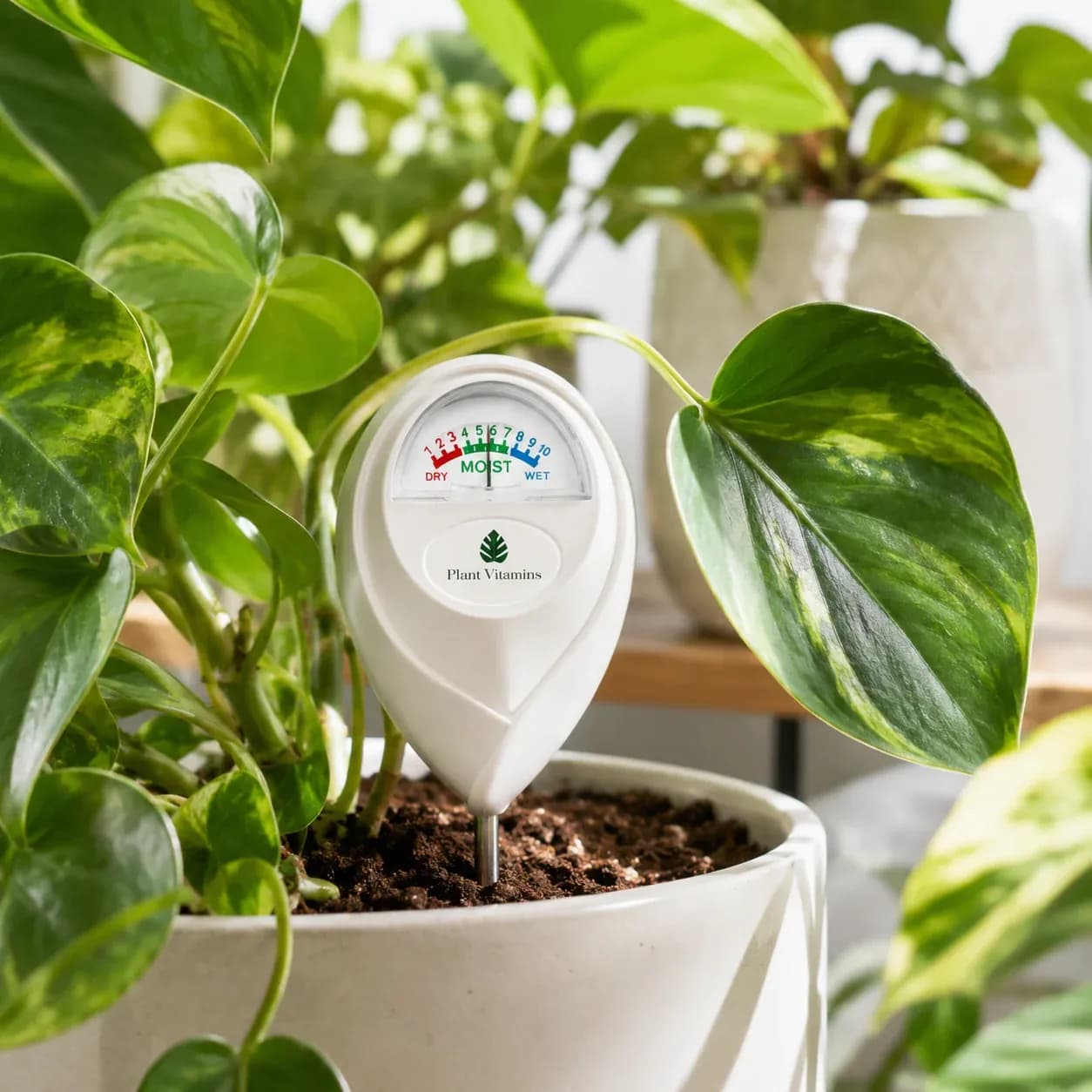
Watering by feel kills plenty of houseplants. A moisture meter checks the soil for you, and takes the guesswork out of it. This guide will show you how to use it correctly, from the first touch to the final reading.

Beginner Guides

How to Use a Moisture Meter for Plants
Best Bedroom Plants – Top 10 to Grow in Your Space

8 min read · 8 Jul 2026

Best Bedroom Plants – Top 10 to Grow in Your Space

Discover the top 10 houseplants that are suitable for growing in your bedroom. Compare their light and water needs, pet safety, and benefits. Find out where best to place greenery in your relaxation space and what species to avoid.

Plant Recommendations
Best Bedroom Plants – Top 10 to Grow in Your Space
8 Glow-in-the-Dark Plants and Fungi That Really Exist

8 min read · 6 Nov 2026

8 Glow-in-the-Dark Plants and Fungi That Really Exist

Plants that glow in the dusk really exist. Some of them produce their own light, while others need UV exposure or special treatments. Explore eight fascinating examples, including glowing petunias, bioluminescent mushrooms, fluorescent flowers, and experimental succulents.

Plant Recommendations
8 Glow-in-the-Dark Plants and Fungi That Really Exist