
Sugar Pine Identification (Pinus lambertiana)

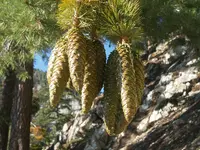
To recognize Sugar Pine, check for needles in bundles of five, each often 3 to 4 inches (8 to 10 cm) long, and very long hanging cones that commonly reach 10 to 20 inches (25 to 50 cm).

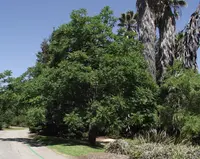
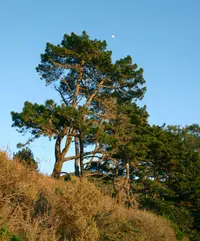
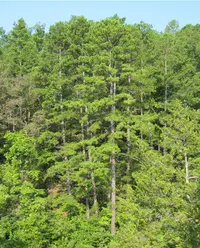
Mature trees also show a straight trunk and broad, open crown.

Pinus lambertiana Identification

Is This Sugar Pine?

Not sure about your plant ID? Upload a photo and check it with Botan.

Clear images work best. Avoid photos taken too close or too far away

Check the needles, cones, and branch form first for a fast visual read.

  • Needles grow in bundles of five, forming soft tufts at twig tips.
  • Each needle is long and slender, often about 3 to 4 inches (8 to 10 cm).
  • Cones hang down and are very long, usually 10 to 20 inches (25 to 50 cm).
  • Branch tips often droop slightly, giving the crown a loose, layered outline.
  • The trunk is straight and massive, with a tall, narrow crown on mature trees.

Very long hanging cones are the quickest confirming feature when present.

Pinus lambertiana shows clear age-related changes in crown form, bark, and cone display.

  • Seedling: Seedlings show a slender stem with soft juvenile needles, then soon shift into dense needle bundles rather than the sparse first leaves.
  • Young plant: Young plants are narrow and conical, with regular whorled branches and smooth gray bark; long, drooping needles stand out on outer branch tips.
  • Mature plant: Mature trees develop a broad, more open crown and thick, furrowed bark; the straight trunk can exceed 6 feet (1.8 m) across.
  • Fruiting stage: Cone-bearing trees are especially distinctive, carrying hanging seed cones 10-20 inches (25-50 cm) long near branch ends, far larger than on younger plants.

Pinus lambertiana stays evergreen, so there is no fall leaf drop to mark the seasons. The clearest visual shift is in spring, when pale new shoots and fresh needle clusters appear at branch tips. By late summer into fall, the species is especially recognizable if cones are present. Its very long, hanging cones become conspicuous as they mature, while winter still shows a full crown of persistent blue-green needles.

A few western white pines are the main visual look-alikes.

western white pine(Pinus monticola)

Often confused with Pinus lambertiana because both have bundles of five needles and long, narrow cones. Western white pine usually has much shorter cones, often 5 to 10 inches (13 to 25 cm), not the very long 10 to 20 inch (25 to 50 cm) cones typical here.

limber pine(Pinus flexilis)

Another five-needle pine that can resemble young trees. Limber pine is usually smaller overall and has shorter, stouter cones, commonly 3 to 6 inches (8 to 15 cm), rather than the hanging, very long cones seen on sugar pine.

Native to the mountains of southwestern Oregon and California, especially the Sierra Nevada, Pinus lambertiana is most often found in mixed-conifer forests. It usually grows on montane slopes and ridges at about 2,000 to 7,500 feet (600 to 2,300 m). This range helps narrow identification because it is a high-elevation western pine rather than a lowland or coastal species.

Confirm the Species with Botan

Upload a photo to compare key details and get help identifying the plant or confirming the name before you label it.

FAQ

The standout trait is its huge hanging cones, often 10 to 20 inches (25 to 50 cm) long, the longest of any pine. Needles are also in bundles of five, helping with Sugar Pine identification.

More Plant Identification Guides

Identify First. Learn What Comes Next.

Use a photo to identify the plant, then see care information, common problems, and other species-specific details in Botan.

Botan app identifying a plant from a photo
What Do Plants Need to Grow – 5 Things Every Greenery Can't Live Without

8 min read · 31 Jul 2026

What Do Plants Need to Grow – 5 Things Every Greenery Can't Live Without

To keep plants healthy and thriving, provide the right balance of light, humidity, nutrients, airflow, and quality soil. This guide covers the essentials of year-round plant care.

Beginner Guides
What Do Plants Need to Grow – 5 Things Every Greenery Can't Live Without
Best Fertilizer for Grass in Summer: How to Choose the Right One

6 min read · 18 Aug 2026

Best Fertilizer for Grass in Summer: How to Choose the Right One

The right fertilizer in summer can make a lawn thrive. The wrong one can damage it. Here, you’ll learn the best NPK ratios by grass type, when and how to apply your formula, and how to recognize the signs of over- or under-fertilizing.

Plant Care
Best Fertilizer for Grass in Summer: How to Choose the Right One
When to Harvest Tomatillos: How to Tell When They're Ripe

4 min read · 20 Oct 2026

When to Harvest Tomatillos: How to Tell When They're Ripe

Tomatillos grow inside papery husks, making it hard to judge ripeness at a glance. This guide explains how to know when tomatillos are ripe and offers practical advice on harvesting and storage.

Plant Recommendations
When to Harvest Tomatillos: How to Tell When They're Ripe