Best Bedroom Plants – Top 10 to Grow in Your Space
Discover the top 10 houseplants that are suitable for growing in your bedroom. Compare their light and water needs, pet safety, and benefits. Find out where best to place greenery in your relaxation space and what species to avoid.

On this page
- Plants for the Bedroom – A Comparison Chart
- Top-10 Best Plants for the Bedroom
- 1. Snake Plant (Dracaena trifasciata)
- 2. ZZ Plant (Zamioculcas zamiifolia)
- 3. Pothos (Epipremnum aureum)
- 4. Heartleaf Philodendron (Philodendron hederaceum)
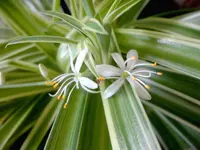
- 5. Spider Plant (Chlorophytum comosum)
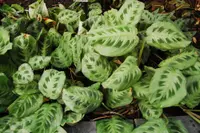
- 6. Prayer Plant (Goeppertia concinna)
- 7. Chinese Evergreen (Aglaonema modestum)
- 8. English lavender (Lavandula angustifolia)
- 9. Arrowhead Vine (Syngonium podophyllum)
- 10. Southern Sword Fern (Nephrolepis exaltata)
- 5 Plants to Avoid in the Bedroom
- Where to Put Plants in the Bedroom
If your bedroom is not cozy for sleep, think about a green corner. The best plants for the bedroom combine aesthetic appeal, easy care based on prompts from Botan, benefits for the air, and a calming effect.
In this guide, we’ll compare the 10 best bedroom plants, consider where to place them, and find out which greenery to avoid in the sleeping area.

Plants for the Bedroom – A Comparison Chart
When choosing plants for the bedroom, remember that different species are suitable depending on the space’s light level, watering schedule, and other conditions in your relaxation area:
Plant | Light | Water | Pet Safe | Benefit |
Snake Plant (Dracaena trifasciata) | Bright Low | Requires little water | Toxic to dogs and cats | Removes air toxins |
ZZ Plant (Zamioculcas zamiifolia) | Low Medium | Needs water once a month during winter and twice a month during summer | Medium toxicity to pets | Low-meintenance |
Pothos (Epipremnum aureum) | Bright indirect Low | Needs soil drying between waterings | Toxic to dogs and cats | Cascading stems |
Heartleaf Philodendron (Philodendron hederaceum) | Medium Low | Moderate moisture | Toxic to pets | Cleans air from formaldehyde |
Spider Plant (Chlorophytum comosum) | Medium Low | Prefers moist soil. Also, it can thrive in dry soil | Non-toxic to dogs and cats | Removes air pollution |
Prayer Plant (Maranta leuconeura) | Medium | Grows well in moist conditions | Non-toxic to pets | Creates a tropical atmosphere |
Chinese Evergreen (Aglaonema modestum) | Medium | Requires soil moistening from spring to fall. In winter, you can reduce watering. | Toxic to cats and dogs | Increases the air humidity |
English lavender (Lavandula angustifolia) | Bright sunlight | Needs to be watered slightly when the soil is dry | Toxic to dogs and cats | Has a pleasant aroma that calms |
Arrowhead Vine (Syngonium podophyllum) | Medium | Requires moderate and regular watering | Toxic to dogs and cats | Soothing color |
Southern Sword Fern (Nephrolepis exaltata) | Medium | Needs moist soil | Non-toxic to pets | Increases air humidity |

Identify Your Plant
Scan the plant and get a result with 98% accuracy
Top-10 Best Plants for the Bedroom
The best bedroom plants discussed below are easy to care for and have properties that create a calming atmosphere in your relaxation area. Some species produce oxygen at night, others purify the air of pollutants, while certain plants have pleasant colors and scents that reduce stress and create a relaxing oasis.
1. Snake Plant (Dracaena trifasciata)

The tropical greenery native to Central Africa is well known for its upright, sleek, sword-shaped leaves with horizontal patterns of dark green or silver color. This herbaceous perennial tolerates direct sunlight, but for 2-6 hours a day, the rest of the time it prefers low-light conditions.
This plant in the bedroom not only produces oxygen at night but also removes air toxins, such as formaldehyde, benzene, and xylene. Such a benefit is useful for sleep.
2. ZZ Plant (Zamioculcas zamiifolia)

ZZ Plant is an evergreen herbaceous plant that has firm, feather-shaped leaves that grow upwards. This greenery is not picky about light conditions: it can grow both in an area with low light under a fluorescent lamp and in a place with indirect sunlight.
However, direct sunlight can lead to scalding and browning of leaves. Among the good plants for the bedroom, this option is valuable due to its low maintenance.
3. Pothos (Epipremnum aureum)

Pothos is an evergreen indoor vine that pays attention with its glossy, heart-shaped leaves with green, white, cream, or yellow flecks. This houseplant grows well in a space with bright, indirect light.
However, it can also feel good in a dark room. Pothos has long cascading stems that create a calm atmosphere, which, in turn, can help to relax before sleeping.
4. Heartleaf Philodendron (Philodendron hederaceum)

This tropical evergreen is easy to identify by its glossy dark-green heart-shaped leaves decorated with yellow flecks and cascading stems. Without support, it grows like a trailing vine, while if you stand it on a special grate, this greenery can climb.
Medium sunlight is most suitable for Heartleaf Philodendron, but it can also grow well in low light. When asking about what plants are good for bedrooms, pay attention to this green friend, as it perfectly absorbs formaldehyde, which is one of the causes of problems with sleep.
5. Spider Plant (Chlorophytum comosum)

This classic herbaceous houseplant, which naturally grows in tropical West Africa, has arching green leaves with white stripes in the middle. Like grass, this greenery produces many long shoots with small plants at the end resembling little spiders on tiny legs.
Spider Plant is perfectly adaptable to both bright indirect light and shade, while direct sunlight can be harmful. Since it produces oxygen at night and removes air from formaldehyde, benzene, and xylene, this greenery is perfectly suitable for sleeping zones.
6. Prayer Plant (Goeppertia concinna)

If plant bedroom ideas creating a tropical atmosphere that relaxes and calms inspire you, pay attention to this clumping-forming greenery. It is unique with its striking pattern consisting of alternating V-shaped stripes of dark green and light green on the rounded, oval, or paddle-shaped leaves.
They have one interesting habit – in daylight they are open, while at night they fold up, resembling a person’s palms during prayer. Regarding care, Goeppertia concinna prefers bright indirect light, while direct sunlight can lead to scorching the leaves.
7. Chinese Evergreen (Aglaonema modestum)

This is one of the most common houseplants, native to tropical and subtropical areas of Southeast Asia and New Guinea. Lance-shaped green leaves with white or silver patterns and 5-8 lateral veins that are erect and bushy are clear signs that make the shrub a good accent in the sleeping space.
Indirect light or diffuse sunbeams are the most suitable for the greenery. Chinese Evergreen is a good choice for the bedroom because it increases indoor humidity, making it easier to breathe while sleeping.
8. English lavender (Lavandula angustifolia)

English lavender is a universal dwarf shrub that is widespread in Mediterranean areas. This evergreen is valued above all for its pleasant fragrance, which permeates its small purple flowers and narrow, elongated gray-green leaves. One lavender bush can grow to 2 feet tall and 3 feet wide, provided it receives a lot of sunlight.
Although this plant is not typical for indoor cultivation, it can also stand in the bedroom due to its soothing properties of natural aroma.
9. Arrowhead Vine (Syngonium podophyllum)

The American evergreen shrub can be identified by its pale, shimmering green leaves that change their appearance depending on age. In young plants, they are arrowhead-shaped, while adult ones have lobed foliage.
The tropical perennial greenery requires bright light with shade. Thanks to its soft shapes and soothing color, this plant is perfect for the bedroom.
10. Southern Sword Fern (Nephrolepis exaltata)

Southern Sword Fern, which is often called Boston Fern, usually grows in the humid forests of tropical and subtropical areas of America. However, due to its emerald green feather-shaped leaves tapering upward, it began to grow actively as a herbaceous houseplant in North Carolina and other USDA zones.
Boston Fern thrives in a space with bright indirect light. It is useful for the sleeping zone as it increases air humidity, which reduces dryness, the main reason for catching at night.
5 Plants to Avoid in the Bedroom
Not every houseplant is suitable for the bedroom due to high toxicity to people, large size, spines or sharp leaves, strong fragrance, or careful care. Let’s take a look at 5 species that you should avoid placing in your sleeping space:
- Cacti. Such plants have sharp spines that may cause injury in active children and pets if you place them on the nightstand.
- Chinese Jasmine. Although this plant with white or pale pink flowers smells pleasant, its fragrance may be concentrated in a small sleeping space. In addition, Chinese Jasmine requires bright light and careful care.
- Nerium oleandr. In addition to full sun conditions, this plant is poisonous if consumed. And according to the ASPCA, it can even change the heart rhythm in cats.
- Dieffenbachia. Its calcium oxalate in the composition can cause excessive salivation, swelling, irritation of the mouth, and even loss of speech when chewing or swallowing. And the sap of this plant can cause a rash, swelling, and redness of the skin, as well as eye irritation upon contact.
- Japanese Sago Palm. In addition to its huge size, the Japanese Sago Palm is poisonous in full: if your pet eats its seeds or leaves, symptoms such as severe vomiting, bloody diarrhea, loss of appetite, and seizures may appear within just a few minutes. If treatment is not provided in time, liver failure may develop.
This doesn’t mean that these plants are completely unsuitable for growing indoors: you can place them in other rooms with more suitable conditions, or in areas where children and pets can’t reach them.
Where to Put Plants in the Bedroom
Placing the plant in the right place in the bedroom ensures enough space for growth, the optimal amount of light, and the necessary humidity:
- Nightstand – compact plants, such as Prayer Plant, Chinese Evergreen, Heartleaf Philodendron.
- Windowsill – greenery that needs bright sunlight, like English lavender.
- Dresser top – medium-sized plants that grow upright or in clumps, such as Chinese Evergreen, ZZ plant, and Snake Plant.
- Floor corner – species that grow upright, such as Boston Fern.
- Hanging basket – trailing plants, whose shoots hang down or trail (young Boston Fern, Pothos, Heartleaf Philodendron, Spider Plant, or Arrowhead Vine).
If you are unsure what kind of greenery you have, identify the houseplant via the Botan app and find out if it is suitable for your bedroom. You can also ask the expert about where to put plants in the bedroom and what care they require to grow healthy.
FAQ
Plants are good for growing in the bedroom, as they produce oxygen, purify the air of pollutants, and calm the nervous system, which, in turn, promotes restful sleep.
Dariia Plaksina
Botanist
5 years of botanical research experience
Dariia Plaksina is a biologist, botanist, and writer of informational articles with over 5 years of experience exploring the world of plants, nature, and biology. She studied at Taras Shevchenko National University of Kyiv, Educational and Scientific Center “Institute of Biology and Medicine,” where she built a strong scientific foundation for her future work.
For Dariia, writing is a hobby, a calling, and a way to make reliable knowledge easier to understand. Her articles focus on plant care, plant health, and natural processes, helping readers learn more about the living world through clear, accessible, and science-based explanations.
Related Articles

4 min read · 20 Oct 2026
When to Harvest Tomatillos: How to Tell When They're Ripe
Tomatillos grow inside papery husks, making it hard to judge ripeness at a glance. This guide explains how to know when tomatillos are ripe and offers practical advice on harvesting and storage.
8 min read · 16 Oct 2026
20 Funny Plant Names That Make You Laugh
Some plants carry names that sound like jokes. This guide explains the origins of 20 funny plant names. You will also see which of these plants you can grow at home.

7 min read · 13 Oct 2026
12 Best Cold-Hardy Vegetables for Cold Weather
Cold-hardy vegetables can keep a garden productive through chilly fall, winter, and early spring weather. This guide covers 12 reliable crops, their frost tolerance, and practical growing tips for better cold-season harvests.
Explore Plants by Care Needs

Identify the plant and problem. Help your plant recover
Identify plant problems early, understand what's wrong, and get clear care guidance. Botan helps you turn guesswork into confident plant care