


black walnut Identification (Juglans nigra)

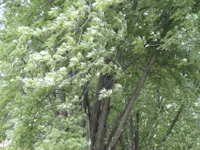
To recognize black walnut, look for very long alternate compound leaves, usually 12 to 24 inches (30 to 60 cm) long, with many narrow leaflets along one central stalk, plus large round green husked fruits about 2 inches (5 cm) wide.

Mature trees also show dark, deeply furrowed bark in long interlacing ridges.

Juglans nigra Identification

Check Your Plant with Botan

Upload a clear photo to check your plant identification with Botan.

Clear images work best. Avoid photos taken too close or too far away

Check black walnut for a tall tree form with very large compound leaves and round husked fruits.

  • Leaves are alternate and feather-like, usually 12-24 inches (30-60 cm) long.
  • Each leaf commonly carries 15-23 narrow leaflets, pointed with fine toothed edges.
  • Leaflets line the central stalk in pairs, with the end leaflet small or sometimes missing.
  • Twigs are stout, and the bark forms dark, rough ridges that cross into diamond-like patterns.
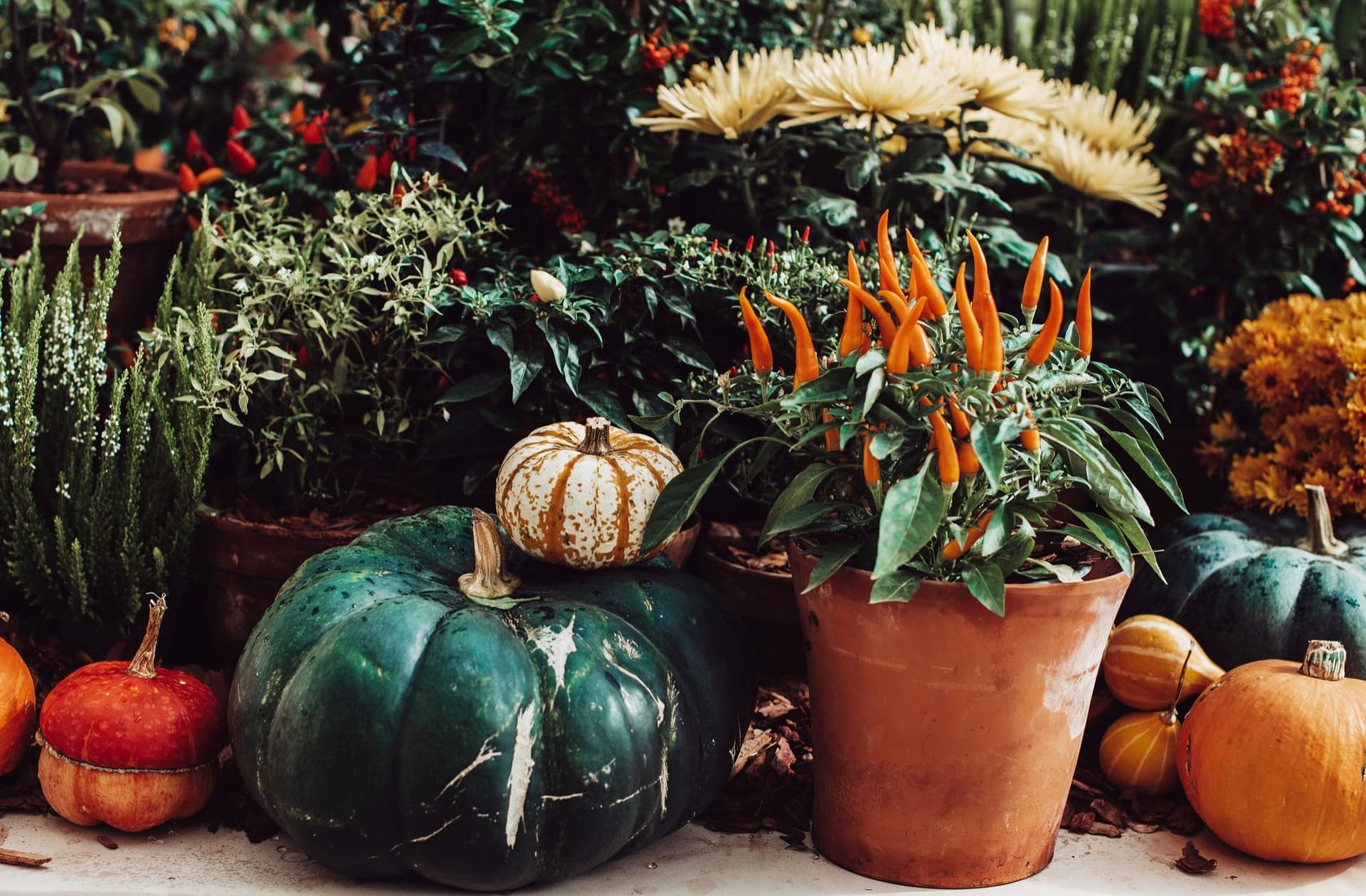
  • Fruits are nearly round, about 2-2.5 inches (5-6 cm) wide, with a thick green husk.

The leaf size, high leaflet count, and husked round fruits are the fastest visual clues.

Juglans nigra shows clear visual shifts from seedling to fruiting tree, useful for identification.

  • Seedling: First growth shows a straight green stem with alternate compound leaves; leaflets are fewer and larger-looking than on older saplings, giving a sparse outline.
  • Young plant: Saplings develop long, pinnate leaves often 12-24 inches (30-60 cm) long, with many narrower leaflets and stronger side branching than seedlings.
  • Mature plant: The crown becomes broad and high, with a thick dark trunk, deeply furrowed bark, and stout ascending limbs replacing the smoother stems of youth.
  • Fruiting stage: Female flowers give way to round green husked walnuts hanging singly or in small clusters, adding visible weight and droop to outer branchlets.

In spring, black walnut leafs out with long compound leaves, and drooping male catkins become easy to spot as the tree flowers. By late summer into fall, round green husked fruits are often visible and can litter the ground beneath the canopy. After leaf drop in fall, the stout twigs, chambered pith, and deeply furrowed dark bark are more visible, giving the tree a heavier, rugged winter outline.

A few walnut relatives are regularly mistaken for Juglans nigra.

English walnut(Juglans regia)

Both are large trees with pinnate leaves and round nuts. English walnut usually has 5-9 broader leaflets, often with smoother margins. Its husked fruit is more smooth and less rough than black walnut.

butternut(Juglans cinerea)

This is another walnut with long compound leaves and similar branching. Butternut leaflets are usually more numerous, often 11-17, and the fruit is oblong rather than round.

pecan(Carya illinoinensis)

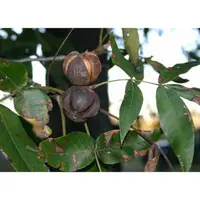
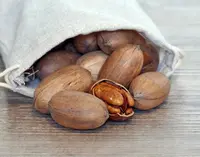
Pecan can suggest walnut from a distance because it also has long pinnate leaves. The quickest check is fruit: pecan makes a narrow, elongated nut, not a round husked walnut.

Juglans nigra is native to eastern and central North America, from southern Ontario and the northeastern US west to the Great Plains, and south to Georgia, Alabama, and eastern Texas. It is most often found in rich bottomland woods, floodplains, stream banks, and moist lower slopes. Finding a walnut in these fertile inland habitats helps separate it from species more typical of drier uplands or coastal sites.

  • Ingestion risk: The nuts and hulls of Juglans nigra can cause stomach upset if eaten in quantity, and moldy nuts are a greater concern. This is mainly an ingestion issue for humans, dogs, and livestock.
  • Skin contact: The green husk around the fruit contains juglone and staining compounds. Handling the husk can irritate sensitive skin and causes strong brown staining on hands and clothing.

Confirm the Species with Botan

Upload a photo to help identify the plant or confirm your result before you label it or make planting decisions.

FAQ

A strong clue in black walnut identification is the large pinnate leaf with 15 to 23 narrow leaflets, usually lacking a terminal leaflet, plus round green husked fruits and dark, deeply furrowed bark on mature trees.

Everything About black walnut

More Plant Identification Guides

Identify the Plant and Get Its Profile

Use Botan to identify a plant from a photo, then review plant details, care information, and common problems.

Botan app identifying a plant from a photo
Banana Peel Water for Plants: 5 Things to Know Before Trying It

5 min read · 9 Jul 2026

Banana Peel Water for Plants: 5 Things to Know Before Trying It

Banana water can provide potassium and some nutrients that may support plant growth, but it is not a universal fix. Use it carefully and only when the plant actually shows signs of nutrient deficiency rather than as a routine treatment.

Plant Care

Banana Peel Water for Plants: 5 Things to Know Before Trying It
Can Plants Grow With Artificial Light?

6 min read · 15 Sept 2026

Can Plants Grow With Artificial Light?

Plants can grow under artificial light when the setup provides a suitable spectrum, enough intensity, and sufficient daily exposure. This guide explains how artificial lighting compares with sunlight, which options work indoors, and how to match a setup to houseplants.

Plant Care
Can Plants Grow With Artificial Light?
15 Best Scary Halloween Plants and Fungi for a Spooky Garden

8 min read · 9 Oct 2026

15 Best Scary Halloween Plants and Fungi for a Spooky Garden

Want a garden that looks eerie in October? Here are 15 Halloween plants and fungi, from carnivorous traps to bleeding mushrooms. For each species, we cover its appearance, care requirements, and potential uses in your landscape.

Plant Recommendations
15 Best Scary Halloween Plants and Fungi for a Spooky Garden