Plan root clearance
Before planting, map a 50–70 ft radius where roots and shade will expand, and keep buildings, septic lines, and paved areas out of this zone to prevent long‑term structural conflicts.

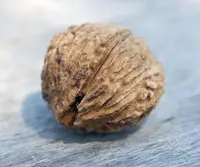
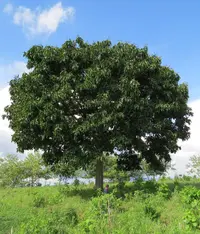
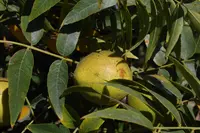
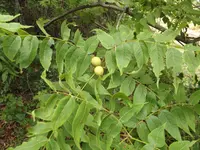
Black walnut, Juglans nigra, is a large, long-lived deciduous tree valued for its dark, dense timber and edible nuts. It develops a broad, rounded crown and strong central trunk, creating deep, shifting shade as it matures.
This species is native to eastern North America, where it grows in rich forests and along river valleys. It produces a chemical called juglone in its roots, leaves, and husks, which can inhibit the growth of many nearby plants and makes site selection important when you care for black walnut.
Black walnut prefers full sun, deep, well-drained soil, and consistent moisture in its early years, and it generally suits larger gardens or rural properties rather than small urban yards.

Care Difficulty
Moderate Care

Light Preference
Full Sun

Water Requirements
Moderate Water

Temperature Preference
Cold Hardy

Hardiness Zone
4–9

Soil Texture
Loamy, Sandy, Clay

Soil pH
Acidic (5.5–6.5), Slightly acidic (6.5–7.0)

Soil Drainage
Moist but well-drained

Fertilization
Minimal (feed rarely)
Scan your plant to receive care tips personalized for your specific plant
Available on iOS and Android
Juglans nigra develops best with strong outdoor light from an open, unshaded position.
Juglans nigra prefers consistent soil moisture but dislikes prolonged saturation.
This species is adapted to temperate climates with cold winters and warm summers.
Humidity is not a critical factor for Juglans nigra, which thrives in typical outdoor conditions.
Juglans nigra performs best in deep, fertile, well-structured soil that remains moist but never waterlogged.
This species is generally unsuitable for long-term container growing due to its large, deep root system and mature size.
Juglans nigra usually grows well in average soil, but targeted feeding can support nut production and early growth.
Pruning Juglans nigra focuses on structure and safety rather than frequent shaping.
Black walnut develops a deep taproot early, so long-term container culture is impractical and transplanting must be timed carefully.
Juglans nigra is propagated mainly from seed, which demands patience and specific conditions for good germination.
Juglans nigra is fully cold hardy across most temperate regions and generally needs minimal winter care once established.

Plant Health Check
Not sure what's wrong with your plant? Check your plant's health inside the app.
Black walnut roots, leaves, and husks release a compound called juglone, which can inhibit or kill many nearby plant species, especially within the root zone where concentrations are highest.
Young black walnut trees develop a strong, deep taproot early in life, which anchors the tree and allows access to deeper soil moisture, making transplanted specimens difficult to move once established.
The dark, dense heartwood of black walnut is prized for fine furniture, veneer, and gunstocks, and long-term timber plantings of this species are often managed as high-value forestry investments.

Archaeological evidence indicates that Indigenous peoples and early settlers in eastern North America actively managed and transported black walnut, so many current wild-looking stands actually reflect centuries of human selection and dispersal rather than purely natural distribution.
Yes, this tree is commonly started from fresh nuts. Seeds need cold stratification to break dormancy, then are sown outdoors or in deep pots. Seedlings develop a strong taproot, so transplant carefully while young for successful growing black walnut.
Keep your plants happy and healthy with plant identification, disease detection, and easy care guidance.