Deep root establishment
During the first 2–3 years, irrigate less often but for longer sessions to encourage a deep, wide root system that anchors the tree and improves drought tolerance when growing Mexican walnut.

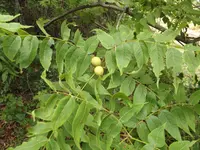
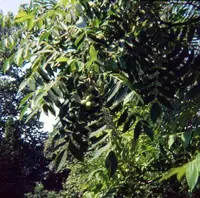
Mexican walnut (Juglans mollis) is a deciduous tree valued for its edible nuts and sturdy wood. It forms a broad crown with strong branches and attractive, pinnate leaves.
This species is native to Mexico, where it grows in montane and semi-arid forests, often on rocky slopes. It typically develops a deep root system and a strong trunk, which makes it well suited to open landscapes.
The tree prefers full sun, well-drained soil, and moderate moisture, and it is relatively tolerant of drought once established. Understanding these basic needs helps guide how to care for Mexican walnut in gardens or small orchards.

Care Difficulty
Moderate Care

Light Preference
Full Sun

Water Requirements
Moderate Water

Temperature Preference
Warm Climate

Hardiness Zone
8–10

Soil Texture
Sandy, Loamy, Rocky

Soil pH
Slightly acidic (6.5–7.0), Neutral (7.0)

Soil Drainage
Well-drained

Fertilization
Minimal (feed rarely)
Scan your plant to receive care tips personalized for your specific plant
Available on iOS and Android
Juglans mollis performs best in open, bright conditions typical of its native upland habitats.
Juglans mollis prefers evenly moist, deep soils but does not tolerate standing water.
This species is adapted to warm, seasonally dry climates with mild to moderate winter cold.
This species is adapted to relatively dry upland climates, so humidity is rarely a limiting factor for Juglans mollis.
Juglans mollis prefers deep, well-structured mineral soils that stay evenly moist yet drain freely.
This tree is generally unsuited to long-term container growing and is best kept in containers only at the seedling or very young sapling stage.
Juglans mollis is a long-lived tree that benefits from modest, targeted feeding on poor soils only.
Juglans mollis benefits from light, structured pruning to maintain a safe, balanced crown.
This deep-rooted species is seldom container-grown; focus on careful transplanting of young Juglans mollis trees.
This species is usually propagated from seed, and propagation of mature Juglans mollis can be slow and technically demanding.
Established Juglans mollis trees are cold hardy in suitable regions and typically need minimal winter care.

Plant Health Check
Not sure what's wrong with your plant? Check your plant's health inside the app.
This walnut species is naturally restricted to highland regions of Mexico, especially in the Sierra Madre Oriental, where it grows in dry oak and pine-oak forests rather than in moist lowland habitats typical of some other walnuts.
The nuts have a notably thick, hard husk and shell, which protect the seed from many predators and make natural seedling establishment slower and more selective.
In its native range this tree experiences pronounced dry seasons and shows relatively high drought tolerance compared with many temperate walnuts, allowing it to persist on rocky slopes and shallow soils.

The species name mollis refers to the comparatively soft, somewhat hairy leaf undersides, which contrast with the usually smoother, less pubescent foliage of several other walnut species.
This tree has a moderate growth rate, typically adding 30–60 cm in height per year under good conditions. Growth slows in poor, shallow, or very dry soils and at higher, colder sites within its native range.
Keep your plants happy and healthy with plant identification, disease detection, and easy care guidance.