Shelter From Wind
Site the plant where it is shielded from prevailing winds or provide a windbreak, as constant strong wind can dry foliage and distort the naturally layered branch structure.

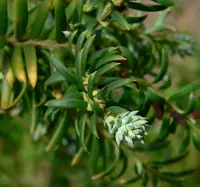
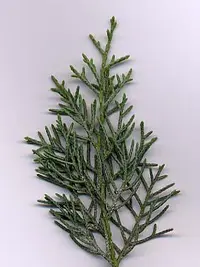
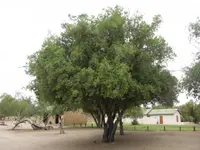
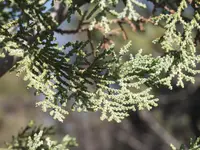
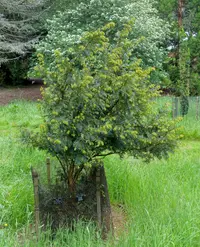
Prince Albert's yew, Saxegothaea conspicua, is a slow-growing evergreen conifer from the cool, moist forests of southern Chile and Argentina. It forms a dense, bushy shrub or small tree with flattened, dark green, yew-like needles.
In gardens it is valued for its refined texture, shade tolerance, and naturally tidy habit. Growth is usually gradual, which makes it suitable for smaller spaces if given time.
This species prefers cool summers, consistent soil moisture, and well-drained, slightly acidic soils. Understanding these conditions is key to how to care for Prince Albert's yew successfully.

Care Difficulty
Moderate Care

Light Preference
Partial Shade

Water Requirements
Regular Water

Temperature Preference
Cool Climate

Hardiness Zone
7–9

Soil Texture
Loamy, Silty, Organic-rich

Soil pH
Strongly acidic (4.5–5.5), Acidic (5.5–6.5)

Soil Drainage
Moist but well-drained

Fertilization
Minimal (feed rarely)
Scan your plant to receive care tips personalized for your specific plant
Available on iOS and Android
This slow-growing conifer prefers cool, sheltered light conditions similar to a moist woodland edge.
This species prefers consistently moist, cool soil but is sensitive to prolonged saturation.
This cool-temperate conifer is adapted to mild, moist climates with limited heat and moderate cold.
This species prefers cool, moist air and reacts poorly to prolonged dryness indoors or outdoors.
Saxegothaea conspicua grows best in consistently moist, cool, acidic soil with a loose, organic structure.
This species can be grown in containers for some years, provided the pot offers cool, stable, well-drained root conditions.
This slow-growing conifer needs only light feeding, especially when young or container-grown Prince Albert's yew plants.
Pruning Saxegothaea conspicua is usually light and focused on keeping a healthy, natural form.
This species is more often transplanted in the landscape than repotted, since it is typically grown as an outdoor conifer.
Propagation of this conifer is possible but slow and often challenging for home growers.
This cool-climate conifer is fairly cold hardy but benefits from basic winter care, especially when young or container-grown.

Plant Health Check
Not sure what's wrong with your plant? Check your plant's health inside the app.
This conifer is a living remnant of the ancient Gondwanan flora, with its closest relatives in New Zealand and Australia, reflecting a deep evolutionary history linked to continental drift.
Its seed cones bear fleshy, berry-like scales that become bluish to purplish and are dispersed mainly by birds, which distinguishes it from many northern-hemisphere yews and other conifers.
In its native range in southern Chile and adjacent Argentina, it thrives in cool, hyper-humid, often fog-laden temperate rainforests, frequently growing under the canopy of taller broadleaf and conifer trees.

In its native southern Chile, Prince Albert's yew was historically valued for its dense, durable wood, which was used on a small scale for fine carpentry and turning, but heavy exploitation and habitat loss have contributed to its current Near Threatened conservation status.
This species grows slowly, typically 5–15 cm per year in garden conditions. Growth is faster in cool, humid climates with consistent moisture and shelter from strong wind, and slower in exposed, dry, or compacted sites.
Keep your plants happy and healthy with plant identification, disease detection, and easy care guidance.