glossy shower Care (Senna surattensis)

Also known as: Sunshine Tree, scrambled-eggs, Solomon-In-All-His-Glory
glossy shower

About glossy shower

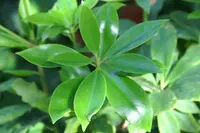
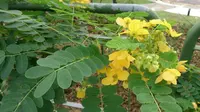
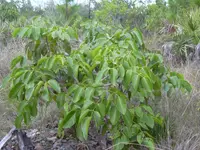
Glossy shower (Senna surattensis) is a fast-growing tropical shrub or small tree valued for its bright yellow flowers and fine-textured, glossy foliage. It often forms a rounded crown and can be used as an ornamental feature or light shade tree in warm climates.

This species is native to South and Southeast Asia but is now planted in many tropical and subtropical regions. It grows best in full sun, with moderate moisture and well-drained soil.

Once established, it is relatively resilient and can tolerate short dry periods, which makes it easier to manage in low-maintenance landscapes. Gardeners who learn how to care for glossy shower usually find it a dependable flowering shrub in suitable climates.

Main Plant Requirements

Care Difficulty

Moderate Care

Light Preference

Full Sun

Water Requirements

Moderate Water

Temperature Preference

Tropical / Frost Sensitive

Hardiness Zone

10–11

Soil Texture

Sandy, Loamy, Organic-rich

Soil pH

Acidic (5.5–6.5), Slightly acidic (6.5–7.0)

Soil Drainage

Well-drained

Fertilization

Minimal (feed rarely)

Get Personalized Care Plan

Scan your plant to receive care tips personalized for your specific plant

Available on iOS and Android

How to Care for the glossy shower

Senna surattensis thrives in strong, direct sun for best flowering and dense foliage.

  • Provide 6–8 hours of direct sun daily; full sun is ideal, but it tolerates light afternoon shade in very hot climates.
  • Use an east or south exposure outdoors so glossy shower receives bright morning sun and avoids the harshest late-afternoon intensity where summers are extreme.
  • In cooler months, ensure it is not shaded by buildings or trees, as prolonged low light reduces blooms and causes leggy, weak growth.

This species prefers evenly moist, well-drained soil that dries slightly between waterings.

  • Water when the top 3–5 cm of soil feel dry, applying a deep soak so moisture reaches the root zone rather than frequent shallow splashes.
  • During hot, dry periods, check soil every 2–3 days; in cooler or rainy seasons, extend intervals and rely more on natural rainfall for Senna surattensis.
  • Install or maintain free-draining soil; yellowing, soft leaves suggest overwatering or poor drainage, while crisp leaf edges and drooping foliage indicate underwatering.

This warm-climate shrub grows best in consistently mild to hot conditions without frost exposure.

  • Optimal growth occurs around 70–90°F (21–32°C), where stems elongate steadily and flowering is most reliable.
  • Minimum tolerance is about 40°F (4°C); brief dips slightly below may scorch foliage, but repeated cold or frost can kill young or unestablished plants.
  • In regions with summer highs above 95°F (35°C), it tolerates the heat if soil moisture is maintained and roots are mulched to limit temperature swings.

This species handles a wide humidity range and rarely needs special humidity management outdoors.

  • Target 40–60% humidity for potted glossy shower kept on patios or near buildings with drying wind or heat sources.
  • Expect mild leaf-edge browning, tip scorch, or faster leaf drop if air stays very dry and hot for long periods.
  • Increase humidity around container plants with grouped pots and a thick organic mulch over the root zone rather than misting foliage.

Senna surattensis prefers freely draining, moderately fertile soil that does not stay waterlogged.

  • Use a sandy or sandy-loam mix with clear particle structure, such as 50% coarse sand, 30% loam, and 20% compost.
  • Aim for slightly acidic to neutral pH, roughly 6.0–7.2, adjusting with sulfur or lime only if tests show strong imbalance.
  • Blend in grit or perlite to improve aeration in heavy native soil so water passes through within a few seconds of watering.
  • Avoid compacted clay, peat-heavy mixes that stay wet, or sites where water pools after rain, which encourages root and stem rot.

This species can grow in containers if the pot is large and very stable.

  • Choose a deep, wide container that allows a substantial woody root system to anchor the tall, shrubby top growth without rocking in wind.
  • Select a heavy material such as clay or concrete if the site is windy, so the container weight counters the plant’s top-heaviness.
  • Elevate the pot on feet or bricks so drainage holes stay clear and excess water escapes quickly after heavy rain or deep watering.

Senna surattensis benefits from moderate feeding to support flowering and foliage in active growth.

  • Use a balanced slow-release fertilizer (around 10-10-10) or well-rotted compost at the start of spring growth.
  • Feed container or young plants every 6–8 weeks during the warm growing season only.
  • Apply fertilizers at half the label strength to avoid salt buildup and root burn.
  • Stop feeding in late fall and through winter, as glossy shower growth slows and nutrients are not needed.

Pruning Senna surattensis maintains a stable framework and encourages heavy flowering.

  • Carry out main pruning in late winter or early spring before vigorous new growth starts.
  • Remove dead, diseased, crossing, or storm-damaged branches with clean, sharp bypass pruners or loppers.
  • Shorten overly long shoots to shape the canopy and keep the shrub or small tree compact and balanced.
  • Lightly thin crowded interior branches to improve light penetration and air circulation around foliage.

This species is usually grown in the ground, so transplanting young plants correctly is more important than frequent repotting.

  • Transplant in late spring or early summer once soil is consistently warm and frost risk has passed.
  • Look for circling roots at the drainage holes or stunted growth as signs a container specimen needs a larger pot.
  • Shift to a container 1–2 in wider using a well-drained mix, gently loosening circling roots without tearing them.
  • Water thoroughly after planting, then keep evenly moist and shaded for 3–7 days to reduce transplant shock.

Senna surattensis is commonly propagated from seeds, with warm conditions needed for reliable germination.

  • Collect ripe pods, then dry and shell seeds, discarding any damaged or shriveled ones.
  • Scarify hard seed coats by lightly nicking with a blade or soaking in hot (not boiling) water for 12–24 hours.
  • Sow in late spring in a free-draining mix, keeping the medium at 70–80°F and lightly moist, not wet.
  • Provide bright light and good air movement; transplant seedlings carefully when roots hold the mix together.

This tropical shrub is frost-sensitive and needs protection in regions with cool or freezing winters.

  • In USDA zones below 10, grow Senna surattensis in containers and move indoors before temperatures drop below 40°F.
  • Site in the warmest, most sheltered part of the garden to reduce cold wind exposure.
  • Apply a 5–8 cm mulch layer around the root zone in fall, keeping it away from direct stem contact.
  • If light frost is expected, cover young or tender plants with breathable fabric supported off the foliage.

Care Tips

Encourage Bushy Form

Pinch or lightly tip-prune new shoots at 10–15 cm length in the first 1–2 years to create a denser canopy and reduce weak, elongated branches that snap in wind.

Wind‑Hardening Young Plants

Gradually expose young plants to stronger breezes over 2–3 weeks or use low, temporary staking so they flex slightly, which strengthens stems and reduces storm damage later.

Flowering Flush Management

After a heavy flowering flush, remove spent clusters and any crossing or inward-growing twigs to direct energy into new flowering wood and keep the crown open for light and air.

Targeted Pod Removal

If self-seeding is a concern, remove developing seed pods while still green and soft, leaving a few only where seed collection is desired to limit unwanted spread and maintain tidiness.

Dry‑Season Pest Checks

During hot, dry spells, inspect the undersides of leaflets every 1–2 weeks for scale insects and mites, and treat early with horticultural oil to keep the foliage clean when growing glossy shower.

Common Pests and Diseases

Caterpillars

This pest commonly feeds on young Senna foliage and flower buds, leaving irregular holes and ragged leaf edges. Symptoms include rapid defoliation on tender shoots, especially during warm, wet periods.

Solution

Hand-pick visible caterpillars and prune heavily infested shoots, then dispose of them away from the plant. For ongoing problems, use Bacillus thuringiensis (Bt), a biological caterpillar control, and encourage birds and predatory insects by maintaining diverse nearby planting.

Leaf miners

These insects tunnel inside leaf tissue, creating winding, pale trails and blotches on the leaf surface. Symptoms include distorted leaves that may yellow and drop prematurely when heavily infested.

Solution

Remove and discard affected leaves as soon as trails are noticed to break the life cycle. For repeated issues, use a systemic insecticide labeled for ornamental shrubs or apply horticultural oil to young foliage to deter new egg-laying, and keep the plant well watered to support recovery.

Scale insects

This pest appears as small, fixed bumps on stems and leaf undersides, often accompanied by sticky honeydew and sooty mold. Symptoms include yellowing foliage, reduced growth, and decline in flowering.

Solution

Gently scrub stems with a soft brush and mild soapy water to remove scales, then rinse well. For heavier infestations, apply horticultural oil or an appropriate systemic insecticide during active growth, and prune out severely affected twigs to improve air and light penetration.

Leaf spot

This disease causes brown to black spots on leaves, sometimes with yellow halos and eventual leaf drop during humid weather. Symptoms include a thinning canopy and reduced vigor when defoliation repeats over several seasons.

Solution

Prune and dispose of affected leaves and twigs, and avoid overhead watering to keep foliage as dry as possible. Improve airflow around the shrub, mulch the soil to reduce splash, and if needed apply a copper-based or other labeled ornamental fungicide at the first sign of spotting.

Powdery mildew

This disease produces a white, powdery film on leaves and young shoots, leading to curling, distortion, and reduced flowering in shaded or crowded plantings. Symptoms include dull, grayish foliage that may age and drop early if the infection is heavy.

Solution

Increase sun exposure and airflow by selective pruning, and avoid excess nitrogen fertilizer that drives very soft, mildew-prone growth. Remove and discard heavily infected leaves and, when conditions favor disease, use a labeled ornamental fungicide or sulfur spray as part of routine Senna surattensis care.

Interesting Facts

Year‑round flower production

In frost‑free tropical and subtropical climates, this species can flower almost continuously, producing successive flushes of bright yellow blooms rather than a single short flowering season.

Specialized ant partners

Its leaf stalks bear small nectar‑secreting glands that attract ants, which in turn can help deter some herbivorous insects from feeding on the foliage.

Sensitive leaf movement

Leaflets fold along the midrib and droop in response to touch, wind, or nightfall, a movement called nyctinasty that reduces exposure and may limit water loss or damage.

Botan icon

Did you know?

Senna surattensis is widely used as a living host plant in tropical Asia for several butterfly species, including the common emigrant (Catopsilia pomona), whose caterpillars feed on its leaves and depend on it to complete their life cycle.

FAQs about glossy shower

Poor flowering usually comes from insufficient light, heavy pruning at the wrong time, or low nutrients. Allow full sun, avoid cutting new wood before flower buds form, and apply a balanced, slow‑release fertilizer at the start of the growing season.

Grow Healthy Plants with Botan Care

Keep your plants happy and healthy with plant identification, disease detection, and easy care guidance.

Botan plant care app — identify plants on mobile

Explore More Plants