Windbreak establishment
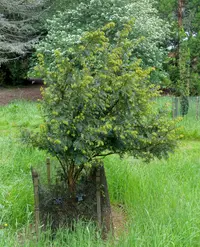
In open or coastal sites, plant a low hedge or install a slatted windbreak on the windward side to protect young trees from branch dieback and leaf scorch caused by strong, drying winds.

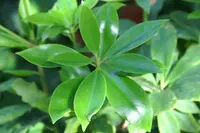
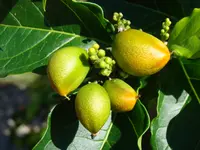
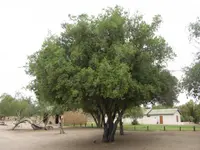
Star anise, Illicium verum, is an evergreen tree grown mainly for its aromatic, star-shaped fruit used as a culinary spice. It has glossy, lance-shaped leaves and small, yellowish flowers, forming a dense, bushy crown when mature.
The species is native to southern China and northern Vietnam and is now cultivated in other warm, humid regions. It is generally considered moderate in difficulty, as it prefers consistently warm conditions and does not tolerate frost.
To care for star anise, provide a sheltered spot with bright light, evenly moist but well-drained soil, and protection from cold, drying winds.

Care Difficulty
Moderate Care

Light Preference
Partial Shade

Water Requirements
Keep Soil Moist

Temperature Preference
Tropical / Frost Sensitive

Hardiness Zone
9–11

Soil Texture
Loamy, Silty, Organic-rich

Soil pH
Strongly acidic (4.5–5.5), Acidic (5.5–6.5)

Soil Drainage
Moist but well-drained

Fertilization
Minimal (feed rarely)
Scan your plant to receive care tips personalized for your specific plant
Available on iOS and Android
This evergreen tree prefers bright, soft light that mimics dappled forest conditions for reliable flowering and star anise production.
This species prefers evenly moist, well-drained soil and reacts quickly to both drought and waterlogged conditions.
This warm-temperate to subtropical tree grows best in stable, mild conditions without hard frost or extreme heat spikes.
This species prefers moderately humid air and reacts to very dry indoor conditions.
Illicium verum grows best in consistently moist, well-aerated, organic-rich soil.
This species can adapt reasonably well to container growing when root space and moisture are carefully managed.
Illicium verum benefits from modest, consistent feeding rather than heavy fertilization.
Pruning Illicium verum is mainly done to maintain structure and remove problem wood.
Illicium verum is most often grown in the ground, so transplanting is more common than container repotting.
Illicium verum is usually propagated from seeds or semi-ripe cuttings under controlled conditions.
Illicium verum is frost-sensitive and needs thoughtful winter management in cooler climates.

Plant Health Check
Not sure what's wrong with your plant? Check your plant's health inside the app.
The characteristic sweet-spicy scent of star anise comes mainly from anethole, the same aromatic compound that dominates in fennel and anise, but its overall flavor profile is modified by a distinct mix of minor aromatic molecules unique to this species.
Fruits are typically collected while still green and unripe, then sun-dried until they turn hard and reddish-brown, a process that concentrates both aroma and flavor in the woody star-shaped carpels.
The closely related Japanese star anise, Illicium anisatum, is poisonous, which is why reliable identification and controlled sourcing of Illicium verum fruits is essential for food use and for Illicium verum plant care in home gardens.

Star anise has become an important industrial crop because its fruits are a commercial starting material for synthesizing oseltamivir, an antiviral drug used in influenza treatment, linking a traditional spice to modern pharmaceutical production.
Yellowing leaves often result from poor drainage, waterlogged roots, nutrient deficiency, or sudden temperature stress. Check for compacted soil, correct watering, and apply a balanced, slow-release fertilizer if the plant has not been fed recently.
Keep your plants happy and healthy with plant identification, disease detection, and easy care guidance.