macadamia nut Care (Macadamia tetraphylla)

Also known as: Rough-shell Queensland Nut, Macadamia, Prickly Macadamia, Roughshell Bushnut, Queensland Nut, Roughleaf Bushnut
macadamia nut

About macadamia nut

Macadamia tetraphylla, commonly called macadamia nut, is an evergreen tree grown for its edible nuts and glossy, leathery foliage. It has a dense, rounded crown and can become a sizable landscape tree in suitable climates.

This species is native to subtropical rainforests of eastern Australia, where it grows in warm, frost-free areas with good rainfall. It is moderately demanding to cultivate, as it needs consistent moisture, good drainage, and protection from hard frosts and strong, drying winds.

Gardeners who care for macadamia nut should also consider its long juvenile phase, since trees may take several years to begin flowering and nut production. It prefers bright light and fertile, slightly acidic soil.

Main Plant Requirements

Care Difficulty

Hard Care

Light Preference

Full Sun

Water Requirements

Moderate Water

Temperature Preference

Tropical / Frost Sensitive

Hardiness Zone

9–11

Soil Texture

Sandy, Loamy, Organic-rich

Soil pH

Strongly acidic (4.5–5.5), Acidic (5.5–6.5)

Soil Drainage

Well-drained

Fertilization

Minimal (feed rarely)

Get Personalized Care Plan

Scan your plant to receive care tips personalized for your specific plant

Available on iOS and Android

How to Care for the macadamia nut

Macadamia tetraphylla grows best in bright, direct sun with some protection from intense afternoon heat.

  • Provide 6–8 hours of direct sun daily, ideally full morning sun with light afternoon shade, especially in hotter regions.
  • Young trees tolerate partial shade, but prolonged shade reduces flowering and nut production, and leads to sparse, leggy growth.
  • In summer, shield from reflected heat and hot western sun; in winter, ensure an open, unshaded position so low-angle sun still reaches the canopy.

Macadamia tetraphylla prefers evenly moist but never waterlogged soil, especially during establishment and active growth.

  • Let the top 3–5 cm of soil dry before watering; in hot, dry periods, this may mean deep watering 1–2 times per week in freely draining soil.
  • Use well-drained, slightly sandy soil; puddling, sour smells, or yellowing leaves with soft stems indicate waterlogging and poor drainage.
  • Leaf wilt, rolling, or premature leaf drop during dry, hot weather signals underwatering; respond with a slow, deep soak rather than frequent light sprinkling.

This species thrives in mild, frost-free climates with warm summers and cool, not cold, winters.

  • Aim for 65–82°F (18–28°C) for active growth; trees handle short peaks up to about 95°F (35°C) if soil moisture is adequate and roots are mulched.
  • Avoid frost: damage occurs near 30–32°F (-1–0°C), and hard freezes below 28°F (-2°C) can kill young trees or new flushes.
  • In regions with cool winters, choose a warm, sheltered microclimate, protect young trees with frost cloth during cold snaps, and avoid planting in low-lying frost pockets.

This species prefers moderately humid air but usually tolerates typical household levels if not extremely dry.

  • Aim for 40–60% relative humidity, especially for young or container-grown macadamia nut trees.
  • Watch for dry, browning leaf tips or edges and slower growth as signs of low-humidity stress.
  • Increase humidity with a nearby open tray of water and stones, grouped plants, or a room humidifier rather than misting leaves.

Macadamia tetraphylla grows best in deep, loose, well-drained mineral soil with moderate organic matter.

  • Use a slightly sandy loam with 20–30% coarse material such as perlite or grit to keep pores open for root aeration.
  • Aim for a slightly acidic pH around 5.5–6.5; avoid strongly alkaline mixes that lock up nutrients and cause leaf yellowing.
  • Blend composted bark, a modest amount of mature compost, and sharp sand to improve structure without becoming heavy or waterlogged.
  • Avoid compacted clay, peat-heavy mixes that stay wet, or sites where water pools after rain, as roots are sensitive to low oxygen.

This species can be grown in containers when young or kept compact, but requires careful pot management due to its eventual tree size.

  • Choose a deep, heavy pot that resists tipping, as the tree becomes top-heavy with a woody trunk and canopy.
  • Select a container material that balances moisture, such as thick-walled terracotta that allows gradual evaporation without extreme drying.
  • Raise the pot on feet or bricks so drainage holes stay clear and excess water can exit rapidly after irrigation.

Macadamia tetraphylla responds well to moderate, consistent nutrition during its active growing season.

  • Apply a balanced slow-release NPK fertilizer in spring as new growth starts, following label rates rather than guessing.
  • Supplement with well-rotted compost or manure around the drip line to improve soil structure and microbial activity.
  • During late spring to summer, a light top-up of slow-release or a half-strength liquid feed every 6–8 weeks supports nut production.
  • Reduce or stop feeding in fall and winter to avoid forcing soft, cold-sensitive growth on the macadamia nut tree.

Macadamia tetraphylla benefits from light structural pruning to maintain a strong, open canopy and accessible fruiting wood.

  • Carry out main pruning in late winter to early spring before vigorous new growth starts.
  • Remove dead, diseased, crossing, or inward-growing branches to improve air flow and light penetration.
  • Shorten overly long shoots to shape the crown and keep fruiting branches at a manageable height.
  • Use sharp, clean bypass pruners or a pruning saw, making smooth cuts just outside the branch collar.

This tree is usually grown in the ground, so focus on careful transplanting and only short-term container culture.

  • Transplant young trees in late winter to early spring when growth is just restarting and conditions are mild.
  • Look for circling roots, stunting, or quick drying of the potting mix as signs a container plant needs a larger pot.
  • Shift up 1–2 pot sizes into a deep container with free-draining, slightly acidic mix, keeping the root flare at soil level.
  • Water thoroughly after planting, then shade and wind-shelter the tree for 1–2 weeks to limit transplant shock.

Macadamia tetraphylla is most often raised from seed or grafted, with cuttings less reliable for home growers.

  • Sow fresh seeds in late winter to spring in a warm (70–80°F), well-drained seed mix, just covered and kept evenly moist.
  • Expect slow, uneven germination; discard any moldy seeds and maintain bright, indirect light for seedlings.
  • For semi-hardwood cuttings, take 10–15 cm pieces in late spring, use rooting hormone, and place in a humid, warm propagator.

This subtropical tree is frost sensitive and needs protection in regions with cold winters.

  • Avoid planting outdoors in areas that regularly drop below about 26–28°F without reliable frost protection.
  • Mulch the root zone with 5–8 cm of organic material, keeping it slightly away from the trunk to insulate soil.
  • Wrap young trunks with breathable frost cloth or horticultural fleece during cold snaps to limit bark damage.
  • Move container-grown trees into a bright, cool indoor or sheltered greenhouse space before the first hard frost.

Care Tips

Wind-training young trees

In the first 2–3 years, stake loosely on the windward side and gradually lower the tie point each season so the trunk flexes slightly, which builds stronger wood and reduces the risk of windthrow once the tree is mature.

Structured scaffold pruning

During years 1–4, select 3–5 evenly spaced primary branches around the trunk and remove steep, crossing, or low branches annually to create an open, bowl-shaped canopy that supports heavy nut crops and improves air flow.

Mulch for root protection

Maintain a 5–8 cm layer of coarse organic mulch in a 60–100 cm radius around the tree, keeping it 5–10 cm away from the trunk, to stabilize soil moisture, limit weed competition, and protect shallow feeder roots from heat and light mechanical damage.

Efficient nut collection

Spread a clean tarp or shade cloth under the canopy during the main drop period and gather fallen nuts every 2–3 days, which reduces losses to rodents, prevents moldy nuts, and makes caring for macadamia nut trees more efficient.

Targeted pest monitoring

From spring through late summer, inspect new flushes and developing nut clusters every 1–2 weeks for chewing damage, webbing, or sooty mold, and act early with appropriate controls so pest populations do not build up to levels that affect the following season’s yield.

Common Pests and Diseases

macadamia nut borer

This pest is a small moth larva that tunnels into developing nuts, feeding on the kernel and causing premature nut drop and internal damage. Symptoms include small entry holes, frass (sawdust-like droppings), and empty or shriveled kernels.

Solution

Collect and destroy fallen and visibly infested nuts to break the life cycle, and avoid leaving culls or husks on the ground. For larger plantings, monitor with pheromone traps and, if thresholds are exceeded, use targeted insect growth regulator or Bacillus thuringiensis (Bt) sprays timed to early nut development, following local extension guidance.

macadamia felted coccid

This pest is a sap-sucking scale insect that forms dense, felt-like white to cream patches on twigs, leaves, and sometimes nuts, leading to dieback and reduced yield. Symptoms include twig distortion, leaf yellowing, and a rough, crusty coating on young stems.

Solution

Prune out and destroy heavily infested twigs, and avoid moving infested plant material or tools between trees. Encourage or introduce natural enemies such as lady beetles where possible, and in home settings use horticultural oil sprays that thoroughly coat stems and leaf undersides during cool parts of the day, repeating as needed according to label directions.

phytophthora trunk canker

This disease is caused by Phytophthora species that infect the lower trunk and collar, leading to dark, sunken cankers, gumming, and eventual canopy decline. Symptoms include leaf yellowing, branch dieback, and bark that peels to reveal reddish-brown, water-soaked tissue.

Solution

Improve drainage, avoid water pooling around the trunk, and keep mulch and soil away from direct contact with the stem. Remove loose infected bark to just beyond the margin of healthy tissue and, in consultation with local specialists, consider registered phosphonate trunk or soil treatments as part of broader Macadamia tetraphylla plant care in high-risk areas.

flower blight

This disease, often caused by Botrytis or related fungi, attacks macadamia flower racemes, causing browning, collapse, and loss of flowers before nut set. Symptoms include grey or brown fuzzy fungal growth on flowers, especially under cool, humid conditions or dense canopies.

Solution

Reduce canopy density through regular pruning to improve airflow and light penetration, and avoid overhead irrigation during flowering. Remove and discard blighted flower clusters and fallen debris from under the tree, and in wetter regions time preventive fungicide sprays to early flowering if recommended by local extension services.

macadamia lace bug

These insects feed on the undersides of leaves, sucking sap and causing yellow stippling that can progress to bronzing and premature leaf drop. This pest leaves dark excrement spots and delicate, lace-like adults visible on the lower leaf surface.

Solution

For light infestations, hose down foliage with a strong water jet to dislodge nymphs and adults, and encourage beneficial predators by minimizing broad-spectrum insecticide use. In heavier infestations, apply insecticidal soap or horticultural oil thoroughly to leaf undersides, repeating at intervals to target newly hatched nymphs while monitoring tree stress levels.

Interesting Facts

Naturally rough shells

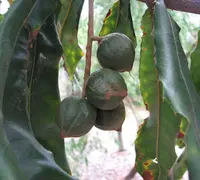
This species produces nuts with distinctly rough, pebbled shells, unlike the smoother shells of its close relative Macadamia integrifolia, and this texture is a key trait used in botanical identification.

Cooler-climate tolerance

Among commercial macadamias, it tolerates cooler and more humid coastal conditions better than M. integrifolia, which is why it is traditionally grown in higher-rainfall, subtropical areas of eastern Australia.

High sugar kernels

Its kernels generally contain a slightly higher natural sugar content than those of M. integrifolia, which contributes to a sweeter flavor profile often noted in breeding and processing literature on growing macadamia nut.

Botan icon

Did you know?

Macadamia tetraphylla played a key role in the global macadamia industry by contributing important genetic material to many modern hybrids, which combine its cool-climate tolerance and nut quality with traits from Macadamia integrifolia to improve yield and adaptability in commercial orchards.

FAQs about macadamia nut

Container growth is possible for young trees using a large, deep pot with excellent drainage. Root systems become extensive, so long-term culture is challenging. Dwarf rootstocks and regular root pruning help manage size when growing macadamia nut in pots.

Grow Healthy Plants with Botan Care

Keep your plants happy and healthy with plant identification, disease detection, and easy care guidance.

Botan plant care app — identify plants on mobile

Explore More Plants