


Salinity Management
Maintain water salinity in the brackish range (around 10–25 ppt) by mixing marine salt into dechlorinated water and testing with a refractometer, adjusting slowly over several days to avoid shock.

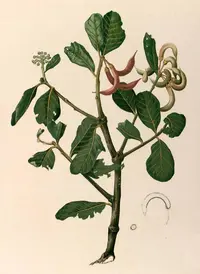
River mangrove, Aegiceras corniculatum, is a small coastal shrub or tree found in intertidal zones and estuaries across Asia, Australia, and parts of East Africa. It forms dense thickets with smooth gray bark, glossy green leaves, and curved seed pods adapted to salty, waterlogged conditions.
This species is a true mangrove, meaning it tolerates salt and periodic flooding but depends on consistently moist, oxygen-poor substrates. It is best suited to outdoor coastal or specialized brackish setups rather than typical home gardens.
Because it needs saline water, muddy or sandy substrates, and stable tidal-like conditions, it is considered challenging for beginners. Those who want to learn how to care for river mangrove should be prepared to replicate its natural shoreline environment as closely as possible.

Care Difficulty
Hard Care

Light Preference
Full Sun

Water Requirements
Aquatic

Temperature Preference
Tropical / Frost Sensitive

Hardiness Zone
10–11

Soil Texture
Sandy, Silty, Organic-rich

Soil pH
Acidic (5.5–6.5), Slightly acidic (6.5–7.0)

Soil Drainage
Waterlogged tolerant

Fertilization
Minimal (feed rarely)
Scan your plant to receive care tips personalized for your specific plant
Available on iOS and Android
This coastal shrub thrives in strong light typical of open estuaries and mangrove edges.
This mangrove species is adapted to frequently wet, even brackish, conditions rather than drying cycles.
This species prefers warm, frost-free coastal climates similar to its natural tidal habitats.
This coastal mangrove prefers very humid, marine-like air to perform well.
This species is adapted to waterlogged, salty mud and needs a special mix in culture.
This mangrove can be grown in containers if the pot allows a stable, permanently wet root zone.
Aegiceras corniculatum usually needs little feeding in nutrient-rich coastal mud but accepts light supplementation in culture.
Pruning Aegiceras corniculatum is mainly done to maintain structure, remove damage, and manage access in restoration or display plantings.
This species is more often transplanted in coastal projects than grown as a long-term container specimen.
Aegiceras corniculatum is usually propagated from seed or semi-hardwood cuttings for coastal restoration and specialist collections.
This warm-coastal mangrove is frost-sensitive and needs protection in regions with cold winters or inland exposure.

Plant Health Check
Not sure what's wrong with your plant? Check your plant's health inside the app.
This mangrove produces strongly curved, horn-shaped fruits that give the species its name corniculatum, meaning horned. The distinctive fruits assist in buoyant dispersal, allowing seedlings to float and travel with tides before rooting in suitable mudflats.
The species thrives in brackish estuaries and tidal creeks with strongly fluctuating salt levels. It tolerates both nearly fresh and highly saline water, which allows it to occupy upstream fringes of mangrove forests where conditions change daily with tides and rainfall.
Its dense, shrubby growth along creek margins provides shelter and foraging areas for estuarine fish, crabs, mollusks, and many insect species. The small white flowers supply nectar for pollinating insects, including bees that use it as a source for mangrove honey.
In parts of Australia and Asia, this species is one of the dominant shrubs in upper intertidal mangrove zones, forming nearly monospecific thickets that help stabilize muddy shorelines and reduce erosion by slowing water movement during tidal flows.
Growth is moderate. Young plants often add 15–30 cm per year under warm, salty, tidal conditions, slowing as they mature. In suboptimal or less saline sites, growth can be noticeably slower and plants stay shorter.
Keep your plants happy and healthy with plant identification, disease detection, and easy care guidance.

 POPULAR
Begonia amphioxus
Begonia amphioxus
glossy acronychia
Acronychia laevis
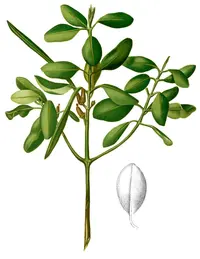
rib-fruited yellow mangrove
Ceriops tagal
Aechmea comata
Aechmea comata
European hornbeam
Carpinus betulus
Elephant's Ear
Colocasia esculenta Royal Hawaiian Blue Hawaii
fringed heartwort
Ricciocarpos natans
Lycium ciliatum
Lycium ciliatum