rib-fruited yellow mangrove Care (Ceriops tagal)

Also known as: Indian mangrove, Spurred mangrove
rib-fruited yellow mangrove

About rib-fruited yellow mangrove

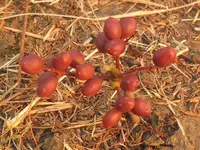
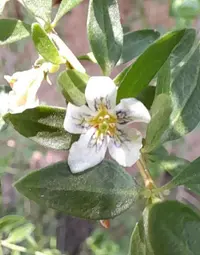
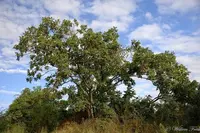
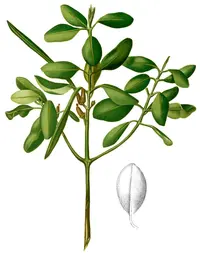
Rib-fruited yellow mangrove, Ceriops tagal, is a true mangrove tree adapted to tidal coastal ecosystems. It typically forms dense, low to medium-height stands along sheltered shorelines and estuaries. The plant has leathery, oval leaves, pale bark, and distinctive ribbed, elongated fruits that develop into long propagules, which are seedlings that germinate while still attached to the parent tree. Its strong, branching root system helps stabilize muddy substrates and tolerate regular saltwater flooding. Ceriops tagal grows best in sunny, warm, saline conditions with waterlogged, muddy soils, so how to care for rib-fruited yellow mangrove indoors or away from the coast requires careful attention to moisture and salt balance.

Main Plant Requirements

Care Difficulty

Hard Care

Light Preference

Full Sun

Water Requirements

Aquatic

Temperature Preference

Tropical / Frost Sensitive

Hardiness Zone

11–12

Soil Texture

Sandy, Loamy, Organic-rich

Soil pH

Neutral (7.0), Slightly alkaline (7.0–7.5)

Soil Drainage

Waterlogged tolerant

Fertilization

Minimal (feed rarely)

Get Personalized Care Plan

Scan your plant to receive care tips personalized for your specific plant

Available on iOS and Android

How to Care for the rib-fruited yellow mangrove

This coastal mangrove thrives in strong light but benefits from moderated exposure in hot interiors or dry climates.

  • Provide 6–8 hours of bright light daily; full sun is suitable outdoors near natural shorelines where humidity and water are high.
  • Allow light shade during harsh afternoon sun, especially in hot, dry areas, to prevent leaf scorch and salt buildup on foliage when caring for rib-fruited yellow mangrove.
  • In cooler seasons, ensure at least 4–5 hours of direct morning sun or bright filtered light to prevent leggy, weak growth.

This species is adapted to tidal flooding and prefers consistently wet, even brackish, conditions rather than intermittent drying.

  • In natural or recreated coastal settings, maintain saturated or shallowly flooded soil; do not allow the root zone to dry out completely between tidal or irrigation cycles.
  • Use mud or sandy loam that drains slowly; water again when the surface film begins to crust, avoiding stagnant, foul-smelling water that signals oxygen depletion at the roots.
  • Watch for yellowing, dropping leaves and blackened roots as signs of prolonged stagnation, and for crisp leaf edges or wilting tips as indicators of chronic underwatering for Ceriops tagal.

This mangrove is a tropical species that grows best in warm, frost-free climates with minimal temperature fluctuation.

  • Aim for 75–86°F (24–30°C) for active growth; short periods up to 95°F (35°C) are tolerated if water availability and humidity remain high.
  • Avoid temperatures below 59°F (15°C) for extended periods; growth slows noticeably and stress increases as conditions move toward this lower limit.
  • Protect from frost entirely, as brief drops near 40°F (4–5°C) can damage leaves and young wood, while freezing conditions can kill seedlings and exposed roots.

This coastal mangrove prefers high humidity but tolerates moderate household levels if watered correctly.

  • Aim for 60–80% humidity, as rib-fruited yellow mangrove is adapted to saturated, saline air in native habitats.
  • Leaves curling inward, browning tips, and slowed growth indicate air that is too dry or irregular watering.
  • Use trays of water with pebbles near the pot or group plants to slightly raise local humidity without waterlogging roots.

Ceriops tagal is adapted to saline, waterlogged coastal soils but needs adjusted mixes in cultivation.

  • Use a sandy, gritty mix with 40–60% coarse sand plus 20–30% fine bark or grit to mimic loose, aerated mangrove sediment.
  • Include 20–30% organic matter such as composted pine bark or leaf mold to hold nutrients without becoming dense or sticky.
  • Ensure drainage is very fast, with abundant holes and a thick coarse layer at the base so water drains within minutes after watering.
  • Aim for slightly acidic to neutral pH around 6.0–7.0 and avoid heavy clay, peat-heavy, or compacted mixes that stay saturated and airless.

This mangrove can be grown in containers when given a stable, deep setup that accommodates its developing root system.

  • Choose a tall, weighty pot to support vertical growth and prevent tipping as the trunk thickens and becomes top-heavy.
  • Use a saucer only for short-term saltwater or brackish experiments, then discard drained water promptly to avoid reabsorption.
  • Select non-porous materials like glazed ceramic or plastic if maintaining brackish conditions, as they reduce uneven salt crystallization in the pot wall.

This coastal species grows in nutrient-poor soils, so Ceriops tagal in containers or restoration plantings needs only light, careful feeding.

  • Use a balanced, slow-release fertilizer (for example 10-10-10) or a thin top-dressing of mature compost at the start of the warm growing season.
  • Feed container plants every 8–10 weeks during active growth, skipping doses if growth is strong and foliage evenly green.
  • Dilute liquid feeds to 1/4–1/2 strength and apply to moist substrate to avoid root burn in rib-fruited yellow mangrove.
  • Stop feeding in late fall and during winter dormancy, allowing growth to slow and roots to rest.

Ceriops tagal requires only light, corrective pruning to maintain structure and health in managed landscapes or containers.

  • Carry out pruning at the end of the cool, dry season, just before active growth resumes.
  • Remove dead, diseased, crossing, or storm-damaged branches first to improve airflow and reduce infection risk.
  • Thin congested inner shoots minimally to maintain the natural form and stable root-to-canopy balance.
  • Use clean, sharp bypass pruners or a small pruning saw, making smooth cuts just outside the branch collar.

This mangrove is seldom grown long-term in pots, so management focuses more on careful transplanting of young plants.

  • Transplant when roots densely circle the container, drainage slows, or top growth stalls despite proper light and salinity.
  • Plan moves for warm, stable weather, avoiding peak heat or cold snaps that add stress to Ceriops tagal.
  • Shift into a slightly larger container or field site with similar salinity, water level, and soil texture to limit shock.
  • Minimize root disturbance, keep roots consistently moist, and shade the plant lightly for 1–2 weeks after transplanting.

Propagation relies mainly on its natural viviparous propagules, which are elongated seedlings forming while still attached to the parent tree.

  • Collect mature, firm propagules that detach easily at the start of the warm, wet season.
  • Plant propagules vertically, with the pointed end up, in saline, waterlogged mud or a mangrove-suitable substrate.
  • Maintain constant moisture, mild water movement, and bright light to support rapid root anchoring.
  • Seed-based methods from dried seed and stem cuttings are less reliable and mainly used in research settings.

This tropical mangrove is highly frost-sensitive and needs protection anywhere winter temperatures fall below about 50°F.

  • In frost-free coastal climates, no special winter care is needed beyond stable water and salinity.
  • Where cool spells occur, maintain water temperatures as stable as possible and avoid cold winds over exposed roots and shoots.
  • Move container plants indoors or into a heated greenhouse when night temperatures approach 50°F, ensuring strong light and high humidity.

Care Tips

Salinity Management

Rotate containers or beds so that incoming tidal or saline irrigation water does not always enter from the same side, which reduces local salt buildup and promotes more even root development.

Root-Zone Aeration

In container culture, raise the pot slightly on feet or bricks and drill extra side drainage holes 2–3 cm above the base to keep the lowest layer saturated but allow upper roots to access oxygen-rich zones.

Propagule Orientation

When planting propagules, set them with roughly one-third of the length buried vertically and ensure the thicker end is down, then gently firm the substrate to stabilize them against wave or wind movement.

Structured Sediment Support

Use short, biodegradable barriers such as coir logs or brushwood fences on the seaward side of young plants to slow water flow, trap sediment, and protect developing pneumatophores, then remove or let them break down once plants are firmly established.

Salinity Monitoring

Periodically check pore-water salinity with a refractometer or conductivity meter, and if readings are consistently above the typical 15–35 ppt range preferred by this species, dilute with controlled freshwater inputs rather than a single heavy flush to maintain stable conditions when caring for rib-fruited yellow mangrove.

Common Pests and Diseases

Leaf-mining moths

This pest tunnels inside young leaves, creating pale winding mines and causing distorted or prematurely shed foliage, especially on seedlings and young propagules. Damage is often more visible on shaded or nursery-grown plants than on established trees in open coastal sites.

Solution

Remove and destroy heavily mined leaves to break the life cycle and reduce larval numbers, and keep nursery plants stress-free with adequate light and balanced watering. In small collections, use sticky traps to monitor adult moths and, if needed, apply a targeted biological insecticide containing Bacillus thuringiensis to young foliage according to label directions.

Scale insects

These insects attach to twigs and leaf midribs, appearing as small bumps and secreting honeydew that encourages black sooty mold on the leaf surface. Infestations can weaken young mangrove plants and reduce new growth in sheltered or indoor-style displays of this species.

Solution

Wipe or gently scrub scales from stems and leaves with a soft cloth or soft brush dipped in mild soapy water, then rinse with clean water. For persistent problems, apply a light horticultural oil spray that fully coats stems and leaf undersides, repeating as needed while improving air movement and avoiding excess nitrogen fertilization that promotes soft, susceptible growth.

Mangrove leaf spot

This disease produces small brown to gray spots with darker margins on older leaves, which may merge into larger blotches and lead to early leaf drop in humid, poorly ventilated conditions. Symptoms include heavier spotting on interior foliage where moisture lingers after tides, irrigation, or rainfall.

Solution

Prune and discard affected leaves and any dead twigs to remove fungal inoculum, and thin dense canopies or nursery groupings to improve air circulation and faster leaf drying. Avoid overhead watering where possible, water early in the day, and if disease pressure is high on valuable specimens, use a broad-spectrum fungicide labeled for foliar leaf spots on woody plants, applied preventively during humid periods.

Wood-boring beetles

These insects bore into trunks and branches, leaving small round exit holes, frass (fine sawdust), and sometimes localized dieback of twigs beyond the tunneled area. Young or stressed trees in disturbed coastal sites or containers are more vulnerable than vigorous, established plants in natural tidal zones.

Solution

Cut out and destroy heavily infested branches to remove larvae and prevent further spread, and keep plants vigorous with appropriate salinity, watering, and no mechanical trunk injuries. For high-value plantings, monitor regularly for new exit holes and consult local extension or forestry guidance on trunk injection or surface treatments where such methods are permitted and appropriate.

Black sooty mold

This disease appears as a dark, powdery to velvety coating on leaves and stems, growing on the sugary honeydew excreted by sap-feeding insects like scale or aphids. Symptoms include dull, blackened foliage that may photosynthesize less efficiently, especially in sheltered nursery plants or display plantings used to grow Ceriops tagal away from strong tidal flushing.

Solution

Wash affected leaves with a strong but gentle stream of water or a soft cloth and mild soapy solution to remove the mold film, then rinse thoroughly. Long-term control depends on reducing honeydew-producing insects by physical removal and, if necessary, horticultural oils or insecticidal soaps, while maintaining good airflow and moderate plant density so foliage dries quickly.

Interesting Facts

Pencil-like aerial roots

This species forms slender, pencil-like pneumatophores, which are air-breathing roots that rise above the mud surface to supply oxygen in waterlogged, low-oxygen soils of tidal flats.

Early seed germination

Ceriops tagal produces long, slender propagules that begin to germinate while still attached to the parent tree (vivipary), allowing the young seedling to establish quickly once it detaches and anchors in the sediment.

Salt-handling strategy

Instead of excreting excess salt through leaf glands like some mangroves, this species primarily excludes salt at the root level, preventing most salt from entering the plant’s vascular system in the first place.

Botan icon

Did you know?

The dense root and trunk systems of Ceriops tagal help stabilize shorelines and trap fine sediments, creating calmer microhabitats that support juvenile fish, crustaceans, and other coastal organisms, making it an important species for building and maintaining mangrove ecosystems.

FAQs about rib-fruited yellow mangrove

This species has a moderate growth rate. In suitable coastal conditions, young plants may add about 20–50 cm of height per year. Growth slows as the tree matures and stabilizes within the mangrove community.

Grow Healthy Plants with Botan Care

Keep your plants happy and healthy with plant identification, disease detection, and easy care guidance.

Botan plant care app — identify plants on mobile

Explore More Plants