Wind acclimation
In windy regions, gradually expose young plants to stronger winds over several weeks so the trunk and leaf bases strengthen before planting in a fully exposed coastal or open site.

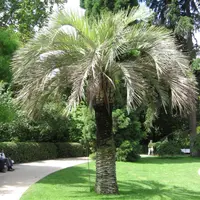
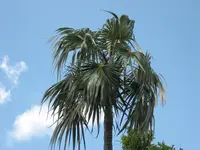
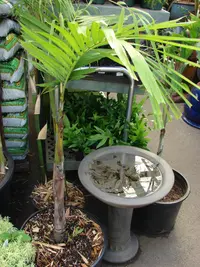
The South American jelly palm, Butia odorata, is a slow-growing feather palm known for its gracefully arching blue-green fronds and stout, solitary trunk. It develops a rounded crown that gives a strong architectural presence in gardens and landscapes.
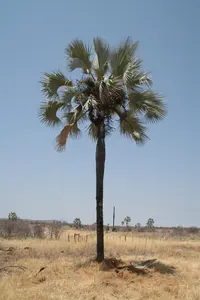
This palm is native to southern Brazil, Uruguay, and parts of Argentina, where it grows in open, windy coastal plains and grasslands. Its tolerance of wind, salt, and brief cold spells makes it easier to grow than many tropical palms.
Gardeners often choose it for its edible, fragrant orange fruits and its relatively low-maintenance nature once established. Understanding how to care for South American Jelly Palm starts with providing sun, well-drained soil, and moderate, consistent moisture.

Care Difficulty
Moderate Care

Light Preference
Full Sun

Water Requirements
Low Water

Temperature Preference
Cold Hardy

Hardiness Zone
8–11

Soil Texture
Sandy, Loamy, Rocky

Soil pH
Slightly acidic (6.5–7.0), Neutral (7.0)

Soil Drainage
Well-drained

Fertilization
Minimal (feed rarely)
Scan your plant to receive care tips personalized for your specific plant
Available on iOS and Android
This palm thrives in bright outdoor conditions with several hours of direct sun each day.
This palm prefers deep, infrequent watering that allows the soil to dry slightly between soakings.
This hardy palm adapts to a wide temperature range but grows best in mild to warm climates.
This palm tolerates a wide humidity range and rarely needs special humidity management indoors or outdoors.
This palm prefers sharply drained, sandy to loamy soil that never stays waterlogged.
This species can be grown in large containers, especially in cooler climates where winter protection is needed.
Butia odorata benefits from modest, steady feeding during the warm growing season.
Pruning focuses on maintaining health and safety rather than reshaping Butia odorata.
Transplanting this palm is done infrequently and should be planned carefully to reduce root stress.
Propagation of Butia odorata is possible but slow and usually done from seed rather than division.
This palm is relatively cold hardy but still benefits from simple winter precautions in colder regions.

Plant Health Check
Not sure what's wrong with your plant? Check your plant's health inside the app.
This South American palm tolerates brief drops to about 5–10°F when mature, making it one of the few feather-leaf palms reliably grown in mild temperate coastal climates such as the US Southeast and parts of California.
Its orange, aromatic drupes are used in Brazil and Uruguay to make sweets, jams, and liqueurs; the common name jelly palm comes from the thick, jelly-like pulp produced when the fruits are cooked and strained.
In its native range of southern Brazil, Uruguay, and northeastern Argentina, it often grows on coastal dunes and sandy plains, where its deep root system and fibrous leaf bases help stabilize shifting sands.

This species was historically confused with Butia capitata in horticulture, and only in the last few decades have taxonomists clarified that most palms in cultivation and in coastal groves of southern Brazil and Uruguay are actually Butia odorata, reshaping understanding of its true native range and identity.
This palm grows slowly, often adding only 15–30 cm of trunk height per year in good conditions. It may take 8–12 years to develop a clearly visible trunk and strong canopy structure.
Keep your plants happy and healthy with plant identification, disease detection, and easy care guidance.