Gambel oak Care (Quercus gambelii)

Also known as: Scrub Oak, Rocky Mountain White Oak
Gambel oak

About Gambel oak

Gambel oak, Quercus gambelii, is a small to medium deciduous tree or large shrub native to the interior western United States. It often forms dense thickets on dry slopes and foothills. Leaves are lobed and turn shades of yellow to orange in autumn, and the plant produces small acorns that support wildlife. Growth is typically slow to moderate but plants can live a long time once established. This species tolerates poor, rocky soils and seasonal drought, which makes it relatively low-maintenance in suitable climates. Understanding how to care for Gambel oak starts with providing full sun, good drainage, and avoiding excessive summer watering.

Main Plant Requirements

Care Difficulty

Easy Care

Light Preference

Full Sun

Water Requirements

Low Water

Temperature Preference

Cold Hardy

Hardiness Zone

4–8

Soil Texture

Sandy, Loamy, Rocky

Soil pH

Slightly acidic (6.5–7.0), Slightly alkaline (7.0–7.5)

Soil Drainage

Well-drained

Fertilization

Minimal (feed rarely)

Get Personalized Care Plan

Scan your plant to receive care tips personalized for your specific plant

Available on iOS and Android

How to Care for the Gambel oak

This drought-adapted oak performs best with strong, direct outdoor light across the growing season.

  • Provide 6–8 hours of direct sun daily; full sun promotes dense growth and a sturdy trunk in Gambel oak.
  • Accepts light or partial shade, especially afternoon shade in hotter regions, but too much shade causes sparse branching and reduced acorn production.
  • Young trees benefit from some protection from intense late-afternoon summer sun, while mature trees tolerate exposed slopes and reflective heat well.

This species is adapted to dry sites and should be watered in a way that encourages deep, drought-tolerant roots.

  • For young trees, water deeply when the top 5–8 cm of soil are dry, then allow the soil to return to dry or slightly dry before the next soak.
  • Use well-drained, gravelly or sandy soils; standing water, heavy clay, or constantly wet conditions increase root rot risk in Quercus gambelii.
  • Watch foliage: yellowing leaves and dieback on wet soil suggest overwatering, while dull, curling, or browning leaf edges on dry, hot soil indicate underwatering.

This hardy oak tolerates a wide temperature range but grows most actively in moderate warmth.

  • Optimal growth occurs around 60–80°F (16–27°C) during spring and early summer, when new shoots and leaves develop most strongly.
  • Mature trees withstand winter lows near -20°F (-29°C) once established, entering full dormancy and dropping leaves to protect buds and wood.
  • Heat tolerance is good up to about 95°F (35°C) if roots are deep; extended extreme heat with shallow roots increases drought stress and leaf scorch risk.

This species tolerates low air moisture and usually does not need special humidity management outdoors.

  • Ideal humidity is around 20–50%, matching its native semi-arid habitats.
  • Leaves curling, browning at margins, or tip dieback during hot, windy spells usually signal combined drought and low-humidity stress.
  • If grown in a very dry, exposed site, windbreaks and deep, infrequent watering reduce transpiration stress more effectively than misting.

Quercus gambelii prefers lean, mineral soils with strong drainage rather than rich, water-retentive substrates.

  • Use a sandy or gravelly loam with 20–40% coarse mineral material such as decomposed granite, pumice, or grit to keep pores open.
  • Aim for slightly acidic to slightly alkaline conditions (pH 6.0–8.0), avoiding strongly acidic mixes designed for ericaceous plants.
  • For planting mixes, combine native mineral soil with small amounts of compost (≤20%) plus coarse sand to balance nutrients and drainage.
  • Avoid compacted clay, peat-heavy bagged mixes, or any soil that stays wet for more than 24 hours after thorough watering.

This oak can be grown in containers when young, but long-term container culture is challenging due to its deep root system and eventual size.

  • Choose a deep, heavy, wide-base container that resists tipping as the woody top growth becomes taller and more wind-exposed.
  • Select thick-walled clay or concrete pots if possible, as these moderate temperature swings and reduce rapid drying of the root zone.
  • Elevate the pot on feet or bricks so large drainage holes remain fully open and runoff clears quickly after each deep watering.

This drought-adapted native oak usually needs little feeding in the landscape if soil is reasonably fertile.

  • For young or stressed Gambel oak, apply a light layer of compost or well-rotted manure in spring over the root zone.
  • If using granular slow-release fertilizer, choose a balanced NPK (such as 10-10-10) at 1/2 label rate.
  • Feed only once per growing season; avoid summer overfertilization that can cause weak, lush growth.
  • Do not fertilize during fall and winter dormancy, to prevent tender late-season shoots.

Quercus gambelii benefits from thoughtful structural pruning rather than frequent shaping cuts.

  • Schedule main pruning in late winter to very early spring, before buds swell.
  • Remove dead, diseased, crossing, or storm-damaged branches first to maintain safety and tree health.
  • Thin crowded interior branches lightly to improve light penetration and stable branch structure, not to create a tight canopy outline.
  • Use clean, sharp bypass pruners or a pruning saw, making cuts just outside the branch collar without leaving stubs.

This oak is rarely kept long term in containers and is best transplanted young into its final site.

  • Transplant when container roots circle the pot, become dense at drainage holes, or growth slows despite proper care.
  • Aim to move young trees in late fall or very early spring when soil is workable and the plant is dormant.
  • Shift up container size only every 2–3 years, choosing a slightly larger pot with excellent drainage if interim pot culture is necessary.
  • Reduce root stress by watering deeply before and after transplanting, disturbing roots minimally, and shading the tree for 1–2 weeks in exposed sites.

Quercus gambelii is usually propagated from seed, which requires some preparation to germinate well.

  • Collect healthy acorns in fall, discarding any with holes, mold, or that float in water.
  • Provide cold stratification by storing moist acorns at 34–41°F for 6–12 weeks in a sealed container with slightly damp peat or sand.
  • Sow into deep containers with a well-draining mix, positioning acorns on their side about 2–3 cm deep.
  • Keep the medium evenly moist and cool-bright; transplant seedlings carefully once a strong taproot and several true leaves have formed.

Mature plants are quite cold hardy and generally need minimal winter care once established in suitable climates.

  • Young or recently transplanted trees benefit from 5–8 cm of mulch over the root zone, kept away from the trunk base.
  • In very exposed sites, use windbreak fabric or temporary fencing to reduce desiccating winds on first- and second-year trees.
  • Container-grown specimens, if any, should be moved to a sheltered, unheated but frost-moderated area to prevent root damage.

Care Tips

Deep root establishment

During the first 2–3 years, give one very deep soak every 3–4 weeks in dry periods to encourage a taproot and wide lateral roots, then gradually lengthen the interval instead of increasing frequency.

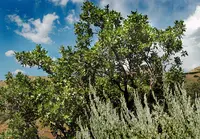
Basal sucker management

Inspect the base and root zone 2–3 times each growing season and cut unwanted suckers cleanly at ground level to prevent dense thickets and to direct energy into the main trunks.

Wind and snow training

While stems are still flexible, selectively prune and lightly stake young leaders so major branches are well spaced and angled 45–60° from vertical, which greatly reduces breakage in wind and snow loads.

Mulch ring strategy

Maintain a 5–10 cm deep mulch ring out to the drip line, kept 5–8 cm away from the trunk, to moderate soil temperature, conserve moisture, and reduce competition from turf around the root zone.

Wildlife and pest scouting

When caring for Gambel oak, check leaves and twigs monthly in spring and summer for galls, scale insects, and chewing damage, and address issues early with pruning or targeted treatments rather than broad-spectrum chemicals.

Common Pests and Diseases

Gambel oak borer

This pest is a metallic wood-boring beetle whose larvae tunnel through inner bark and sapwood, causing branch dieback and canopy thinning. Symptoms include D-shaped exit holes, loose bark, and accumulations of fine sawdust at the base or on branches.

Solution

Prune and destroy heavily infested or dead branches to remove larvae and improve tree vigor, and avoid wounding the trunk or roots which attracts borers. Maintain good Quercus gambelii care with deep, infrequent watering during drought and no excess fertilizer so the tree can resist attack; in high-value trees, certified arborists may use properly timed trunk or systemic insecticide treatments where local regulations allow.

Oak twig pruner

This pest is a longhorned beetle whose larvae develop inside small branches, causing cleanly cut twigs to drop from the canopy in late summer or fall. Symptoms include scattered fallen twigs with smooth, hollowed interiors and no obvious external chewing damage.

Solution

Rake up and remove dropped twigs and small branches during fall and winter to destroy overwintering larvae and reduce the next generation. For large trees, chemical control is rarely practical, so focus on sanitation and keeping the tree healthy through drought management and avoiding construction damage around roots.

Oak powdery mildew

This disease is a fungal infection that forms a white, dusty coating on young leaves, shoots, and sometimes acorns, especially in shaded, humid conditions. Symptoms include distorted new growth, reduced vigor, and premature leaf drop in severe cases.

Solution

Improve air movement by thinning overcrowded branches and avoiding dense understory plantings around the trunk, and water at soil level rather than over the canopy. Remove and discard heavily infected leaves and shoots where practical; in high-value trees with recurring problems, a locally approved fungicide applied early in the season by a professional can help limit spread.

Oak anthracnose

This disease is a group of fungi that infects young leaves and shoots in cool, wet spring weather, causing brown blotches along veins, leaf curling, and early leaf drop. Symptoms include irregular tan to dark-brown lesions that may follow major veins, giving a scorched or tattered appearance to lower branches.

Solution

Rake and remove fallen leaves to reduce overwintering spores and promote good crown airflow by careful thinning of crowded interior branches. Avoid overhead irrigation in spring and keep the tree well watered but not waterlogged during dry periods so it can refoliate strongly; severe, repeated cases may justify early-season fungicide applications by an arborist following local guidelines.

Oak leaf blister

This disease is caused by a fungus that creates raised, blister-like, pale or yellow-green spots on leaves that later turn brown. Symptoms include scattered thickened blisters that may cause mild leaf distortion but rarely threaten tree survival.

Solution

Collect and dispose of fallen leaves to reduce fungal inoculum, and avoid unnecessary irrigation on foliage. Most trees recover without treatment, so focus on overall vigor by avoiding soil compaction, protecting roots from trenching, and providing occasional deep watering during extended drought rather than frequent shallow watering when caring for Gambel oak.

Interesting Facts

Cold-hardy mountain oak

This species is native to the interior western US and is unusually tolerant of cold, often surviving at elevations above 2,700 m in dry, rocky mountain habitats where many other oaks cannot grow.

Clonal thicket growth

Instead of forming a single large trunk, it commonly spreads by root sprouts to form dense clonal thickets, with many stems above ground all connected to the same root system.

Key wildlife food source

Its acorns and leaves are a major food source for mule deer, wild turkeys, jays, and many rodents, and the shrubby growth form provides important cover and nesting habitat for birds and small mammals in semi-arid landscapes.

Botan icon

Did you know?

Individual stems of Gambel oak may live only a few decades, but the underlying clonal root system can persist for centuries, making some stands effectively ancient even though the visible trunks appear relatively young.

FAQs about Gambel oak

Growth is moderate rather than fast. Young plants often add about 20–30 cm per year, slowing as they age. Harsh sites with poor moisture or very shallow soils reduce growth, while deep, well-drained soils increase it.

Grow Healthy Plants with Botan Care

Keep your plants happy and healthy with plant identification, disease detection, and easy care guidance.

Botan plant care app — identify plants on mobile

Explore More Plants