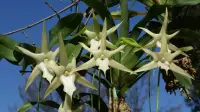
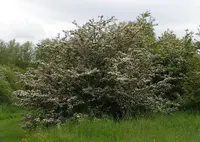
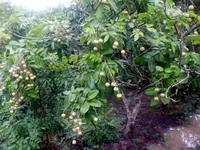
tropical-almond Care (Terminalia catappa)

Also known as: Sea Almond, Country Almond, Indian Almond, Jungli Badam, Beach almond
tropical-almond

About tropical-almond

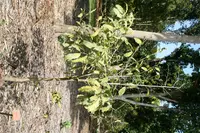
Tropical-almond, Terminalia catappa, is a large deciduous coastal tree valued for its broad, layered canopy and distinctive tiered branching. It is widely planted in tropical and subtropical regions along shorelines, streets, and parks.

The tree develops large, leathery leaves that turn red or yellow before falling, and it produces almond-like seeds inside tough, fibrous fruits. Its strong salt and wind tolerance make it suitable for seaside planting but less practical for small gardens or containers.

Tropical-almond prefers full sun, warmth, and well-drained soil. Understanding how to care for tropical-almond helps owners provide enough space and stable conditions for long-term growth.

Main Plant Requirements

Care Difficulty

Moderate Care

Light Preference

Full Sun

Water Requirements

Moderate Water

Temperature Preference

Tropical / Frost Sensitive

Hardiness Zone

10–12

Soil Texture

Sandy, Loamy, Organic-rich

Soil pH

Slightly acidic (6.5–7.0), Neutral (7.0)

Soil Drainage

Well-drained

Fertilization

Minimal (feed rarely)

Get Personalized Care Plan

Scan your plant to receive care tips personalized for your specific plant

Available on iOS and Android

How to Care for the tropical-almond

This large coastal tree thrives in bright, open sites with strong sun exposure.

  • Provide 6–8 hours of direct sun daily; morning and midday sun are ideal, with some relief from harsh late-afternoon exposure in very hot inland areas.
  • Young tropical-almond trees tolerate light partial shade but grow denser crowns and stronger branching in mostly full sun.
  • In cloudy or high-latitude winters, maximize unobstructed light; in intense summer climates, monitor for leaf scorch and use neighboring trees or structures for slight shade if needed.

This species prefers steadily moist but well-drained soil, especially while establishing deep roots.

  • Irrigate when the top 3–5 cm of soil feels dry, applying a deep soak that penetrates 20–30 cm rather than frequent shallow splashes.
  • During hot, dry seasons, increase watering based on soil checks and leaf condition; in cooler or rainy periods, reduce watering to prevent waterlogging around Terminalia catappa roots.
  • Watch for yellowing, soft leaves and sour-smelling soil as signs of overwatering, and for dull, curling, or crispy leaf edges as indicators of underwatering.

This tropical tree grows best in consistently warm, frost-free climates.

  • Optimal growth occurs at 75–90°F (24–32°C); growth slows noticeably below 68°F (20°C).
  • The tree tolerates brief dips to about 40°F (4°C) but suffers damage near 32°F (0°C) and should not be planted where hard frost is common.
  • Heat tolerance is high up to about 100°F (38°C) if soil moisture is maintained; in cooler, marginal climates, expect leaf drop and slower recovery each spring.

This coastal tree prefers moderately humid air but adapts to drier sites if roots are well watered.

  • Aim for 50–70% humidity for healthiest foliage, especially on young or potted tropical-almond plants.
  • Brown, crisp leaf edges and slow new growth indicate air humidity is too low or wind is very drying.
  • Increase humidity by grouping plants, placing containers near large trays of water and stones, or using a nearby humidifier.

Terminalia catappa grows best in loose, well-drained mineral soils that do not stay waterlogged.

  • Use a sandy or sandy-loam mix with about 60–70% coarse sand, plus compost and a small amount of fine bark for structure.
  • Ensure rapid drainage; water should pass through the profile quickly and not leave the root zone saturated for more than a few hours.
  • Aim for slightly acidic to neutral pH, around 6.0–7.0, which supports nutrient availability and root health.
  • Avoid heavy clay, compacted ground, or mixes high in peat alone, as these limit aeration and increase root-rot risk.

This species can be grown in large containers for a limited time, especially in warm climates.

  • Choose a wide, heavy container to counter the tree’s spreading canopy and reduce the risk of tipping in strong wind.
  • Use a deep, fast-draining mix so the long taproot and lateral roots can extend without curling tightly against the pot base.
  • Select thicker-walled pots (fiberglass, wood, or heavy plastic) in hot regions to limit rapid moisture loss and root overheating.

Fertilizing supports faster growth of young Terminalia catappa, though mature trees often manage in reasonably fertile soil.

  • For container or young trees, use a balanced slow-release NPK fertilizer or well-rotted compost at the start of the growing season.
  • Feed every 6–8 weeks during warm active growth, adjusting based on soil richness and vigor.
  • Apply fertilizers at half the label strength for container plants to limit salt buildup and root burn.
  • Stop or sharply reduce feeding in late fall and winter, especially in cooler or low-light conditions.

Pruning helps manage size and structure of Terminalia catappa, especially in gardens and urban plantings.

  • Carry out main pruning in late winter or early spring before strong new growth starts.
  • Remove dead, diseased, crossing, or storm-damaged branches with sharp, clean bypass pruners or a pruning saw.
  • Thin crowded interior branches to improve light penetration and airflow, which supports healthier foliage.
  • Limit canopy reduction to moderate cuts that guide overall shape rather than heavy topping, which weakens the tree.

This species is usually grown in the ground, so focus on careful transplanting of young trees rather than frequent repotting.

  • Transplant in late spring or early summer when soil is warm and the tree can re-establish quickly.
  • Look for roots circling the container, slow growth, or the root ball drying very fast as signs a young tropical-almond needs a larger planting spot.
  • Loosen circling roots gently, set the tree at the same soil level, and backfill with well-drained soil without heavy compaction.
  • Water deeply after planting, keep soil evenly moist for several weeks, and provide light shade in very hot, dry climates to reduce transplant stress.

Propagation of Terminalia catappa is most reliable from seeds, with cuttings used less often and with lower success.

  • Collect mature, fully dried fruits and extract seeds, discarding any that feel soft or damaged.
  • Sow seeds in warm conditions around 75–85°F in a well-drained, sandy mix and keep evenly moist, not waterlogged.
  • Provide bright light, high humidity, and good air movement to reduce fungal problems during germination.
  • Semi-hardwood cuttings can be tried in late spring to summer using a rooting hormone, bottom heat, and high humidity, but success rates vary.

This tropical tree is frost sensitive and needs protection or indoor culture in regions with cold winters.

  • Avoid planting outdoors where temperatures drop below about 30–32°F, as young trees are easily damaged or killed by frost.
  • Mulch the root zone of in-ground trees with 5–8 cm of organic material in mild-winter climates to buffer soil temperature.
  • Move container plants indoors or into a heated greenhouse before night temperatures fall below 50°F, providing bright light and reduced watering.

Care Tips

Salt-spray tolerance

If grown near the coast, gradually acclimate young plants to salty wind by first placing them behind a windbreak, then slowly reducing protection over 3–6 months so leaf tissue can adapt without severe burn.

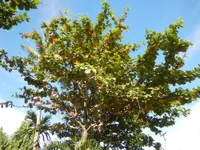
Structural wind training

In windy sites, lightly stake only during the first 1–2 years and allow some trunk movement, which encourages stronger taper and better anchorage, then remove supports completely once the trunk is firm.

Canopy shape management

To maintain the characteristic layered, pagoda-like canopy, selectively shorten overly vigorous upright shoots just above outward-facing buds at the start of the warm season instead of shearing the crown.

Root-zone protection

Keep the root zone clear of heavy traffic and avoid parking vehicles or placing compacting loads under the canopy, as this species is sensitive to soil compaction that reduces deep root penetration.

Leaf litter utilization

Allow at least part of the natural leaf drop to decompose as a surface mulch under the tree, which helps recycle nutrients and stabilize soil, and is a common practice when caring for tropical-almond in larger landscapes.

Common Pests and Diseases

Caterpillars

This pest feeds on young leaves and can skeletonize foliage, especially during flushes of new growth. Symptoms include chewed margins, missing leaf sections, and frass (droppings) on leaves and ground.

Solution

Hand-pick visible caterpillars and prune heavily infested shoots where practical. Encourage or protect natural predators such as birds, and if damage is high, use a targeted biological control like Bacillus thuringiensis (Bt) sprayed on young foliage, following label directions and avoiding application during strong sun or rainfall.

Leaf spot

This disease causes small brown, black, or tan spots that can merge into larger patches, sometimes with yellow halos, leading to premature leaf drop. Symptoms include scattered lesions on older leaves first, especially in humid, rainy conditions or where air circulation is poor.

Solution

Remove and dispose of heavily spotted fallen leaves to reduce inoculum, and avoid overhead watering that keeps foliage wet for long periods. Improve airflow around the canopy by selective thinning, and in severe, recurring cases in landscapes, a registered copper-based fungicide can be applied preventively during wet seasons according to local regulations.

Scale insects

These insects attach firmly to stems and leaf undersides, sucking sap and weakening the plant. Symptoms include small, dome-shaped or flattened bumps, sticky honeydew on leaves and surfaces below, and sooty mold growing on the honeydew.

Solution

Prune and destroy branches with heavy scale colonies when feasible, and gently scrub reachable stems with a soft brush and mild soapy water to dislodge insects. For larger trees or persistent infestations, apply a horticultural oil spray to thoroughly coat stems and leaf undersides during a cool part of the day, repeating as needed according to label instructions.

Mealybugs

This pest appears as white, cottony clusters on leaf axils, young stems, and sometimes roots in container specimens. Symptoms include sticky honeydew, curling or distorted new growth, and slow decline if populations become high.

Solution

Wipe or dab visible mealybugs with a cotton pad dipped in isopropyl alcohol and remove heavily infested twigs. For broader infestations, apply horticultural soap or oil, ensuring thorough coverage of hidden areas, and inspect new plants carefully before planting to limit introductions in areas focused on Terminalia catappa care.

Twig dieback

This disease leads to gradual browning and death of small branches, often starting at the tips, sometimes following mechanical damage or stress. Symptoms include wilting leaves on affected twigs, sunken or discolored bark patches, and eventual dieback beyond the initial infection point.

Solution

Prune out affected twigs back into healthy wood, sterilizing tools between cuts with alcohol or a dilute bleach solution. Reduce stress by avoiding over-pruning or soil compaction near roots, and in recurrent cases on high-value specimens, consult local arboriculture or plant pathology services about potential fungicidal trunk or foliar treatments that match the diagnosed pathogen.

Interesting Facts

Coastal salt specialist

This species grows naturally on sandy, saline seashores and tolerates salt spray and occasional saltwater inundation, thanks to its thick, leathery leaves and extensive root system that stabilizes coastal soils.

Seasonal leaf color change

In tropical and subtropical climates, the tree sheds its leaves once or twice a year, and the foliage often turns yellow, orange, or red before dropping, a rare autumn-like display in equatorial regions.

Aquarium water conditioner

Dried leaves are widely used by aquarists because they release tannins that lower pH slightly, add humic substances, and create more natural, shaded conditions for certain fish and shrimp species.

Botan icon

Did you know?

Genetic and botanical studies indicate that this species has spread widely across tropical coastlines of Asia, Africa, and the Americas partly by sea-dispersed fruits that can float and remain viable after long periods in ocean water, allowing colonization of distant shores.

FAQs about tropical-almond

This species is generally fast-growing in warm climates, often adding 60–120 cm of height per year when young. Growth slows as the canopy broadens. Rate depends on water availability, soil fertility, and root space.

Grow Healthy Plants with Botan Care

Keep your plants happy and healthy with plant identification, disease detection, and easy care guidance.

Botan plant care app — identify plants on mobile

Explore More Plants