Wind-smart placement
Site plants where they get some air movement but are shielded from constant strong winter winds to reduce desiccation and branch breakage, especially in exposed gardens or elevated sites.

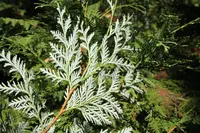
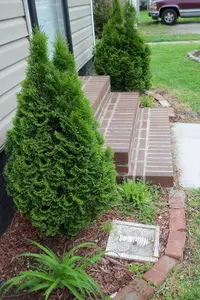
Korean arbor-vitae (Thuja koraiensis) is a slow-growing evergreen conifer valued for its soft, flat sprays of foliage and naturally compact, layered form. It typically develops into a small tree or large shrub with attractive bicolored needles that are green above and silvery beneath.
This species is native to cool mountain regions of Korea and parts of China, where it grows in well-drained, often rocky soils. It is generally hardy and tolerant of cold, but needs good drainage and consistent moisture when young.
Gardeners who learn how to care for Korean arbor-vitae usually find it reliable if given full sun to light shade and protection from harsh drying winds.

Care Difficulty
Moderate Care

Light Preference
Full Sun

Water Requirements
Moderate Water

Temperature Preference
Cold Hardy

Hardiness Zone
5–7

Soil Texture
Loamy, Sandy, Clay

Soil pH
Acidic (5.5–6.5), Slightly acidic (6.5–7.0)

Soil Drainage
Moist but well-drained

Fertilization
Minimal (feed rarely)
Scan your plant to receive care tips personalized for your specific plant
Available on iOS and Android
This species prefers cool, bright conditions with protection from intense afternoon sun.
Thuja koraiensis needs consistent moisture in well-drained soil, especially while establishing.
This cold-hardy conifer prefers cool summers and tolerates significant winter chill.
This conifer tolerates a wide humidity range and usually does not need special humidity management outdoors.
Thuja koraiensis prefers cool, moist, well-structured soil that drains freely but does not dry out quickly.
This species can be grown in containers when a large, stable setup is available outdoors.
This slow-growing conifer needs only light, well-timed feeding to stay healthy.
Pruning supports a stable structure and neat outline for Thuja koraiensis without heavy cutting.
This species is usually grown in the ground, so focus on careful transplanting rather than frequent repotting.
New plants are most reliably produced from semi-hardwood cuttings rather than seed.
Mature plants are cold hardy but benefit from some winter care, especially when young or container-grown.

Plant Health Check
Not sure what's wrong with your plant? Check your plant's health inside the app.
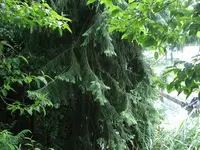
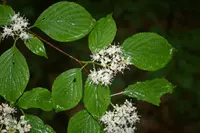
Mature foliage often shows a distinct contrast between dark green upper leaf surfaces and silvery-white undersides, creating a shimmering effect when branches move in the wind.
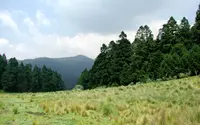
This species is naturally restricted to cool, mountainous regions of Korea and parts of northeastern China, where it grows on rocky slopes and ridges with well-drained, often slightly acidic soils.
Wild populations are considered vulnerable in parts of their native range due to habitat loss, overharvesting, and limited, fragmented distribution, so many plants in cultivation originate from conservation-driven collections.

Thuja koraiensis has unusually thick, conspicuous white stomatal bands (zones of microscopic pores) on the underside of its scale-like leaves, a feature so distinctive that it is commonly used by botanists to confirm the species in the field even from a distance.
This species is generally slow-growing, adding about 10–20 cm per year under good conditions. Growth may be slower in poor soil, exposed sites, or containers. Patience is important when trying to grow Thuja koraiensis for screening.
Keep your plants happy and healthy with plant identification, disease detection, and easy care guidance.