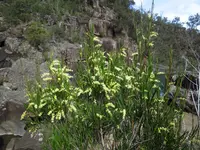
pagoda dogwood Care (Cornus alternifolia)

Also known as: alternate-leaved dogwood, pagoda dogwood, alternative-leaf dogwood
pagoda dogwood

About pagoda dogwood

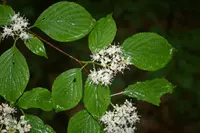
Pagoda dogwood, Cornus alternifolia, is a small deciduous tree or large shrub valued for its layered, horizontal branching that creates a tiered, architectural form. In spring it carries flat clusters of creamy white flowers, followed by dark blue berries on red stalks and leaves that often turn shades of burgundy or purple in autumn.

This species is native to woodlands and forest edges in eastern North America, where it typically grows in cool, moist, partially shaded sites. It is considered moderate in difficulty, as it dislikes drought, heat stress, and compacted soils, so site choice is important when you care for pagoda dogwood.

It generally prefers dappled light, consistent moisture, and well-drained, slightly acidic soil enriched with organic matter.

Main Plant Requirements

Care Difficulty

Moderate Care

Light Preference

Partial Shade

Water Requirements

Regular Water

Temperature Preference

Cold Hardy

Hardiness Zone

3–7

Soil Texture

Loamy, Sandy, Organic-rich

Soil pH

Acidic (5.5–6.5), Slightly acidic (6.5–7.0)

Soil Drainage

Moist but well-drained

Fertilization

Minimal (feed rarely)

Get Personalized Care Plan

Scan your plant to receive care tips personalized for your specific plant

Available on iOS and Android

How to Care for the pagoda dogwood

This deciduous understory tree prefers cool, bright conditions with some protection from intense sun.

  • Provide 3–5 hours of direct morning sun with light shade or filtered light in the afternoon to prevent leaf scorch, especially in warmer climates.
  • In hotter regions, choose a site with dappled light under taller trees; in cooler areas, pagoda dogwood tolerates nearly full sun if soil stays evenly moist.
  • Watch foliage: pale, sparse growth indicates too much shade, while crisped, browning leaf edges suggest excessive afternoon sun exposure.

This species needs consistently moist, well-drained soil to establish a healthy root system.

  • Aim for soil that feels moist but not saturated, letting the top 3–5 cm dry slightly between soakings, especially during the first 2–3 years after planting.
  • Increase watering during hot, dry spells, focusing on deep, infrequent soakings; reduce frequency in cool, rainy periods and during dormancy in fall–winter.
  • Watch for signs: drooping, dry leaves and brittle twigs suggest underwatering, while yellowing leaves, dieback, and a sour soil smell indicate poor drainage or overwatering in Cornus alternifolia.

This hardy woodland tree thrives in cool to moderate climates with distinct seasons.

  • Optimal growing temperatures are around 60–80°F (16–27°C) during the active season, with best shoot and leaf development in the cooler part of this range.
  • Dormant trees tolerate winter lows near -20°F (-29°C) when established, but newly planted specimens benefit from mulch to buffer rapid freeze–thaw cycles.
  • During summer heat above 85°F (29°C), provide soil moisture and afternoon shade to limit stress, as prolonged extreme heat combined with drought can cause leaf scorch and decline.

Cornus alternifolia tolerates a wide humidity range and usually does not need special humidity management outdoors.

Cornus alternifolia prefers consistently moist, deep, loamy soil with high organic matter.

  • Aim for a moisture-retentive but well-drained loam, made from roughly equal parts garden soil, compost, and leaf mold or fine bark.
  • Keep pH slightly acidic to neutral, around 5.5–7.0, avoiding highly alkaline or compacted clay conditions that restrict root growth.
  • In heavier soils, improve drainage and aeration by incorporating coarse sand or fine gravel plus extra organic matter through the top 20–30 cm.
  • Avoid waterlogged spots, hardpan layers, or thin, drought-prone sand where roots cannot stay evenly moist through summer.

This species is only marginally suitable for long-term container growing and is better kept as a temporary container specimen when young.

  • Use a very large, deep, and heavy container to accommodate the developing root system and to prevent the plant from becoming top-heavy and unstable.
  • Choose a thick-walled, non-glazed clay or concrete pot if possible, as this moderates moisture swings and anchors the plant against wind.
  • Combine loam-based compost with coarse bark and pumice or grit so the mix stays evenly moist yet free-draining under container conditions, supporting successful growing pagoda dogwood.

Most established Cornus alternifolia in the ground need minimal feeding if soil is reasonably fertile.

  • For young or nutrient-poor sites, apply a balanced slow-release fertilizer (such as 10-10-10) at 1/2 label strength in early spring.
  • Alternatively, top-dress with 2–5 cm of compost over the root zone once a year, keeping it away from the trunk.
  • Avoid summer high-nitrogen products that push weak growth; stop feeding by late summer to allow wood to harden before winter.

Pruning Cornus alternifolia focuses on maintaining its layered form and plant health.

  • Prune in late winter to very early spring before bud break to limit sap bleed and stress.
  • Remove dead, diseased, crossing, or inward-growing branches with sharp, clean bypass pruners or a small pruning saw.
  • Thin congested interior shoots lightly to keep the characteristic tiered canopy and improve air flow.
  • Avoid heavy structural cuts in one season; shape gradually over several years to maintain vigor and flowering.

Cornus alternifolia is usually grown in the ground, so transplanting young trees correctly is more important than repotting.

  • Plan transplants for early spring or early fall when conditions are cool and soil is moist but not waterlogged.
  • Move container plants or field-grown saplings when roots circle the pot, growth slows, or the plant dries out very quickly.
  • Dig a wide planting hole, keep the root flare at soil level, and tease apart circling roots gently to reduce long-term girdling.
  • Water deeply after planting, mulch 5–7 cm over the root zone, and keep soil evenly moist for the first 1–2 growing seasons.

Cornus alternifolia is most often propagated by semi-hardwood cuttings or seeds rather than division.

  • Take semi-hardwood cuttings in mid to late summer; use 8–12 cm pieces with several nodes and remove lower leaves.
  • Dip the base in rooting hormone, place in a moist, free-draining medium, and maintain high humidity and bright shade.
  • Sow fresh seed in fall outdoors or use cold stratification at 34–41°F for 3–4 months before spring sowing.
  • Simple layering of low, flexible branches in spring can also root over a season under consistently moist soil.

This species is cold hardy in most temperate climates and usually needs only modest winter care.

  • Established in-ground trees tolerate typical freezes in USDA zones suited to growing pagoda dogwood.
  • Apply 5–7 cm of mulch over the root zone in late fall, keeping it a few cm away from the trunk to limit rot risk.
  • For young or container plants in colder areas, heel pots into the ground or move them to a sheltered, unheated space.

Care Tips

Layered branch training

Select a few strong, evenly spaced lateral branches in early spring and lightly tie them to horizontal supports to emphasize the natural tiered structure and improve light penetration through the canopy.

Mulch ring management

Maintain a 5–8 cm deep mulch ring out to the dripline, keeping mulch 5–8 cm away from the trunk to stabilize soil moisture, cool the root zone, and reduce mower or string‑trimmer damage.

Trunk flare protection

Keep the lower trunk and root flare visible and free of soil or mulch build‑up, which helps prevent rot and discourages girdling roots that can weaken the tree over time.

Targeted pest scouting

From late spring to midsummer, check undersides of leaves and new shoots every 1–2 weeks for sawfly larvae, scale, or leaf spots so that any infestation is treated early with appropriate horticultural oil or pruning.

Storm and snow prep

Before heavy snow or ice events, inspect the layered branches for included bark or old storm damage and remove or shorten weak, crossing, or over‑extended branches to reduce breakage risk when growing pagoda dogwood.

Common Pests and Diseases

Dogwood anthracnose

This disease causes irregular tan to brown leaf spots with purple borders, blighted leaf tips, and dieback of young shoots, especially in cool, wet spring weather.

Solution

Prune out and destroy infected twigs and leaves, improve air circulation by thinning crowded branches, avoid overhead watering, and apply a labeled fungicide at budbreak and through wet periods if the shrub has a history of severe infection.

Septoria leaf spot

This disease produces many small, circular tan to gray spots on leaves, often with darker margins, leading to premature leaf drop from mid to late summer.

Solution

Rake and remove fallen leaves in autumn, avoid wetting foliage where possible, and if defoliation is heavy for several years, use a registered foliar fungicide in spring to protect new growth as part of broader Cornus alternifolia care.

Dogwood borer

This insect pest tunnels into trunks and larger branches, causing oozing sap, sawdust-like frass, and progressive dieback of affected limbs.

Solution

Reduce trunk injury and sunscald by avoiding string trimmers against the bark and by maintaining mulch correctly, prune out and destroy infested branches, and where pressure is high, use a labeled trunk or lower-stem insecticide timed to adult flight according to local extension guidance.

Dogwood sawfly

These insects feed in groups on the undersides of leaves, skeletonizing or completely consuming foliage and giving branches a ragged, defoliated appearance.

Solution

Hand-pick and crush larvae on small shrubs, hose them off with a strong stream of water, encourage natural predators, and on larger or heavily infested plants, apply a targeted insecticide such as spinosad to young larvae following label directions.

Scale insects

This pest appears as small, immobile bumps on stems or leaves, often accompanied by sticky honeydew and sometimes sooty mold on nearby surfaces.

Solution

For light infestations, gently scrub scales from stems with a soft brush and soapy water, prune out heavily infested twigs, and use horticultural oil during the dormant season or when crawlers are active to smother remaining insects.

Interesting Facts

Naturally tiered branching

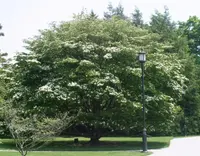
This species develops strongly horizontal branches in layered tiers, giving the crown a pagoda-like outline that is distinct within the dogwood group and useful for plant identification.

Alternate leaf arrangement

Unlike most dogwoods, which have opposite leaves, this tree has leaves arranged alternately along the stem, a trait that is reflected in the species name alternifolia and helps separate it from other Cornus species.

Specialist caterpillar host

Pagoda dogwood is a documented larval host for several moth and butterfly species, including the spring azure, making it an important structural and food resource in mixed hardwood forests.

Botan icon

Did you know?

In its native range across eastern North America, pagoda dogwood often forms an important midstory layer beneath taller canopy trees, where its tolerance of partial shade allows it to stabilize forest structure and provide cover and food for songbirds and small mammals.

FAQs about pagoda dogwood

Lack of flowering often comes from insufficient light, immature age, heavy spring pruning, or stress from drought or root damage. Avoid pruning after midspring, maintain consistent moisture, and allow several years for young plants to begin flowering reliably.

Grow Healthy Plants with Botan Care

Keep your plants happy and healthy with plant identification, disease detection, and easy care guidance.

Botan plant care app — identify plants on mobile

Explore More Plants