Croton ferrugineus Care

About Croton ferrugineus

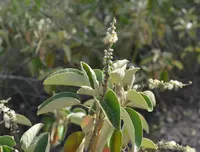
Croton ferrugineus is a woody shrub or small tree in the spurge family, often found with a bushy, branching form. Its foliage is usually narrow, leathery, and can show rusty or brownish tones that match its species name.

This species occurs naturally in tropical regions of Central and South America, typically in dry forests, scrub, or open woodland. It is adapted to strong light and seasonal dryness, which influences how to care for Croton ferrugineus in cultivation.

In general, it prefers bright light, well-drained soil, and moderate moisture without prolonged waterlogging, making it manageable for growers who can mimic these conditions.

Main Plant Requirements

Care Difficulty

Moderate Care

Light Preference

Partial Sun

Water Requirements

Moderate Water

Temperature Preference

Warm Climate

Hardiness Zone

10–12

Soil Texture

Loamy, Sandy, Organic-rich

Soil pH

Acidic (5.5–6.5), Slightly acidic (6.5–7.0)

Soil Drainage

Well-drained

Fertilization

Minimal (feed rarely)

Get Personalized Care Plan

Scan your plant to receive care tips personalized for your specific plant

Available on iOS and Android

How to Care for the Croton ferrugineus

This shrub prefers bright, warm conditions with some protection from intense midday sun.

  • Provide 4–6 hours of direct morning sun with light shade or filtered light from around 11 a.m. to 3 p.m. to prevent leaf scorch.
  • Tolerates partial shade, but Croton ferrugineus develops denser growth and better coloration in higher light than in deep shade.
  • In summer, watch for leaf edges bleaching or crisping as a sign of excessive sun; in winter, trim nearby shade or reposition plants to maintain at least 3–4 sun hours.

Watering should keep the root zone moist but never saturated for long periods.

  • Let the top 3–5 cm of soil dry before watering again; use your finger to check, rather than following a fixed schedule.
  • Ensure soil drains freely so water does not pool around the roots; standing water or a sour smell indicates poor drainage and risk of root rot.
  • In hot, dry periods increase checks for drooping leaves and dry surface soil, while in cooler seasons extend intervals between waterings to avoid yellowing, soft leaves from overwatering.

Stable, warm temperatures support healthy growth and foliage quality.

  • Aim for 70–85°F (21–29°C) for active growth, as this range suits the tropical origin of this species.
  • Avoid exposing plants below 55°F (13°C); brief dips to 45–50°F (7–10°C) may be survived but can trigger leaf drop and stress.
  • Protect from frost at all times, and during heat waves above 95°F (35°C) provide shade and extra soil moisture monitoring to reduce stress and leaf scorch.

This species benefits from moderately high humidity and reacts to very dry indoor air.

  • Aim for 50–60% humidity to keep foliage dense and reduce leaf edge browning.
  • It tolerates brief dips to 35–40%, but prolonged dry air causes crispy tips, leaf drop, and dull color.
  • Increase humidity with a nearby humidifier or grouped plants; avoid misting onto leaves to reduce fungal issues.

Croton ferrugineus grows best in a loose, well-aerated, fast-draining substrate.

  • Use a mix such as 50% peat- or coco-based potting medium, 25% perlite, and 25% fine bark to combine moisture retention with sharp drainage.
  • Aim for slightly acidic to neutral pH, around 6.0–7.0, which supports nutrient availability and root function.
  • Improve aeration by adding coarse perlite or pumice if the mix compacts or stays wet for more than 2–3 days.
  • Avoid heavy clay, unamended garden soil, or mixes that become waterlogged, as this encourages root rot and weak growth.

This species is suitable for container growing when the pot setup keeps roots aerated and the plant stable.

  • Choose a relatively heavy pot or place a weight in the base to prevent tipping as the canopy becomes top-heavy.
  • Select a pot that is wider than it is deep to give lateral root space and reduce the risk of soggy lower layers.
  • Use a container material that breathes slightly, such as unglazed clay, if overwatering is a concern, as it allows gradual moisture loss.

In cultivation, Croton ferrugineus responds well to light, consistent nutrition during the warm growing season.

  • Use a balanced liquid fertilizer (for example 10-10-10) at 1/2 strength every 4–6 weeks in spring and summer.
  • Alternatively, apply a slow-release balanced fertilizer or a thin layer of well-finished compost once per growing season.
  • Always water before and after feeding container plants to avoid root burn and improve nutrient uptake.
  • Stop fertilizing in fall and winter when growth slows, except for very light feeding if plants are under strong indoor light.

Pruning helps maintain a healthy structure and manageable size for Croton ferrugineus in gardens or containers.

  • Plan main pruning for late winter or early spring before active growth resumes.
  • Remove dead, diseased, crossing, or inward-growing branches with clean, sharp bypass pruners or loppers.
  • Shorten overly long shoots to encourage bushier branching and a more compact crown.
  • Avoid removing more than 20–30% of live growth at once to limit stress and maintain vigor.

Croton ferrugineus adapts to both ground planting and containers but resents frequent disturbance of its roots.

  • Check for roots circling the pot, pushing through drainage holes, or persistent wilting as signs it needs a larger container.
  • Schedule repotting or transplanting for late spring, allowing warm soil and steady moisture to support new root growth.
  • Move up only 1 pot size, using a well-drained mix, and keep the root ball as intact as possible to limit shock.
  • Water thoroughly after moving, shade from strong sun for 3–5 days, and maintain even moisture until growth resumes steadily.

Gardeners most often propagate Croton ferrugineus from semi-ripe stem cuttings under warm, humid conditions.

  • Take 8–12 cm semi-ripe cuttings in late spring or early summer from healthy, non-flowering shoots.
  • Remove lower leaves, dip the cut end in rooting hormone, and insert into a sterile, well-drained medium such as perlite and peat or coco coir.
  • Maintain 75–80°F, bright indirect light, and high humidity using a propagator lid or clear plastic cover with air holes.
  • For seed propagation, sow fresh seed in warm, evenly moist medium and allow extra time, as germination and early growth are slower.

In mild climates Croton ferrugineus can handle light chills, but extended freezing conditions damage foliage and young stems.

  • In regions below about 25°F, treat as a tender shrub and grow in containers that can be moved to a frost-free space.
  • Mulch the root zone with 5–8 cm of organic material in late fall to moderate soil temperature swings.
  • For in-ground plants in marginal climates, wrap young stems with breathable horticultural fleece during hard freezes.

Care Tips

Stem pinching

Pinch out the soft tips of overly long shoots in late spring to encourage a denser, more branched canopy instead of tall, leggy growth.

Selective staking

Use a thin, dark stake and loose soft ties to support any top-heavy, woody stems, positioning the stake on the side opposite your main viewing angle so the support remains discreet.

Rotational light training

Rotate the container 1/4 turn every 1–2 weeks so foliage colors develop evenly and stems do not lean permanently toward the brightest window or greenhouse panel.

Preventive pest scouting

Inspect the undersides of leaves and stem nodes weekly with a hand lens, and at the first sign of scale or spider mites isolate the plant and treat with an appropriate horticultural oil before the infestation spreads.

Seasonal repot timing

Plan any major root work or upsizing of the container for mid to late spring, after day length increases, so the plant can recover quickly and resume active growth, which is essential for stable Croton ferrugineus care.

Common Pests and Diseases

Scale insects

This pest feeds on stems and leaf undersides, causing yellowing, leaf drop, and sticky honeydew that can attract sooty mold. Infestations are often first noticed as small, rounded bumps attached firmly to the plant surface.

Solution

Remove heavily infested twigs and leaves and gently scrape or wipe off individual scales with a cotton pad dipped in 70% isopropyl alcohol. For larger shrubs or trees, use repeated applications of horticultural oil or insecticidal soap, targeting the undersides of leaves and young stems, and avoid drought stress to reduce vulnerability.

Spider mites

These insects thrive on Croton ferrugineus in hot, dry conditions and cause fine speckling, bronzing, and eventual leaf drop. Symptoms include thin webbing between leaves and along midribs when populations are high.

Solution

Rinse foliage thoroughly with a strong but controlled stream of water, especially on the undersides of leaves, and increase ambient humidity around the plant. Follow with repeated treatments of insecticidal soap or horticultural oil at 5–7 day intervals, and avoid placing the plant in very hot, dry, stagnant air to help manage long term.

Leaf spot

This disease causes circular to irregular brown or black lesions on leaves, often with yellow halos and occasional shot-hole appearance where dead tissue drops out. Symptoms include progressive spotting from lower to upper leaves, leading to premature leaf drop under prolonged wet conditions.

Solution

Prune and discard affected leaves, improve airflow around the canopy, and avoid overhead watering so foliage dries quickly. In humid regions, copper-based or other labeled fungicides can be applied preventively at the start of warm, wet periods, and fallen debris should be cleaned up to reduce reinfection.

Sooty mold

This disease develops as a dark, powdery coating on leaves and stems growing on the honeydew excreted by sap-sucking insects such as scale or mealybugs. Symptoms include dull, blackened foliage that can reduce photosynthesis and overall vigor but rarely damages tissues directly.

Solution

First control the underlying insects with targeted treatments such as horticultural oil or insecticidal soap, then gently wash affected foliage with lukewarm water and a soft cloth or sponge. Improving light exposure and airflow helps the plant outgrow minor damage and keeps surfaces drier, which limits new mold development.

Mealybugs

These insects appear as white, cottony clusters in leaf axils, along stems, and on roots in container plants, sucking sap and weakening growth. Symptoms include distorted new leaves, sticky honeydew, and slow decline if infestations persist.

Solution

Isolate the plant, then dab visible mealybugs with 70% isopropyl alcohol on a cotton swab and rinse the plant thoroughly after treatment. For persistent cases, use repeated applications of insecticidal soap or systemic insecticides labeled for ornamental crotons, and inspect regularly to break the life cycle when caring for Croton ferrugineus.

Interesting Facts

Rusty leaf undersides

The specific epithet ferrugineus refers to the rusty or ferruginous tone often visible on the undersides of its leaves and young twigs, caused by dense microscopic hairs and surface pigments that scatter light in a warm brown hue.

Andean cloud forest shrub

This species naturally occurs as a shrub or small tree in humid Andean cloud forests of Ecuador and neighboring regions, where it grows in moist, well-drained soils along forest edges and disturbed slopes.

Role in forest regeneration

In its native range, it can appear in secondary vegetation and forest margins, where its tolerance of light gaps helps stabilize soil and provide structure that facilitates later colonization by more shade-demanding tree species.

FAQs about Croton ferrugineus

This shrub is evergreen in climates without frost, keeping foliage year-round. In cooler or very dry conditions, it may thin or partially shed leaves, but new growth usually resumes once favorable temperatures and moisture return.

Grow Healthy Plants with Botan Care

Keep your plants happy and healthy with plant identification, disease detection, and easy care guidance.

Botan plant care app — identify plants on mobile

Explore More Plants