Himalayan giant blackberry Care (Rubus praecox)

Himalayan giant blackberry

About Himalayan giant blackberry

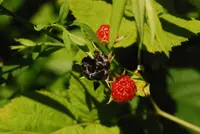
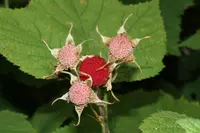
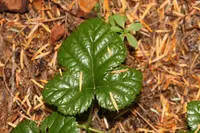
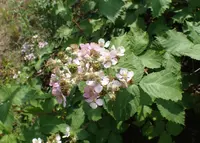
Himalayan giant blackberry, Rubus praecox, is a vigorous bramble grown mainly for its large, flavorful berries and dense, arching canes. It is a deciduous shrub in the rose family. Native to Himalayan regions, it has strong, fast-growing stems with thorns and abundant white flowers that mature into dark purple to black fruit. Plants can form substantial thickets if not managed.

This species is generally considered easy to grow where space is available, but requires regular pruning and structure to control its size. Gardeners who learn how to care for Himalayan giant blackberry usually find it productive in full sun, with moist, well-drained soil and good air circulation.

Main Plant Requirements

Care Difficulty

Moderate Care

Light Preference

Full Sun

Water Requirements

Regular Water

Temperature Preference

Cold Hardy

Hardiness Zone

5–8

Soil Texture

Loamy, Sandy, Organic-rich

Soil pH

Acidic (5.5–6.5), Slightly acidic (6.5–7.0)

Soil Drainage

Moist but well-drained

Fertilization

Minimal (feed rarely)

Get Personalized Care Plan

Scan your plant to receive care tips personalized for your specific plant

Available on iOS and Android

How to Care for the Himalayan giant blackberry

Rubus praecox fruits best with ample direct sun but tolerates light shade.

  • Provide 6–8 hours of direct sun daily; morning sun with light afternoon shade reduces leaf scorch in hot regions.
  • Tolerates partial shade (3–4 hours sun) but flowering and fruiting of Himalayan giant blackberry decline and stems may stretch.
  • In cooler climates, full sun all day is ideal; in very hot summers, use filtered light or light shade from 1–4 p.m. to prevent stressed, bronzed foliage.

Rubus praecox prefers evenly moist, well-drained soil rather than constant saturation.

  • Water when the top 3–5 cm of soil feels dry, aiming for deep soaking that moistens the root zone instead of light surface sprinkling.
  • During active growth and fruiting, increase water if leaves wilt early in the day, berries shrivel, or new canes stall; reduce input once canes go dormant.
  • Ensure soil drains freely; yellowing soft leaves, sour smell, or standing water indicate overwatering, while crisp leaf edges and dry, crumbly soil signal underwatering.

This species is a hardy bramble that tolerates a wide temperature range but performs best in moderate conditions.

  • Active growth is strongest around 60–75°F (16–24°C), with good flowering and fruiting in mild, frost-free periods.
  • Established plants typically survive down to about 0°F (−18°C) with mulch over the root zone, though young canes may die back after severe frost.
  • Tolerates short heat waves up to about 90–95°F (32–35°C) if soil stays moist; in hot spells, expect softer berries and give extra water to limit stress.

Humidity needs are low, as this bramble tolerates typical outdoor air in most climates.

  • Performs well at 30–60% humidity, similar to most temperate outdoor conditions.
  • Tolerates dry air if soil moisture is consistent, so focus on watering rather than misting.
  • Leaf edges crisping and tender shoot tips wilting usually indicate drought or heat stress, not humidity problems.

Rubus praecox prefers deep, moisture-retentive but free-draining ground for strong growth and fruiting.

  • Use a loamy soil rich in organic matter, with a crumbly structure that holds moisture yet breaks apart easily in the hand.
  • Aim for slightly acidic to neutral pH around 6.0–7.0, adding composted leaf mold or well-rotted manure to improve structure.
  • In heavy clay, mix in coarse sand and fine bark to increase aeration and prevent waterlogging around the roots.
  • Avoid compacted, soggy, or very shallow soils, which restrict root spread and increase risk of root rot and poor cane vigor.

This species can be grown in large outdoor containers if the pot supports its vigorous, spreading root and cane system.

  • Choose a wide, heavy container at least 40–50 cm deep to anchor canes and prevent tipping in wind.
  • Select thick-walled terracotta or heavy resin to moderate moisture swings and provide extra stability for trained canes.
  • Raise the pot on feet so drainage holes stay clear and runoff leaves quickly, reducing soggy lower layers that suffocate roots.

Rubus praecox benefits from light, targeted feeding during the active growing season.

  • Apply a balanced, slow-release fertilizer (around 10-10-10) in early spring as new growth starts.
  • Top-dress with compost once per year to improve soil structure and long-term nutrient supply when growing Himalayan giant blackberry.
  • During late spring and early summer, a light granular or liquid feed every 6–8 weeks is usually sufficient.
  • Stop feeding in late summer and avoid fertilization in fall and winter to prevent soft, frost-tender growth.

Pruning Rubus praecox keeps the plant productive, manageable, and healthier over time.

  • Carry out main pruning in late winter or very early spring before buds break.
  • Remove dead, diseased, or damaged canes first, then thin crowded stems to improve light and air flow.
  • Cut out older, exhausted canes at ground level to encourage strong new replacement shoots.
  • Use clean, sharp bypass pruners and make angled cuts just above healthy buds to reduce disease risk.

This species is usually grown in the ground, so management focuses on transplanting rather than frequent repotting.

  • Transplant young plants in early spring or fall when soil is moist and temperatures are mild.
  • Move or up-pot only when roots circle the container, growth slows, or watering becomes very frequent.
  • Lift with a wide root ball, disturb roots as little as possible, and replant at the same soil depth.
  • Water thoroughly after planting, then maintain even moisture and light shade for 1–2 weeks to limit transplant shock.

Rubus praecox is commonly propagated vegetatively to maintain desirable fruiting and growth traits.

  • Use tip layering in late spring or summer by pegging a flexible cane into moist soil until roots form.
  • Take semi-ripe stem cuttings in mid to late summer, then root in a free-draining mix under high humidity.
  • Divide vigorous, clump-forming plants in early spring, replanting sections with strong buds and fibrous roots.
  • Seed propagation is possible but slower; stratify seeds in moist medium at 35–40°F for several weeks before sowing.

This bramble is generally cold hardy in much of the US and needs only modest winter care in the ground.

  • In late fall, apply a 5–8 cm mulch layer around the root zone to moderate soil temperature and moisture.
  • In very cold or exposed sites, mound extra mulch over the crown and secure canes away from drying winds.
  • Move container-grown plants into a sheltered, unheated but frost-free area, keeping soil just slightly moist.

Care Tips

Trellis From First Year

Install a strong wire or trellis system before canes reach 60–80 cm, then fan out and loosely tie new canes horizontally to improve light exposure, air movement, and future fruit set.

Cane Age Labeling

Tag first-year canes with a weatherproof label when they emerge, then remove only the clearly marked 2-year-old, post-fruiting canes in winter to keep the planting vigorous and uncluttered.

Targeted Sucker Management

Slice off unwanted suckers just below soil level with a sharp spade 10–15 cm from the crown, but pot up a few healthy ones each spring if you plan to expand the row or share plants.

Spring Cane Selection

In early spring, thin crowded new canes so that only the 4–7 strongest per plant remain, spaced a hand-width apart along the row, which reduces disease pressure and concentrates energy into larger berries.

Harvest Hygiene Routine

During peak fruiting, harvest every 1–2 days and immediately remove any damaged or moldy berries from the planting area to limit fungal spread and support long-term success when growing Himalayan giant blackberry.

Common Pests and Diseases

Raspberry beetle

This pest causes dry, crumbly drupelets and small brown larvae inside the berries. Symptoms include misshapen fruit with feeding scars near the berry tip.

Solution

Remove and destroy infested fruit promptly after harvest to reduce the next generation. In small plantings, shake canes over a sheet to dislodge adults in late spring, then remove them, and use fine mesh netting over plants at flowering to reduce egg laying; encourage birds and predatory insects by maintaining diverse nearby vegetation.

Aphids

These insects cluster on young shoots and undersides of leaves, sucking sap and causing leaf curl, distortion, and sticky honeydew that can lead to sooty mold. Growth may weaken and new canes may appear stunted.

Solution

Prune out and destroy heavily infested shoot tips and rinse colonies off with a firm stream of water. For ongoing problems, use insecticidal soap or a light horticultural oil, applied in the early morning and repeated as needed, and limit high-nitrogen fertiliser that encourages very soft, aphid-prone growth when caring for Himalayan giant blackberry relatives such as Rubus praecox.

Spur blight

This disease produces purple-brown lesions around leaf joints and buds on canes, leading to dead lateral shoots and poor fruiting the following year. Symptoms include narrow, dark bands on canes and premature yellowing and drop of leaves on affected laterals.

Solution

Cut out and remove affected canes at ground level during dormancy, and avoid overhead watering to keep foliage as dry as possible. Improve spacing and trellising for better airflow, and if the disease is persistent, use an approved copper or other cane-berry fungicide during the dormant season according to label directions.

Anthracnose

This disease causes small, sunken, grayish spots with purple margins on young canes and sometimes on leaves and fruit, leading to rough, scabby stems and reduced vigor. In severe cases, canes crack and dry out, and berries may be undersized or deformed.

Solution

Prune out and destroy infected canes, focusing on those with numerous lesions, and keep plants well supported to avoid cane wounding. Avoid wetting the foliage when irrigating, maintain a clean mulch under plants to reduce splash, and consider a preventive fungicide spray at bud break if the planting has a history of anthracnose.

Botrytis fruit rot

This disease affects ripe and ripening berries, which become soft, pale, and covered with gray, fuzzy mold in humid conditions. Infected fruit often remains attached and can spread spores to nearby healthy berries.

Solution

Harvest fruit frequently and remove overripe or damaged berries from the plant and the ground. Improve airflow with careful pruning and trellising, water at soil level rather than over the top, and in very wet seasons consider a labeled pre-bloom or bloom-time fungicide to protect flowers and young fruit in high-value plantings.

Interesting Facts

Early-flowering habit

This bramble often flowers noticeably earlier than many related blackberry species, which is reflected in the epithet praecox, meaning early. Its early bloom can make it an important spring nectar and pollen source for bees in mild climates.

Large, arching growth

The plant forms very long, strongly arching canes that can create dense, thicket-like stands if left unmanaged. This vigorous habit allows it to spread rapidly in suitable conditions and makes structural support important when gardeners grow Rubus praecox.

Heavily armed stems

Its canes carry numerous stout prickles that provide strong mechanical protection against browsing animals. These prickles, combined with dense growth, create effective shelter and nesting sites for small birds and invertebrates.

FAQs about Himalayan giant blackberry

This species spreads vigorously by arching canes and root suckers. In mild, moist climates it can form dense thickets and outcompete nearby plants, so regular pruning, root-barrier edging, and removing unwanted shoots are important.

Grow Healthy Plants with Botan Care

Keep your plants happy and healthy with plant identification, disease detection, and easy care guidance.

Botan plant care app — identify plants on mobile

Explore More Plants