Early framework training
In the first 1–3 years, choose 3–5 well-spaced main stems and lightly stake or tie them to guide an open, vase-shaped framework that resists wind and reduces limb breakage later.

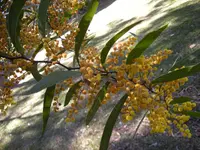
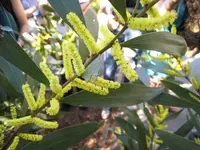
Zig-zag wattle (Acacia macradenia) is an Australian shrub or small tree known for its arching, zig-zagging green stems and fine, feathery foliage. It produces abundant golden-yellow, ball-shaped flower clusters that create a strong seasonal display.
This species grows naturally in open woodlands and along roadsides in subtropical Queensland, where conditions are warm and relatively dry. It tends to establish quickly, which makes it useful for screening, informal hedges, and habitat plantings.
Acacia macradenia is generally easy to grow in mild climates if it has full sun, good drainage, and protection from heavy frost. Understanding how to care for Zig-zag Wattle is mainly about providing light, air movement, and soil that does not stay wet for long periods.

Care Difficulty
Moderate Care

Light Preference
Full Sun

Water Requirements
Low Water

Temperature Preference
Tropical / Frost Sensitive

Hardiness Zone
10–11

Soil Texture
Sandy, Loamy

Soil pH
Acidic (5.5–6.5), Slightly acidic (6.5–7.0)

Soil Drainage
Well-drained

Fertilization
Minimal (feed rarely)
Scan your plant to receive care tips personalized for your specific plant
Available on iOS and Android
This species prefers bright, direct sun for strong growth and flowering.
This species prefers deep, infrequent watering once established, with time to dry between soakings.
This plant thrives in warm, mild climates with only brief exposure to cold.
This species handles low to moderate humidity and rarely needs special humidity management indoors.
Acacia macradenia prefers freely draining, relatively lean soil that mimics sandy or gravelly native ground.
This species can be grown in containers for a time, provided the pot is chosen to manage its fast, woody root system.
Acacia macradenia is adapted to low-nutrient soils, so keep fertilizing light and infrequent, especially in-ground plants.
Pruning Acacia macradenia is mainly done to maintain shape, safety, and flowering performance.
This species is usually grown in the ground, so focus on careful transplanting of young plants and limited time in containers.
Acacia macradenia is commonly propagated from seed, with some growers also using semi-hardwood cuttings.
This wattle prefers mild, frost-free climates and needs protection in areas with cold winters.

Plant Health Check
Not sure what's wrong with your plant? Check your plant's health inside the app.
This species is naturally restricted to dry open forests and woodlands of southeastern Queensland, where it grows on well-drained, often nutrient-poor soils and withstands seasonal drought.
The plant is named for its characteristic zig-zag pattern of green, slender stems, which carry small phyllodes instead of true leaves, an adaptation that helps reduce water loss in hot, dry conditions.
It produces masses of bright yellow, ball-shaped flower heads in late winter to spring, providing an important pollen source for native bees and other insects when few other shrubs are in heavy bloom.

This species often acts as a short-lived pioneer plant, quickly colonizing disturbed or cleared sites in its native range and improving soil conditions through nitrogen fixation, which then facilitates the establishment of slower-growing woodland species.
Lack of flowers is usually linked to insufficient light, excessive nitrogen fertilizer, or heavy pruning at the wrong time, which removes flower buds. Age also matters; young plants often need a few seasons before flowering reliably.
Keep your plants happy and healthy with plant identification, disease detection, and easy care guidance.