Lavender Feverberry Care (Croton gratissimus)

Also known as: Lavender Croton
Lavender Feverberry

About Lavender Feverberry

Lavender feverberry (Croton gratissimus) is a small tree or large shrub from southern Africa, valued for its scented foliage and airy, elegant structure. It belongs to the spurge family, which includes many resinous and aromatic species.

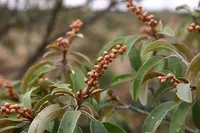
The plant typically carries narrow, gray-green leaves with silvery undersides and small, pale flowers that appear along slender stems. In warm climates it forms a light, open canopy that fits well in dry gardens or large containers.

It prefers bright, sun-filled positions, well-drained soil, and moderate watering, which influences how to care for Lavender Feverberry and keep it healthy over time.

Main Plant Requirements

Care Difficulty

Moderate Care

Light Preference

Full Sun

Water Requirements

Moderate Water

Temperature Preference

Tropical / Frost Sensitive

Hardiness Zone

10–11

Soil Texture

Sandy, Loamy, Organic-rich

Soil pH

Acidic (5.5–6.5), Slightly acidic (6.5–7.0)

Soil Drainage

Well-drained

Fertilization

Minimal (feed rarely)

Get Personalized Care Plan

Scan your plant to receive care tips personalized for your specific plant

Available on iOS and Android

How to Care for the Lavender Feverberry

Croton gratissimus prefers bright, warm conditions to maintain foliage color and dense growth.

  • Provide 6–8 hours of bright light daily, ideally with morning sun and light afternoon shade, especially in hot climates.
  • Tolerates light partial shade, but stems may elongate and leaf color fade if light drops much below 4–5 hours of sun.
  • In strong summer sun, especially for Lavender Feverberry, protect from harsh midday rays to prevent leaf scorch and monitor for wilting.

This species prefers evenly moist but never waterlogged soil for stable growth.

  • Water when the top 2–4 cm of soil feels dry to the touch; soil below should stay slightly moist, not soggy.
  • Ensure sharp drainage with a well-structured, gritty or loamy soil to reduce root rot risk, especially after heavy rain.
  • In warm growing seasons, watch for limp, curling leaves as a sign to water; in cooler seasons, allow the soil to dry a little deeper and watch for yellowing from excess moisture.

This plant thrives in warm, frost-free conditions typical of subtropical and tropical climates.

  • Optimal growth occurs at 70–85°F (21–29°C), where leaf color and new shoots develop most reliably.
  • Below 55°F (13°C) growth slows; brief exposure to 40–45°F (4–7°C) may cause leaf drop and tissue damage.
  • Protect from frost and cold winds, and in extreme heat above 95°F (35°C) provide light shade and consistent soil moisture to limit stress.

Croton gratissimus prefers moderately humid air to keep foliage healthy and reduce leaf drop.

  • Aim for 40–60% humidity, as very dry heated rooms can cause leaf edges to crisp and curl.
  • It tolerates short dry spells, but prolonged low humidity leads to slower growth and increased leaf shedding in Lavender Feverberry.
  • Increase humidity with a nearby water tray, grouping plants together, or using a small room humidifier rather than misting leaves heavily.

This species prefers a loose, well-aerated mix that drains quickly but does not dry out instantly.

  • Use a loamy, organic-rich base such as peat- or coir-based potting mix blended with 30–40% perlite or coarse bark for structure.
  • Ensure rapid drainage so water does not pool; water should flow freely from the pot within seconds after watering.
  • Keep pH slightly acidic to neutral, around 6.0–7.0, which supports nutrient availability for Croton gratissimus.
  • Avoid heavy clay, unamended garden soil, or compacted mixes that stay soggy and suffocate roots.

This species is well suited to container growing when the pot provides stable support and rapid drainage.

  • Choose a heavy terracotta or ceramic pot to counterbalance the woody, top-heavy canopy in windy or exposed spots.
  • Select a container slightly wider than the root ball to allow lateral root spread without creating a large mass of unused, wet mix.
  • Elevate the pot on feet or a stand so drainage holes remain clear and excess water can escape quickly from the saucer.

Croton gratissimus benefits from modest, controlled feeding to support steady growth without excess softness.

  • Apply a balanced liquid fertilizer (for example 10-10-10) at 1/2 strength every 4–6 weeks during spring and summer.
  • Use either a diluted balanced NPK feed or a light top-dressing of compost, not both at full strength.
  • Stop feeding in fall and winter, when growth slows and the plant rests.
  • Rinse the pot or root zone occasionally with plain water to prevent fertilizer salt buildup when caring for Lavender Feverberry.

Pruning Croton gratissimus helps maintain a stable framework, control size, and remove weak growth.

  • Carry out main pruning in late winter or early spring before new growth starts.
  • Remove dead, diseased, crossing, or inward-growing branches to improve light and air movement.
  • Shorten overly long shoots to shape the canopy and encourage bushier side branching.
  • Use clean, sharp bypass pruners and make cuts just above outward-facing buds or branch junctions.

Container-grown Croton gratissimus or young landscape plants benefit from careful, infrequent transplanting to limit root disturbance.

  • Check for roots circling the pot, emerging from drainage holes, or a plant that dries out quickly as signs it needs a larger container.
  • Plan repotting or transplanting in spring, every 2–3 years for pots or when a field plant clearly outgrows its space.
  • Water thoroughly 1–2 days before moving and gently loosen the root ball, trimming only tightly circling roots.
  • Replant at the same soil level, firm gently, water deeply, and shade from intense sun for 1–2 weeks to reduce stress.

Croton gratissimus is usually propagated from semi-hardwood cuttings or fresh seed under warm, stable conditions.

  • Take 10–15 cm semi-hardwood stem cuttings in late spring or early summer, using non-flowering shoots.
  • Remove lower leaves, dip the base in rooting hormone, and insert into a free-draining mix kept at 70–80°F with high humidity.
  • Provide bright, indirect light and bottom heat if possible; avoid waterlogging to prevent rot.
  • Sow fresh seed in warm, moist, well-drained soil, noting that seed-grown plants may vary from the parent.

Croton gratissimus is frost-sensitive and needs protection in regions with cold winters.

  • In USDA zones colder than 10, grow in containers and move plants indoors before temperatures drop below 40°F.
  • Provide a bright, frost-free room indoors, keeping temperatures around 60–75°F and soil just slightly moist.
  • For in-ground plants in mild climates, add a 5–8 cm mulch layer around the root zone, keeping it away from the trunk.

Care Tips

Branch thinning

Every 1–2 years selectively remove 1–3 of the oldest, crossing, or inward-growing branches at the base to open the canopy, improve airflow, and reduce the risk of scale and mite buildup in dense foliage.

Gradual light hardening

Before moving a container plant outdoors for summer, increase light exposure over 10–14 days by shifting it gradually toward brighter positions to avoid leaf scorch and stress from sudden high-UV exposure.

Salt buildup control

If grown in pots, flush the substrate thoroughly with clean water every 2–3 months until it runs freely from the drainage holes to reduce fertilizer salt accumulation that can burn fine feeder roots.

Wind exposure training

Rotate outdoor containers a quarter turn every 2–3 weeks in windy sites so stems develop even mechanical strength, which reduces leaning and branch breakage as the plant gains height.

Seasonal pest scouting

Inspect undersides of leaves and woody stems at least monthly in warm months, paying special attention after indoor–outdoor moves, and treat small outbreaks of scale or spider mites early with horticultural oil to simplify caring for Lavender Feverberry over the long term.

Common Pests and Diseases

Spider mites

This pest often appears on Croton gratissimus grown in warm, dry indoor or patio conditions, causing fine stippling and a dusty or bronzed look on leaves. Symptoms include thin webbing on stems and leaf undersides and gradual leaf drop.

Solution

Rinse foliage thoroughly with a strong but controlled stream of water, focusing on leaf undersides, then allow the plant to dry in bright, indirect light with higher humidity. For persistent infestations, apply neem oil or insecticidal soap every 7–10 days, alternating with simple water rinses and isolating the plant from others until new growth appears clean.

Scale insects

These insects attach tightly to stems and leaf veins, appearing as small brown, tan, or gray bumps that exude sticky honeydew. Symptoms include sooty mold on leaves, weak growth, and yellowing foliage.

Solution

Physically remove individual scale with a cotton swab dipped in isopropyl alcohol, then wash the plant with lukewarm water and mild insecticidal soap. Repeat inspections weekly and treat any new scale promptly; in heavier cases, combine manual removal with 2–3 follow-up neem oil or horticultural oil sprays, ensuring good coverage of stems and leaf midribs.

Mealybugs

This pest is attracted to the dense, aromatic foliage and often hides in leaf axils and along stems, producing white, cottony clusters. Symptoms include sticky honeydew, distorted new leaves, and overall decline in vigor.

Solution

Isolate the plant, then dab visible mealybugs with a cotton swab dipped in 70% isopropyl alcohol and follow with a thorough spray of insecticidal soap on all leaf surfaces and crevices. Inspect every few days and repeat treatment at least 2–3 times; pruning heavily infested shoot tips can speed recovery and reduce reinfestation pressure.

Leaf spot

This disease develops as brown, tan, or dark purple spots on leaves, often with yellow halos, especially in plants exposed to prolonged leaf wetness or poor air circulation. Symptoms include premature leaf drop starting from lower leaves and an overall thin canopy.

Solution

Remove and discard affected leaves, then adjust watering to keep foliage dry by watering at soil level and improving airflow around the plant. If new spots continue to appear, apply a copper-based or chlorothalonil fungicide according to label directions, and avoid overhead misting in cool or stagnant conditions.

Anthracnose

This disease causes irregular, sunken dark lesions along leaf margins and tips, which can merge and create large dead areas on older foliage. Symptoms include scorched-looking leaves, especially after periods of warm, humid weather or frequent overhead watering.

Solution

Prune and dispose of all heavily spotted or blighted leaves and thin congested branches to improve light and airflow through the canopy. Allow the soil surface to dry slightly between waterings, avoid wetting the foliage, and in severe or recurring cases use a labeled ornamental fungicide in 2–3 applications spaced 10–14 days apart to protect new growth.

Interesting Facts

Distinct aromatic foliage

The leaves release a strong resinous scent when crushed, due to essential oils and latex canals typical of the Euphorbiaceae family, which may help deter herbivores and pathogens.

Variable leaf shape

On a single tree, leaves can range from narrow and willow-like to broader with slight lobes, a natural variation that often reflects leaf age and light exposure rather than different species.

Savanna and rocky specialist

This species commonly occurs on rocky hillsides and dry woodland or savanna in southern and eastern Africa, showing clear adaptation to high light, fast-draining soils, and seasonal drought.

Botan icon

Did you know?

In parts of southern Africa, the dry fruiting branches of Croton gratissimus are traditionally burned as incense during cultural ceremonies, valued for their lingering, fragrant smoke rather than for ornamental or timber use.

FAQs about Lavender Feverberry

Brown leaf edges often result from low humidity, underwatering, or hot, dry wind. Sudden brown patches can indicate fertilizer burn or root damage. Check soil moisture, flush excess salts, and protect the plant from harsh exposure.

Grow Healthy Plants with Botan Care

Keep your plants happy and healthy with plant identification, disease detection, and easy care guidance.


Botan plant care app — identify plants on mobile

Explore More Plants