Provide climbing support
Install a sturdy moss pole or rough wooden board early on and gently tie new vines to it so aerial roots can attach and support heavier, deeply fenestrated leaves.

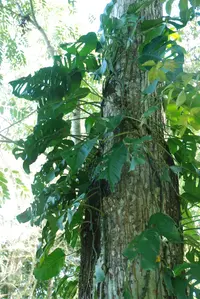
Monstera dissecta is a tropical climbing aroid known for its deeply cut, narrow leaf segments that give a lacy, elongated look. It is uncommon in cultivation and usually grown by collectors. In nature it occurs in humid forests of Central and South America, where it climbs tree trunks and branches for support. The plant tends to stay more slender and elongated than the better-known Monstera deliciosa. It is moderately challenging, as it prefers stable warmth, high humidity, and consistent moisture without waterlogging. A bright spot with filtered light and a well-draining, airy mix supports healthy growth and makes it easier to care for Monstera dissecta.

Care Difficulty
Moderate Care

Light Preference
Bright Indirect Light

Water Requirements
Moderate Water

Temperature Preference
Tropical / Frost Sensitive

Hardiness Zone
11–12

Soil Texture
Loamy, Organic-rich

Soil pH
Acidic (5.5–6.5), Slightly acidic (6.5–7.0)

Soil Drainage
Moist but well-drained

Fertilization
Light (every 4–6 weeks)
Scan your plant to receive care tips personalized for your specific plant
Available on iOS and Android
This species prefers bright, filtered light that mimics dappled forest canopy conditions.
Watering should keep the root zone evenly moist but never saturated.
Stable, warm conditions support steady growth and reduce stress for this aroid.
This species prefers moderately humid air and reacts noticeably to very dry conditions indoors.
This aroid prefers a loose, airy, organic-rich mix that drains quickly but holds some moisture.
This species is well suited to container growing when the pot supports its climbing, spreading habit.
Nutrient inputs support steady growth for Monstera dissecta in containers, but heavy feeding is not required.
Thoughtful pruning keeps Monstera dissecta manageable, encourages fuller growth, and removes weak tissues.
Container-grown plants benefit from occasional repotting to relieve root congestion and refresh the substrate.
Stem cuttings provide the most practical way of growing Monstera dissecta for home collections.
This species is frost sensitive and needs mild, stable conditions during winter, especially in containers.

Plant Health Check
Not sure what's wrong with your plant? Check your plant's health inside the app.
Monstera dissecta develops unusually long, narrow leaf divisions that often reach close to the midrib, giving each leaflet a deeply lacerated look compared with the broader windows of related species like M. deliciosa.
In its native Central American habitats, this species behaves as a strong climbing hemiepiphyte and is often associated with riverine or seasonally wet forests, where its elongated, divided leaves cope well with moving air and filtered light.
For years this species was frequently confused in cultivation with similar, dissected Monstera relatives, and only more recent comparative work on leaf morphology and reproductive structures has led to more consistent use of the name Monstera dissecta in collections and herbaria.
Browning edges usually result from low humidity, salt buildup from fertilizer, or inconsistent watering. Check for crispy margins, flush the soil occasionally, and maintain moderate humidity to prevent further tissue damage on new leaves.
Keep your plants happy and healthy with plant identification, disease detection, and easy care guidance.