Wind-harden foliage
If grown outdoors, gradually expose plants to gentle breezes over 2–3 weeks in spring so the arching leaves toughen and are less likely to tear in stronger winds later in the season.

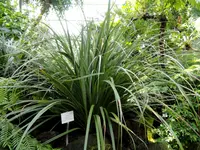
Perching lily, Astelia solandri, is an evergreen, clump-forming plant with arching, sword-like leaves. It often grows as an epiphyte, perched on tree branches or rocks. Leaves are typically green to bronze-green, creating a dense, fountain-shaped tuft. Small, inconspicuous flowers are followed by berries that add seasonal interest. In nature, it occurs in moist forests of New Zealand, where it benefits from cool, humid, and sheltered conditions. This species is moderately demanding, as it dislikes extreme heat, drought, or heavy, airless soil. Gardeners who learn how to care for Perching lily usually find it reliable when given consistent moisture and good drainage.

Care Difficulty
Moderate Care

Light Preference
Partial Shade

Water Requirements
Moderate Water

Temperature Preference
Warm Climate

Hardiness Zone
9–11

Soil Texture
Loamy, Sandy, Organic-rich

Soil pH
Acidic (5.5–6.5), Slightly acidic (6.5–7.0)

Soil Drainage
Moist but well-drained

Fertilization
Minimal (feed rarely)
Scan your plant to receive care tips personalized for your specific plant
Available on iOS and Android
This plant prefers bright but gentle light that mimics open woodland edges.
Astelia solandri prefers evenly moist but not saturated soil around its root zone.
This species grows best in mild, frost-free climates with stable, moderate temperatures.
This species prefers moderate humidity but adapts to typical indoor levels when air is not extremely dry.
Astelia solandri prefers loose, moisture-retentive but sharply drained soil that never stays waterlogged.
This species is suitable for container growing, especially in climates with cold winters or wet soils.
Astelia solandri benefits from modest feeding when grown in containers or poor soil, while in rich garden soil it needs very little extra nutrition.
Astelia solandri needs only light maintenance pruning to stay tidy and healthy.
This species is more often transplanted in the landscape than kept in small containers, but similar principles apply.
Astelia solandri is most reliably propagated by division rather than from seed.
In mild coastal or frost-free climates, Astelia solandri usually needs minimal winter attention.

Plant Health Check
Not sure what's wrong with your plant? Check your plant's health inside the app.
This species naturally grows as an epiphyte, perching on branches and trunks of trees in New Zealand’s moist lowland and montane forests rather than rooting in soil on the forest floor.
The stiff, arching leaves form a funnel-shaped rosette that traps leaf litter and organic debris, which slowly decomposes and helps supply nutrients to the plant in its nutrient-poor canopy habitat.
This plant is endemic to New Zealand and represents a distinct forest-dwelling member of the Astelia genus, which elsewhere includes more ground-dwelling and open-habitat species.

The pale, often whitish underside of the leaves reflects light and can make mature clumps conspicuous in the dim forest canopy, which has led field botanists to use these plants as visual markers when surveying New Zealand rainforest canopies.
Brown tips or edges usually result from low humidity, underwatering, or fertilizer salts building up in the potting mix. Check soil moisture, flush the substrate with clean water occasionally, and avoid placing this plant in very dry, heated air.
Keep your plants happy and healthy with plant identification, disease detection, and easy care guidance.