Epidendrum fimbriatum Care

Epidendrum fimbriatum

About Epidendrum fimbriatum

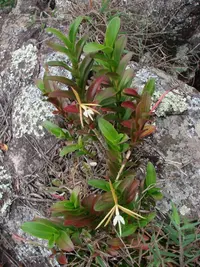
Epidendrum fimbriatum is a small to medium epiphytic orchid that usually grows on trees, forming clumps of slender, cane-like stems. It produces narrow leaves and showy, often fringed flowers that appear along the upper parts of the stems, giving a delicate and airy look.

This species occurs naturally in tropical and subtropical regions of Central and South America, typically in bright, humid forests at mid to high elevations. It tends to be moderately easy for growers familiar with basic orchid care, as long as it receives good light, regular moisture, and excellent drainage. Many hobbyists learn how to care for Epidendrum fimbriatum as a step up from beginner orchids.

Main Plant Requirements

Care Difficulty

Moderate Care

Light Preference

Partial Sun

Water Requirements

Moderate Water

Temperature Preference

Tropical / Frost Sensitive

Hardiness Zone

10–12

Soil Texture

Sandy, Loamy, Organic-rich

Soil pH

Acidic (5.5–6.5), Slightly acidic (6.5–7.0)

Soil Drainage

Moist but well-drained

Fertilization

Light (every 4–6 weeks)

Get Personalized Care Plan

Scan your plant to receive care tips personalized for your specific plant

Available on iOS and Android

How to Care for the Epidendrum fimbriatum

This orchid prefers bright, indirect light with some gentle direct sun each day.

  • Provide 4–6 hours of bright, filtered light, such as under 30–50% shade cloth or behind a sheer curtain, to support compact growth and flowering in Epidendrum fimbriatum.
  • Allow soft morning sun or late-afternoon sun; avoid harsh midday sun, which can cause yellowing, scorched patches, or crisp leaf edges.
  • In summer, shift slightly deeper into dappled shade; in winter, move to brighter exposure or closer to a window to compensate for shorter days.

This species prefers consistent moisture around the roots but not waterlogged conditions.

  • Water when the top 2–3 cm of the mix feels nearly dry, using thorough soaking and then letting excess drain completely from the pot or mount area.
  • In active growth and warm weather, watering may be needed several times per week; in cooler months, reduce frequency as drying slows.
  • Watch for wrinkled, limp leaves as a sign of underwatering, and for blackened roots or a sour smell as signs of overwatering and poor drainage.

This orchid grows best in mild, intermediate temperatures without sharp extremes.

  • Aim for 65–80°F (18–27°C) by day and 55–65°F (13–18°C) at night to support steady growth and flower production.
  • Protect from frost; growth stops near 45°F (7°C), and exposure below 40°F (4°C) risks cold damage to leaves and roots.
  • In heat above 85°F (29°C), increase air movement and shade, and avoid hot, stagnant spots such as enclosed patios or sun-baked windowsills.

This orchid prefers moderately humid air but tolerates typical indoor levels if not too dry.

  • Aim for 50–70% humidity, using a room humidifier or grouping plants if indoor air is very dry.
  • Crisping leaf tips, wrinkled pseudobulbs, or buds that dry and drop indicate humidity stress.
  • Place the pot on a pebble tray with water below the pot base to raise local humidity without soaking roots.

This species prefers a very airy, fast-draining medium similar to other epiphytic orchids.

  • Use a mix of medium orchid bark, perlite, and a little sphagnum moss to hold some moisture while keeping large air gaps.
  • Ensure water runs freely through the pot within seconds; the medium should never stay waterlogged or compacted.
  • A slightly acidic to neutral pH around 5.5–7 suits Epidendrum fimbriatum grown in a container mix.
  • Avoid fine peat-heavy potting soil, which collapses around the roots, reduces aeration, and encourages rot.

This orchid is well suited to container growing, especially in well-ventilated pots.

  • Choose a narrow, heavy-bottomed pot or cachepot to prevent tall stems from tipping in wind or when in flower.
  • Select slotted or net-style orchid pots to keep the chunky medium aerated and allow rapid evaporation after watering.
  • Match pot size closely to the root mass so the coarse mix dries evenly instead of staying wet in unused corners.

This orchid benefits from light, consistent feeding during active growth for balanced Epidendrum fimbriatum plant care.

  • Use a balanced NPK orchid fertilizer at 1/4–1/2 strength, applied to moist medium to prevent root burn.
  • Feed every 2–3 weeks in spring and summer when growth and flowering are strongest.
  • Reduce feeding to monthly or stop in fall and winter if growth slows under lower light.
  • Flush the pot with plain water every 3–4 feedings to clear excess salts from the medium.

Pruning focuses on hygiene and directing energy to healthy canes and flower spikes.

  • After blooming, cut spent flower spikes back to just above a node or the cane surface with clean, sharp scissors or pruners.
  • Remove dead, shriveled, or damaged canes at the base to lower disease risk and improve airflow.
  • Thin crowded or crossing stems in late winter or early spring to maintain an open, upright form for Epidendrum fimbriatum.
  • Always disinfect tools before and between cuts to limit spread of fungal or bacterial problems.

Container-grown plants appreciate occasional repotting to refresh the medium and accommodate the root system.

  • Repot every 2–3 years or when roots circle the pot, push the plant up, or growth becomes noticeably slower.
  • Choose late winter to early spring, just before active growth, as the least stressful time for Epidendrum fimbriatum.
  • Use a free-draining orchid mix based on medium bark with some perlite; select a pot only 2–3 cm wider than the old one.
  • Gently loosen and trim dead roots, then water lightly after repotting and keep in bright, indirect light until recovery is clear.

Propagation is typically done vegetatively to preserve flower traits and speed establishment.

  • Divide mature clumps in late spring when new roots emerge, ensuring each division has at least 3–4 healthy canes and active roots.
  • Plant divisions into fresh, well-drained orchid mix and keep humidity around 50–70% with gentle air movement.
  • Keikis, or small plantlets on canes or spikes, can be removed once roots reach 3–5 cm and potted individually.
  • Seed propagation is highly specialized and usually requires sterile laboratory conditions, so is not practical for home growers of Epidendrum fimbriatum.

This orchid is not frost hardy and needs mild, protected conditions in winter.

  • Keep temperatures near 55–65°F at night and 60–75°F by day; avoid exposure near freezing.
  • Move container plants indoors or into a greenhouse before the first frost, providing bright, filtered light.
  • Water less often in winter, allowing the medium to approach dryness but not stay dry for long periods.
  • In cool, humid spaces, increase air circulation to reduce fungal issues on leaves and canes of Epidendrum fimbriatum.

Care Tips

Manage aerial roots

Place plump aerial roots on top of the medium instead of burying them, and mist them lightly when you water to keep them functional without risking rot.

Use open mounts

For vigorous plants, mount the orchid on cork or tree fern with a thin layer of sphagnum, then secure rhizomes and new growths with soft ties so they root quickly and dry fast between waterings.

Rotate for even spikes

Turn the pot or mount 90° every 1–2 weeks so growths and flower spikes develop evenly and do not lean strongly toward a single light source.

Divide at active eyes

When clumps become overcrowded, divide only when new eyes (buds at the cane base) are swelling, keeping at least 4–6 healthy canes per division to maintain flowering strength.

Prevent salt buildup

Every 3–4 weeks, flush the pot or mount thoroughly with plain, low-mineral water to wash out fertilizer salts that otherwise burn fine roots, which is essential for stable long-term Epidendrum fimbriatum care.

Common Pests and Diseases

Scale insects

This pest feeds on sap along canes and leaf bases, often forming crusty brown or whitish bumps that weaken the plant and reduce flowering.

Solution

Isolate the plant, then gently scrape off visible scale with a cotton swab dipped in 70% isopropyl alcohol and rinse the plant with lukewarm water. For persistent infestations, apply a horticultural oil or insecticidal soap to all cane surfaces and leaf axils, repeating every 7–10 days while improving air movement and avoiding excess nitrogen fertilization.

Mealybugs

These insects hide in leaf axils, sheaths, and around roots, producing white cottony masses and sticky honeydew that can lead to sooty mold.

Solution

Remove loose sheaths and flush the plant thoroughly with tepid water, then spot-treat colonies with 70% isopropyl alcohol on a cotton swab or soft brush. In heavier infestations, use an insecticidal soap drench on foliage and exposed roots, repeat treatments weekly, and keep new plants quarantined to prevent reinfestation while caring for Epidendrum fimbriatum.

Spider mites

This pest thrives on Epidendrum grown in warm, dry indoor conditions, causing pale stippling on leaves, fine webbing, and eventual leaf drop.

Solution

Increase humidity to 50–70%, rinse foliage under a gentle shower, and wipe leaf undersides to remove mites and webbing. Follow with 2–3 applications of insecticidal soap or a neem-based spray at 5–7 day intervals, ensuring good air circulation and avoiding direct hot sun after treatment.

Bacterial brown spot

This disease causes small, water-soaked lesions on leaves that quickly turn brown or black with a yellow halo, often starting where water sits on foliage.

Solution

Immediately remove and discard affected leaves with a sterile blade, cutting well into healthy tissue, and keep water off the foliage, especially at night. Improve airflow, avoid crowding, and consider a copper-based bactericide labeled for orchids as a preventative spray on remaining healthy tissue if conditions stay warm and humid.

Leaf anthracnose

This disease produces irregular tan to dark brown spots or patches on leaves and pseudobulbless stems, sometimes merging into larger dead areas under high humidity and poor air movement.

Solution

Prune out spotted tissue with sterile tools, reduce overhead watering, and provide stronger air circulation around the canes. Keep the plant in bright, indirect light to promote dry foliage and, in severe cases, use a systemic fungicide labeled for orchids following label directions while monitoring new growth for any fresh lesions.

Interesting Facts

Fringed flower lip

This species is named for its distinctly fringed labellum, the modified lip petal that shows fine, lacy margins, which likely helps guide pollinators toward the nectar-producing structures.

Andean cloud-forest native

It naturally occurs on montane slopes and cloud forests of the northern Andes, where it experiences cool to mild temperatures, frequent mists, and high humidity throughout much of the year.

Variable flower coloration

Populations show notable variation in flower color, from greenish to yellowish or reddish tones, which may reflect local pollinator communities and microhabitat conditions rather than a single uniform floral form.

FAQs about Epidendrum fimbriatum

This species typically flowers in late winter to spring, sometimes again later under stable conditions. Individual blooms may last 1–3 weeks, while the overall flowering period on a healthy spike can extend for several weeks.

Grow Healthy Plants with Botan Care

Keep your plants happy and healthy with plant identification, disease detection, and easy care guidance.

Botan plant care app — identify plants on mobile

Explore More Plants