


Tillandsia deppeana Care

Tillandsia deppeana

About Tillandsia deppeana

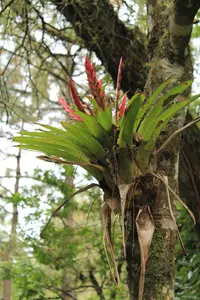
Tillandsia deppeana is a large epiphytic air plant from the mountains of Mexico and Central America. It usually grows attached to trees or rocks rather than in soil. Rosettes of stiff, gray‑green leaves form an arching clump, and mature plants produce a tall, colorful flower spike that can be quite striking in bright light. This species prefers good air movement, bright filtered light, and regular moisture on its leaves, with drying periods in between. Its tolerance of air movement and lack of soil makes how to care for Tillandsia deppeana relatively straightforward for growers who can provide consistent light and airflow.

Main Plant Requirements

Care Difficulty

Moderate Care

Light Preference

Partial Sun

Water Requirements

Low Water

Temperature Preference

Warm Climate

Hardiness Zone

10–12

Soil Texture

Rocky, Sandy

Soil pH

Acidic (5.5–6.5)

Soil Drainage

Well-drained

Fertilization

Minimal (feed rarely)

Get Personalized Care Plan

Scan your plant to receive care tips personalized for your specific plant

Available on iOS and Android

How to Care for the Tillandsia deppeana

This atmospheric air plant prefers bright, indirect light with some gentle direct sun.

  • Provide 3–5 hours of soft morning sun or late-afternoon sun, plus bright filtered light the rest of the day, avoiding harsh midday rays that can scorch leaves.
  • In hot, exposed sites, give Tillandsia deppeana dappled shade under trees or shade cloth, especially during summer midday hours.
  • If light is too low, leaves elongate and color dulls; shift gradually to a brighter position over 7–10 days to prevent light shock.

This epiphytic species absorbs moisture through its leaves, so watering focuses on wetting foliage rather than roots.

  • Thoroughly mist or soak the plant for 10–20 minutes, then shake off excess so no water pools in leaf bases, allowing it to dry within 3–4 hours.
  • Water when foliage feels papery or curls slightly, typically every 2–4 days in hot, dry weather and every 5–7 days in cooler, humid conditions.
  • Overwatering shows as limp, darkening leaf bases or rot odor, while underwatering causes brittle tips; increase air movement and use very fast-draining mounts or substrates.

This highland tillandsia favors mild, stable temperatures without frost or extreme heat spikes.

  • Aim for 65–80°F (18–27°C) for best growth, with slightly cooler nights improving vigor and flower initiation.
  • Protect from cold below 40°F (4°C); brief dips to 35°F (2°C) may be survivable if dry, but repeated chills increase rot and tissue damage risk.
  • In hot spells above 90°F (32°C), move to shaded, airy locations, increase misting early in the day, and avoid heat-reflecting metal or stone surfaces.

This species prefers moderate humidity but tolerates typical indoor levels if hydration is consistent.

  • Aim for 40–60% humidity, using regular misting or short soaks to supplement dry indoor air.
  • Dry, crispy leaf tips, dull color, or leaf curling indicate humidity or moisture stress.
  • Increase humidity locally with a pebble tray, grouping plants, or running a small nearby humidifier.
  • Ensure Tillandsia deppeana dries fully within a few hours after misting to prevent rot in humid environments.

Tillandsia deppeana is an epiphytic air plant and should never be planted in conventional potting soil.

  • Mount the plant on cork bark, driftwood, or a mesh surface, leaving the base fully exposed to air.
  • If support is needed in a container, use inert, airy materials like large orchid bark, lava rock, or coarse charcoal, not peat mixes.
  • Ensure 360° air circulation around the leaves and base; avoid packing any medium tightly around the plant.
  • Rinse mounting materials occasionally to remove dust and salts that could interfere with water uptake.

This species can be grown in containers if treated as a mounted air plant rather than potted in substrate.

  • Use shallow, open containers or wire baskets that let air move freely around the entire plant and allow rapid drying after watering.
  • Secure the plant with soft ties, fishing line, or mesh so it remains stable without burying the base in any medium.
  • Choose heavier containers or add stones at the bottom to prevent toppling, as larger rosettes can become top‑heavy over time.

This epiphytic species needs only light, occasional feeding to stay healthy in cultivation.

  • Use a balanced, water-soluble NPK fertilizer formulated for epiphytes or orchids, avoiding urea-heavy products.
  • Apply at 1⁄4–1⁄2 label strength every 4–6 weeks during the warm growing season after thorough watering.
  • Skip or greatly reduce feeding in winter, when Tillandsia deppeana slows growth indoors or outdoors.
  • Rinse plants with plain water monthly to limit fertilizer salt buildup on leaves and roots.

Pruning is minimal and mainly used to maintain health and shape in Tillandsia deppeana.

  • Best timing is late winter to early spring, before strong new growth begins.
  • Remove dead, dried, or damaged leaves at the base using clean, sharp scissors or small snips.
  • Cut spent flower spikes close to their base once they dry, which tidies the plant and can redirect energy to offsets.
  • Thin crowded offsets only if airflow is poor or the clump becomes too dense for its mount.

This air plant is usually mounted rather than potted, so transplanting focuses on remounting rather than root disturbance.

  • Remount when the clump outgrows its support, becomes unstable, or shading inside the cluster slows growth.
  • Best time is spring to early summer, when temperatures are mild and growth is active.
  • Typical frequency is every 3–5 years, or sooner if the mounting material decays or hardware corrodes.
  • Gently separate the base from the old mount, avoid breaking the limited root system, then secure to a new, dry, well-ventilated support.

Propagation of Tillandsia deppeana is most reliable through offsets rather than seeds in home conditions.

  • Allow the mother plant to produce pups at the base after flowering, then wait until each reaches about 1⁄3–1⁄2 of the parent size.
  • Detach pups in spring or early summer using clean fingers or a sterile knife, keeping their bases intact.
  • Mount new divisions on well-ventilated material and provide bright, filtered light with good air movement.
  • Maintain moderate humidity and resume normal misting or dunking once the pups are firmly attached and show fresh leaf growth.

This species dislikes hard frost and benefits from simple winter protection in most temperate climates.

  • Move mounted or container plants indoors when temperatures approach 35–40°F, using a bright, airy spot.
  • Avoid freezing drafts near windows or doors, which can damage leaf tips and central growth points.
  • Reduce watering in cool conditions, letting plants dry faster with fans or open space around the foliage.

Care Tips

Optimize mounting surfaces

Fix plants to rough, inert materials like cork bark, hardwood, or lava rock using soft wire or nylon fishing line, leaving the base slightly lifted so air can circulate and new roots can anchor without being constricted.

Use seasonal air shifts

In warm months, move plants outdoors under bright, filtered light where there is consistent airflow, then bring them back indoors before nights drop below about 50°F to reduce cold stress and fungal risk.

Leverage quick-dry dunking

Instead of long soaks, use short 5–10 minute dunks in room-temperature water, then place plants upside down on a towel or mesh for 20–30 minutes so water drains fully from leaf bases and does not cause rot.

Group for microclimate

Arrange several air plants together on a branch or display frame away from walls to create a slightly more humid microclimate around them while still allowing air movement between individual plants.

Inspect and rotate regularly

Every 2–3 weeks, inspect leaf bases and the central rosette for trapped debris, pests, or algae, gently remove any buildup, and rotate plants so different sides receive light, which supports even growth when caring for Tillandsia deppeana.

Common Pests and Diseases

Scale insects

This pest feeds on leaf bases and sheltered crevices, sucking sap and weakening the rosette. Symptoms include yellowing or pale patches, sticky residue, and small brown or off‑white bumps that do not brush off easily.

Solution

Remove affected plants from direct sun, then manually dislodge adults with a soft brush or cotton swab dipped in isopropyl alcohol, taking care not to soak the plant. Rinse thoroughly with lukewarm water, improve airflow, and repeat spot treatment weekly until no new insects appear; this is a key part of Tillandsia deppeana care instructions in collection settings.

Mealybugs

These insects hide in leaf axils and along the stem, producing white, cottony clusters and honeydew that can attract sooty mold. Infested plants may show slowed growth, leaf tip dieback, and general decline.

Solution

Quarantine affected plants, then use a cotton swab with diluted isopropyl alcohol to dab visible mealybugs, followed by a gentle but thorough rinse. Increase air movement, avoid overfertilizing, and repeat inspections and spot treatments every 5–7 days until no new clusters appear.

Fungal leaf spot

This disease causes small water‑soaked spots that turn tan to brown and may merge along the narrow leaves, especially in plants kept overly humid with poor air movement. Symptoms include slow expansion of lesions and, in severe cases, drying and collapse of leaf tips.

Solution

Improve ventilation around the plant, avoid misting into the crown, and allow the foliage to dry quickly after any watering. Trim and discard heavily spotted leaves with clean tools, then keep the plant in bright, airy conditions; a light application of a copper‑based fungicide can be used if new spots continue to appear.

Crown rot

This disease develops when water sits for long periods in the central rosette, leading to soft, brown, foul‑smelling tissue at the base of the leaves. Symptoms include sudden collapse of the central growth while outer leaves may initially remain green.

Solution

At the first signs, shake out excess water, remove the plant from very humid or stagnant air, and carefully cut away any soft, brown tissue with sterilized tools. Allow the remaining plant to dry in bright, indirect light with strong airflow, and always dry the rosette upside down after soaking or heavy watering to prevent recurrence.

Spider mites

These insects favor dry, warm indoor air and feed on the thin leaf surfaces, causing fine stippling, dull coloration, and in heavy infestations, delicate webbing near leaf bases. Symptoms include a dusty appearance and reduced vigor over time.

Solution

Rinse the plant thoroughly under a gentle stream of water, paying attention to leaf undersides and axils, then increase humidity slightly while maintaining strong airflow. For persistent infestations, use repeated applications of insecticidal soap or horticultural oil at low concentration, always rinsing after treatment to avoid residue buildup on the leaves.

Interesting Facts

High-elevation cloud dweller

This species is native to high-elevation pine–oak and cloud forests of Mexico and Central America, where it grows epiphytically on trees in cool, moist, but very airy conditions.

Massive, pendulous inflorescences

Mature plants produce unusually long, drooping flower spikes with many closely packed blossoms, a structure thought to help present nectar efficiently to hummingbirds and large insect pollinators in its native forests.

Heavily scaled leaves

Its thick, grey-green leaves are covered in dense trichomes, specialized scale-like structures that give a silvery cast and allow efficient water and nutrient absorption directly from fog, dew, and rain.

Botan icon

Did you know?

Among larger Mexican bromeliads, this species is notable for forming substantial, long-lived clumps high in the canopy, where its large, arching rosettes can become prominent structural elements in old pine–oak and cloud forest trees.

FAQs about Tillandsia deppeana

This species often needs to reach several years of age before flowering. Consistent bright light, strong air movement, and a steady temperature range support bud formation. Avoid heavy fertilization, which can push leafy growth at the expense of blooms.

Grow Healthy Plants with Botan Care

Keep your plants happy and healthy with plant identification, disease detection, and easy care guidance.

Botan plant care app — identify plants on mobile









