


Windbreak establishment
Plant sturdy windbreak species or install porous fencing on the windward side during the first 2–3 years to reduce leaf shredding and branch breakage in young breadfruit trees.

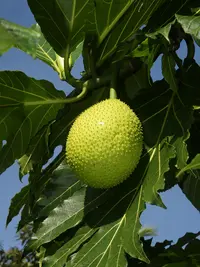
Breadfruit, Artocarpus altilis, is a fast-growing tropical tree known for its large, nutritious fruits and broad, deeply lobed leaves. It forms a rounded canopy and can become a sizable shade tree in warm climates.
This species originates from the Pacific Islands and is now grown across many tropical regions for food and agroforestry. It prefers steady warmth, high humidity, and well-drained soil, which can make outdoor cultivation challenging in cooler or dry areas.
Once established in a suitable climate, it is generally robust, with moderate tolerance to wind and salt spray. Understanding how to care for breadfruit mainly involves providing stable warmth, good light, and consistent moisture without waterlogging.

Care Difficulty
Moderate Care

Light Preference
Full Sun

Water Requirements
Regular Water

Temperature Preference
Tropical / Frost Sensitive

Hardiness Zone
10–12

Soil Texture
Sandy, Loamy, Organic-rich

Soil pH
Acidic (5.5–6.5), Slightly acidic (6.5–7.0)

Soil Drainage
Moist but well-drained

Fertilization
Minimal (feed rarely)
Scan your plant to receive care tips personalized for your specific plant
Available on iOS and Android
Artocarpus altilis needs strong, consistent light to fruit well and maintain healthy foliage.
Artocarpus altilis needs steady moisture in well-drained soil to support fast growth and fruiting.
This tropical tree requires warm, frost-free conditions for reliable growth and fruiting.
This species comes from humid tropics and benefits from elevated air moisture.
This tree prefers deep, well‑structured mineral soil that never stays waterlogged.
This species can be grown in large containers when managed as a pruned, juvenile or compact tree.
This tropical tree benefits from moderate, steady feeding in warm months to support foliage and fruit production.
Thoughtful pruning helps Artocarpus altilis maintain a strong framework and manageable size.
This species is usually transplanted from nursery containers into the ground once it is well established as a young tree.
Artocarpus altilis is commonly propagated in managed plantings, but methods require careful execution for good success.
This tropical tree is very frost sensitive and needs careful winter management outside true lowland tropics.

Plant Health Check
Not sure what's wrong with your plant? Check your plant's health inside the app.
Breadfruit has been a major staple food across many Pacific Island cultures for centuries, providing a high-carbohydrate, energy-rich diet similar in use to potato or rice.
Many cultivated breadfruit trees are seedless and propagated vegetatively from root shoots or cuttings, so some traditional varieties in the Pacific are essentially ancient clones maintained over many generations.
Wild, seeded forms of breadfruit produce fruits whose seeds can withstand seawater, helping the species disperse naturally among islands across the tropical Pacific.

Breadfruit played a central role in the 18th‑century British naval expedition of HMS Bounty, whose mission was to transport live breadfruit trees from Tahiti to the Caribbean as a low-cost food for enslaved people, linking this species directly to one of the most famous mutinies in maritime history.
Growth is relatively fast in warm, humid climates. Young trees commonly add 60–120 cm per year and can begin fruiting in 3–6 years, depending on cultivar, soil fertility, moisture, and absence of wind or salt stress.
Keep your plants happy and healthy with plant identification, disease detection, and easy care guidance.

candelabra wattle
Acacia holosericea
Garden Lettuce
Lactuca sativa var. crispa
emblic
Phyllanthus emblica
Australian pitcher plant
Cephalotus follicularis
African Dragon Tree
Dracaena arborea
Elephant Ear
Colocasia esculenta Royal Hawaiian® Black Coral
Spanish onion
Allium cepa var. cepa
Tahitian gooseberry tree
Phyllanthus acidus