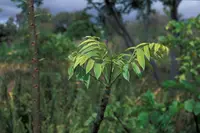
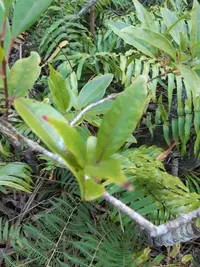
Root flare check
When planting or top-dressing older specimens, ensure the uppermost woody roots sit just at or slightly above soil level, since burying the root flare increases risk of collar rot and weak anchorage over time.

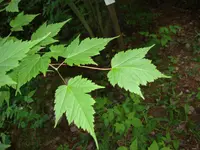
Bearded maple, Acer barbinerve, is a deciduous shrub or small tree grown mainly for its fine-textured foliage and graceful branching. It belongs to the maple family but stays relatively compact compared with many larger maples.
The plant typically has slender stems and small, lobed leaves that give it a delicate, airy look, making it suitable for understory planting or sheltered gardens. Its subtle seasonal color changes add quiet interest rather than bold displays.
Acer barbinerve is native to parts of East Asia, where it grows in cool, moist woodland habitats. It prefers light shade, consistent moisture, and well-drained, humus-rich soil.
Due to its moderate growth rate and preference for stable conditions, it suits patient gardeners who are ready to learn how to care for Bearded maple without frequent relocation or disturbance.

Care Difficulty
Moderate Care

Light Preference
Partial Shade

Water Requirements
Moderate Water

Temperature Preference
Cold Hardy

Hardiness Zone
5–7

Soil Texture
Loamy, Silty, Organic-rich

Soil pH
Acidic (5.5–6.5), Slightly acidic (6.5–7.0)

Soil Drainage
Moist but well-drained

Fertilization
Minimal (feed rarely)
Scan your plant to receive care tips personalized for your specific plant
Available on iOS and Android
This maple prefers bright, gentle light with protection from harsh afternoon sun.
This species prefers evenly moist, cool soil that never stays waterlogged.
This maple is a cold-hardy, temperate tree that prefers cool to mild conditions.
This species prefers moderately moist air but usually copes with typical outdoor garden humidity.
Acer barbinerve thrives in loose, moisture-retentive but well-drained ground.
This maple can be grown in containers for some years if the pot supports steady moisture and root spread.
This species grows well in reasonably fertile soil and only needs modest feeding in cultivation.
Acer barbinerve benefits from light, targeted pruning to maintain structure and health.
This maple is usually grown in the ground, so transplanting is more relevant than container repotting.
Propagation of Acer barbinerve is possible but tends to be slow and is mainly done by seed or layering.
This maple is generally cold hardy in temperate climates and needs only modest winter attention once established.

Plant Health Check
Not sure what's wrong with your plant? Check your plant's health inside the app.
The species name barbinerve refers to the distinctive tufts of hairs along the main veins on the underside of the leaves, a feature that helps separate it from many similar small-leaved Asian maples.
Acer barbinerve naturally grows as a multi-stemmed shrub or small tree in cool, mountainous forests of China and nearby regions, where it forms part of the understory rather than the main canopy.
Its samaras, the paired winged fruits typical of maples, are relatively small and adapted for short-distance wind dispersal within sheltered forest habitats rather than for long-range spread across open landscapes.
This species grows at a moderate rate, typically adding 20–40 cm in height per year under good conditions. Growth is slower in poor soil, exposed sites, or when newly transplanted and still establishing its root system.
Keep your plants happy and healthy with plant identification, disease detection, and easy care guidance.