Antidesma madagascariense Care

Antidesma madagascariense

About Antidesma madagascariense

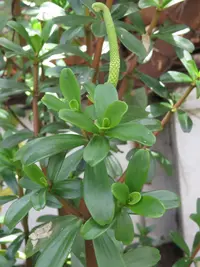
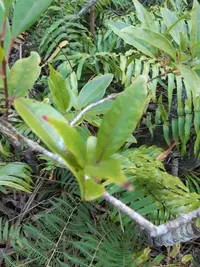
Antidesma madagascariense is an evergreen shrub or small tree from the spurge family, typically forming a dense, rounded crown with many slender branches. The foliage is simple, smooth, and medium green, giving the plant a neat, tidy look year-round.

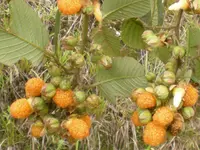
It is native to Madagascar and nearby regions, where it grows in warm, humid forests and coastal habitats. Small flowers are followed by clusters of berries that turn from green to red or dark purple as they mature.

In cultivation it prefers a warm climate, regular moisture, and free-draining soil, and it is best suited to frost-free gardens or protected spaces. Gardeners who want to learn how to care for Antidesma madagascariense should focus on warmth, consistent but not waterlogged soil, and shelter from cold winds.

Main Plant Requirements

Care Difficulty

Moderate Care

Light Preference

Partial Shade

Water Requirements

Moderate Water

Temperature Preference

Tropical / Frost Sensitive

Hardiness Zone

10–11

Soil Texture

Sandy, Loamy, Organic-rich

Soil pH

Acidic (5.5–6.5), Slightly acidic (6.5–7.0)

Soil Drainage

Moist but well-drained

Fertilization

Minimal (feed rarely)

Get Personalized Care Plan

Scan your plant to receive care tips personalized for your specific plant

Available on iOS and Android

How to Care for the Antidesma madagascariense

This tropical shrub prefers bright, soft light similar to an open forest edge.

  • Provide 4–6 hours of morning sun with light afternoon shade; strong late-day sun can scorch young leaves of Antidesma madagascariense.
  • In hotter regions, use dappled or filtered light under taller trees; in cooler coastal areas it tolerates more direct sun without leaf burn.
  • Watch foliage color and density: sparse, elongated shoots indicate insufficient light, while yellowing or crisp leaf edges suggest too much intense sun, especially in summer.

This species prefers evenly moist, well-drained soil that never stays soggy for long.

  • Water when the top 3–5 cm of soil feels dry, allowing deeper soil to stay slightly moist but not saturated.
  • Increase watering frequency in active growth and hot weather, then reduce in cooler months while still preventing complete soil dryness around the root zone.
  • Signs of overwatering include limp leaves, blackened roots, and a sour soil smell; dry, curling leaves and slow growth indicate underwatering or very fast-draining soil.

This plant performs best in warm, frost-free conditions typical of lowland tropics.

  • Aim for 70–86°F (21–30°C) for steady growth, with short periods up to 90°F (32°C) tolerated if soil moisture is stable.
  • Protect from temperatures below 50°F (10°C); prolonged exposure near this level can slow growth and damage tender shoots.
  • Avoid frost entirely, as freezing temperatures can kill top growth; shelter young plants from cold winds and sudden spring or autumn temperature drops.

This species prefers moderately humid air for steady growth.

  • Aim for 50–70% humidity, as very dry indoor air can slow growth and cause leaf edge browning.
  • Watch for curled, crispy leaf margins and stalled new growth as signs of humidity stress.
  • Increase humidity with a nearby humidifier, grouped plants, or a pebble tray, avoiding misting that keeps foliage wet for long periods.

Antidesma madagascariense grows best in a loose, well‑structured mix that drains freely yet retains some moisture.

  • Use a loamy, organic‑rich base made from 50–60% compost or high‑quality potting mix blended with mineral components.
  • Add 20–30% coarse sand and 10–20% perlite or pumice to improve drainage and root aeration.
  • Target slightly acidic to neutral pH around 6.0–7.0, avoiding strongly alkaline or salty substrates.
  • Avoid compacted, heavy clay or mixes high in peat alone, which can become waterlogged and suffocate roots.

This species can adapt to container growing if the pot is chosen to support its woody root system and eventual size.

  • Choose a deep, heavy container that resists tipping as the shrub gains height and develops a woody canopy.
  • Select thicker terracotta or similar porous materials if extra evaporation is needed in wet climates to prevent prolonged saturation.
  • Use a broad-based pot so lateral roots can spread, reducing stress on the main root crown under wind or minor knocks.

This species benefits from light, balanced feeding in containers or poor soils, but established plants in fertile ground often need little extra input.

  • Use a balanced liquid or slow-release fertilizer (around 10-10-10) for Antidesma madagascariense grown in pots or nutrient-poor sites.
  • Feed every 4–6 weeks during the warm growing season, adjusting to growth rate and leaf color.
  • Apply at half the label strength on moist soil to limit root burn and salt buildup.
  • Stop or reduce feeding to 1 light application for the entire period during cooler winter or dormant conditions.

Pruning is mainly used to maintain shape and remove weak growth rather than as a strict annual task for this shrub or small tree.

  • Carry out light structural pruning in late winter or early spring, before strong new growth starts.
  • Remove dead, diseased, crossing, or inward-growing branches to open the canopy and improve airflow.
  • Shorten overly vigorous shoots to maintain the desired height and spread, encouraging denser branching.
  • Use clean, sharp bypass pruners or a small saw, making cuts just above a bud or branch junction.

This plant is most often grown in the ground, so transplanting young specimens correctly is more important than frequent repotting.

  • Look for roots circling the pot drainage holes, pot-bound root mass, or slowed growth as signs a container plant needs a larger space.
  • Transplant or up-pot in spring or early summer, when temperatures are warm and growth is active, about every 2–3 years for container-grown plants.
  • Loosen circling roots gently, keep the root ball slightly moist, and set at the same soil depth in a well-drained site or potting mix.
  • Water thoroughly after planting, shade lightly for 1–2 weeks, and avoid heavy pruning at the same time to reduce transplant shock.

Propagation is usually done from seed or semi-hardwood cuttings, both of which require warmth and consistent moisture.

  • Sow fresh, cleaned seeds in spring in a free-draining mix, covering lightly and keeping at 70–80°F with steady, moderate moisture.
  • Take semi-hardwood cuttings in late spring to summer, 8–12 cm long, with at least 2 nodes and a few leaves retained.
  • Dip cut bases in rooting hormone, then place in a sterile, coarse medium under high humidity and bright, indirect light.
  • Provide bottom heat if possible and avoid waterlogging; root development can be slow, so maintain stable conditions for several weeks.

This tropical species is frost sensitive and needs protection in climates with cool or freezing winters, especially when grown in containers.

  • In regions below about 40°F, grow in a container so it can be moved indoors or into a heated greenhouse for winter.
  • Before first frost, shift potted plants to a bright, cool interior space and reduce watering while growth slows.
  • For in-ground plants in marginal climates, apply a 5–8 cm mulch layer over the root zone, keeping it slightly away from the trunk.
  • Shield young stems from freezing winds using a breathable fabric wrap or temporary windbreak structure.

Care Tips

Formative framework pruning

In the first 2–3 years, selectively tip back overly upright shoots and keep 3–5 main branches to build a strong, open framework that supports fruiting and reduces long-term breakage risk.

Wind and weight support

In windy or exposed sites, install sturdy stakes or a low trellis and loosely tie main stems so that developing fruit clusters do not twist or snap branches under their own weight.

Mulch to protect roots

Apply a 5–8 cm layer of coarse organic mulch over the root zone, keeping it 5–10 cm away from the trunk, to stabilize soil temperature, protect shallow feeder roots, and suppress weed competition.

Targeted fruit thinning

If branches carry very dense fruit clusters, remove a portion of the immature berries by hand so that remaining fruits size up better and branches are not stressed or deformed.

Salinity and runoff management

In coastal or roadside plantings, periodically deep-water beyond the root zone to leach out accumulated salts and avoid using de-icing salts or high-salinity runoff channels near the planting area when growing Antidesma madagascariense.

Common Pests and Diseases

Scale insects

These insects attach tightly to stems and leaves, sucking sap and causing yellowing, leaf drop, and reduced vigor, especially on younger growth.

Solution

Prune heavily infested twigs, then wipe remaining colonies with cotton pads dipped in 70% isopropyl alcohol or insecticidal soap, repeating every 7–10 days until no new scales appear; in outdoor plantings, encourage natural predators such as lady beetles and parasitic wasps and avoid broad-spectrum chemicals that disrupt them.

Mealybugs

This pest forms white, cottony clusters in leaf axils and on shoot tips, leading to distorted new growth, sticky honeydew, and sooty mold on leaves.

Solution

Isolate affected plants, physically remove visible clusters with a soft brush or cotton swab dipped in alcohol, and wash foliage thoroughly with a mild insecticidal soap solution, repeating treatments on a 7–14 day cycle to break the life cycle while monitoring for reinfestation.

Leaf spot

This disease causes small brown or dark purple leaf lesions that may expand, merge, and lead to premature leaf drop in humid, shaded conditions.

Solution

Remove and dispose of affected leaves, avoid overhead watering, and improve air movement around the plant; if spots continue to spread in wet weather, apply a copper-based fungicide according to label directions and keep foliage as dry as possible during treatment to support overall Antidesma madagascariense care.

Sooty mold

This disease appears as a black, powdery coating on leaves and stems growing on the sugary honeydew excreted by sap-feeding insects, reducing light reaching the leaf surface and slowing growth.

Solution

Control underlying pests such as scale and mealybugs, then gently wash leaves with lukewarm water and a small amount of mild dish soap to remove the fungal coating, ensuring better light interception and repeating cleaning as needed until new growth remains clean.

Interesting Facts

Madagascar coastal specialist

This species is native to humid lowland forests of eastern Madagascar, where it often grows near the coast on well-drained, sometimes sandy soils influenced by oceanic climate.

Dioecious flowering shrub

Individual plants are either male or female, a condition called dioecy, so pollen-producing and fruiting flowers occur on separate shrubs.

Drooping berry clusters

It produces elongated, hanging clusters of small drupes that ripen from green through red to dark purple-black, providing an extended food source for local birds and other wildlife.

FAQs about Antidesma madagascariense

This species typically forms a shrub or small tree, often 2–6 m tall in gardens, taller in the ground under ideal conditions. In containers it stays smaller, especially if lightly pruned to control height and shape.

Grow Healthy Plants with Botan Care

Keep your plants happy and healthy with plant identification, disease detection, and easy care guidance.

Botan plant care app — identify plants on mobile

Explore More Plants