feijoa Care (Feijoa sellowiana)

Also known as: pineapple guava, guavasteen
feijoa

About feijoa

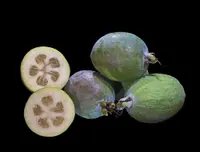
Feijoa, or Feijoa sellowiana, is an evergreen shrub or small tree grown for its aromatic fruit and ornamental value. It has thick, gray-green leaves with silvery undersides and attractive white flowers with red stamens. Native to southern Brazil, Uruguay, Paraguay, and northern Argentina, it is now widely cultivated in mild, frost-free climates. The plant forms a dense, rounded shape and can be used as a fruiting hedge, specimen shrub, or container plant in suitable regions. It is generally resilient and forgiving, which makes it easier to care for feijoa than many other fruiting shrubs, as long as it receives good light, moderate moisture, and well-drained soil.

Main Plant Requirements

Care Difficulty

Moderate Care

Light Preference

Full Sun

Water Requirements

Moderate Water

Temperature Preference

Warm Climate

Hardiness Zone

8–11

Soil Texture

Sandy, Loamy, Organic-rich

Soil pH

Acidic (5.5–6.5), Slightly acidic (6.5–7.0)

Soil Drainage

Well-drained

Fertilization

Minimal (feed rarely)

Get Personalized Care Plan

Scan your plant to receive care tips personalized for your specific plant

Available on iOS and Android

How to Care for the feijoa

This shrub fruits best with strong light and some direct sun each day.

  • Provide 6–8 hours of sun daily, ideally with full morning sun and light afternoon shade in hot climates.
  • Tolerates light partial shade (around 4–5 hours sun), but flowering and fruiting of feijoa decrease as shade increases.
  • In summer, protect from intense reflected heat that can scorch foliage; in winter, avoid heavy shade from buildings or trees that reduces next season’s bloom.

Feijoa sellowiana prefers steady soil moisture without staying soggy.

  • Water when the top 3–5 cm of soil feel dry, applying a slow, deep soak to reach the root zone rather than frequent light splashes.
  • In spring and summer, monitor more often during flowering and fruiting; in fall and winter, extend intervals as growth slows and rainfall increases.
  • Watch for yellowing, soft leaves or constant wet soil as signs of overwatering, and dull, curling leaves or dry, cracked soil as signs of underwatering.

This species favors mild, frost-tolerant conditions and handles both cool and warm seasons when extremes are avoided.

  • Optimal growth occurs around 65–80°F (18–27°C), with strongest vegetative and flowering performance in warm, stable conditions.
  • Mature plants tolerate brief drops to about 15–20°F (-9 to -6°C), but young plants are more sensitive and benefit from frost cloth during hard freezes.
  • In hot regions above 95°F (35°C), provide mulch and some afternoon shade to limit root and leaf stress, especially in dry, windy weather.

This species tolerates a wide humidity range, so humidity management is usually not critical indoors or outdoors.

Feijoa sellowiana prefers a well-aerated, moderately fertile, sandy loam that drains freely yet holds slight moisture.

  • Use a mix of about 50% loam-based potting soil, 25% coarse sand, and 25% compost to combine structure, drainage, and nutrients.
  • Aim for slightly acidic to neutral pH, roughly 6.0–7.0, to support nutrient availability and stable root growth.
  • Improve aeration and prevent compaction by adding coarse perlite or fine bark, especially in heavy or clay-influenced soils.
  • Avoid waterlogged, poorly drained, or highly compacted ground, which promotes root rot and weak growth.

This species adapts well to container growing when the pot supports deep, wide root development and stable anchoring.

  • Choose a heavy, wide-based container to prevent tipping as the woody canopy becomes dense and top-heavy.
  • Select a pot at least 40–45 cm deep so the strong taproot and lateral roots can extend without circling too tightly.
  • Use a free-draining mix and raise the container slightly off the ground so drainage holes never sit in collected water.

Balanced feeding supports steady growth and fruiting for feijoa without forcing soft, weak shoots.

  • Use a balanced slow-release fertilizer (around 10-10-10) or well-rotted compost at the start of spring growth.
  • Feed every 6–8 weeks through late summer for container plants; in-ground trees often manage with 1–2 light applications.
  • Apply at half to three-quarter label strength on young plants to avoid salt stress in the root zone.
  • Stop feeding 6–8 weeks before expected frost and give only minimal or no fertilizer over winter dormancy.

Thoughtful pruning keeps Feijoa sellowiana open, productive, and easy to manage.

  • Carry out main pruning in late winter or very early spring before vigorous new growth starts.
  • Remove dead, diseased, crossing, and inward-growing branches to improve airflow and light penetration.
  • Thin crowded shoots and shorten overly long branches to maintain a balanced, vase-like framework.
  • Use sharp bypass hand pruners and loppers, making clean cuts just above outward-facing buds or branch collars.

Container and young landscape plants benefit from careful transplanting to support long-term structure.

  • Plan major transplanting or up-potting in late winter to early spring when active growth is about to resume.
  • Look for roots circling the container, water running straight through, or slowed growth as signals to move up 1 pot size.
  • Loosen or slice circling roots lightly, set the plant at the same soil level, and backfill with well-drained mix or soil.
  • Water thoroughly after moving, then shade from intense sun and keep soil evenly moist for 1–2 weeks to limit transplant shock.

New Feijoa sellowiana plants are most often produced from semi-hardwood cuttings or seeds, depending on desired traits.

  • Take semi-hardwood cuttings in late summer, 10–15 cm long, with 2–3 leaf nodes, and use rooting hormone on the cut base.
  • Insert cuttings into a free-draining mix, keep at 68–75°F with bright, indirect light and high humidity until roots form.
  • Sow fresh seeds in spring in a light seed mix, barely covered, and keep evenly moist and warm for steady germination.
  • Label named cultivars when using cuttings, since seedlings vary and may not match the parent for fruit quality.

This species is moderately cold-hardy but benefits from simple winter management in cooler regions.

  • Mature plants tolerate brief drops near 15–20°F, but young trees are more sensitive to hard freezes.
  • Apply 5–8 cm of mulch around the root zone in late fall, keeping it a few cm away from the trunk.
  • Wrap young trunks with breathable trunk wrap or horticultural fleece in areas with repeated freezes.
  • Move container plants to a bright, cool, frost-free area and reduce watering while soil stays cold.

Care Tips

Encourage Cross-Pollination

Plant at least 2 genetically different feijoa shrubs within 3–5 m of each other or graft multiple cultivars onto one plant to significantly improve fruit set and size.

Hand-Pollination Technique

For higher yields, use a small, clean paintbrush or cotton swab in late spring to transfer pollen from the anthers of one flower to the stigmas of flowers on a different plant, working in dry weather to avoid clumping.

Wind And Load Support

Install a sturdy stake or low framework when plants are young in windy sites, and tie main stems loosely with soft ties to prevent rocking and root damage as the canopy and fruit load increase.

Targeted Fruit Thinning

After natural fruit drop, remove excess small or crowded fruits by hand so that mature fruits are spaced about 7–10 cm apart, which helps the plant direct resources into fewer, better-quality fruits.

Mulch For Root Stability

Apply a 5–8 cm layer of coarse organic mulch in a wide ring, keeping it 5–8 cm away from the trunk, to buffer soil temperature, reduce weed competition, and support a more stable root environment when growing feijoa.

Common Pests and Diseases

Guava moth

This pest is a small moth whose larvae tunnel into developing fruits, causing internal browning, frass, and premature fruit drop. Symptoms include small entry holes on the fruit surface and spoiled flesh inside.

Solution

Collect and destroy infested fruit, including any that have fallen to the ground, to break the life cycle. Use fine insect mesh or fruit bagging, time harvests carefully, and in high-pressure areas consider pheromone traps or regionally recommended biological controls as part of broader Feijoa sellowiana care.

Scale insects

These insects attach to stems and leaves as small, rounded bumps and feed on plant sap, weakening growth. Sticky honeydew and sooty mold may develop on affected surfaces.

Solution

Prune and discard heavily infested twigs, then wipe remaining scales with a cotton pad dipped in diluted rubbing alcohol or insecticidal soap. Improve light and airflow, and repeat treatments every 7–10 days until new growth appears clean.

Myrtle rust

This disease is a fungal infection that causes bright yellow to orange powdery pustules on young leaves, shoots, and sometimes flowers. Symptoms include leaf distortion, dark lesions, and premature leaf drop.

Solution

Promptly remove and bag affected leaves and shoots without shaking spores, then dispose of them in household trash, not compost. Avoid overhead watering, increase spacing and airflow, and in regions where myrtle rust is established follow local guidance on approved fungicides and reporting requirements.

Brown spot leaf blight

This disease produces small brown leaf spots that may expand with pale halos, leading to yellowing and shedding of older foliage. Symptoms include a gradual thinning of the canopy from the inside out under humid, poorly ventilated conditions.

Solution

Rake and discard fallen leaves, then thin the canopy slightly to improve airflow and reduce humidity around foliage. Water at the base in the morning, avoid wetting leaves, and use a copper-based or other labeled fungicide if the problem recurs season after season.

Fruit cracking

This physiological disorder causes mature fruits to split, often after irregular watering or sudden heavy rain following dry periods. Symptoms include radial cracks from the blossom end, making fruit more vulnerable to secondary rots and insects.

Solution

Maintain consistent soil moisture with deep, even watering and a 5–8 cm organic mulch layer, avoiding waterlogging. Prevent sudden drought–flood cycles and, if possible, harvest promptly once fruits reach full size and begin to soften slightly.

Interesting Facts

Edible flower petals

The fleshy white petals of the flowers are sweet and crisp, and are traditionally eaten fresh in parts of South America and New Zealand without damaging fruit production, since pollination still occurs when only petals are removed and stamens are left intact.

Brush-type pollination

Its flowers have numerous long, showy stamens and are mainly pollinated by birds such as silvereyes in New Zealand, which feed on the petals and contact the pollen, while insects play a secondary role.

Cool-summer fruit set

Unlike many subtropical fruit trees, this species can set fruit reliably in regions with mild summers and tolerates light frosts, which has allowed successful growing feijoa in coastal climates that are too cool for many other fruiting species.

Botan icon

Did you know?

The fruit of this species often continues to develop internal flavor and aroma after naturally dropping from the plant, so in many traditional growing regions the most prized fruits are those collected from the ground rather than picked early from the branches.

FAQs about feijoa

Lack of flowers usually comes from insufficient light, young plant age, or pruning at the wrong time removing flowering wood. Poor nutrition, especially low potassium, and lack of pollination partners can also reduce flowering and fruit set.

Grow Healthy Plants with Botan Care

Keep your plants happy and healthy with plant identification, disease detection, and easy care guidance.

Botan plant care app — identify plants on mobile

Explore More Plants