Prunus × gondouinii Care

Prunus × gondouinii

About Prunus × gondouinii

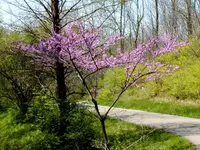
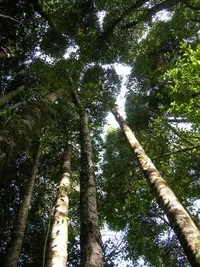
Prunus × gondouinii is a hybrid ornamental cherry, typically grown as a small tree or large shrub. It is valued for its abundant spring blossom and tidy, upright habit. The plant produces clouds of pale to deep pink flowers, followed by small fruits that are usually of limited culinary value but attractive to wildlife. Foliage is deciduous, giving light shade in summer and opening views in winter. This hybrid has garden origins in Europe and is now used widely in temperate landscapes and streetscapes. It is generally considered moderate in difficulty, as it needs well-drained soil, sun, and protection from severe drought or waterlogging. Understanding how to care for Prunus × gondouinii helps keep its flowering and structure strong over many years.

Main Plant Requirements

Care Difficulty

Moderate Care

Light Preference

Full Sun

Water Requirements

Moderate Water

Temperature Preference

Cold Hardy

Hardiness Zone

5–8

Soil Texture

Sandy, Loamy, Clay

Soil pH

Acidic (5.5–6.5), Slightly acidic (6.5–7.0)

Soil Drainage

Moist but well-drained

Fertilization

Minimal (feed rarely)

Get Personalized Care Plan

Scan your plant to receive care tips personalized for your specific plant

Available on iOS and Android

How to Care for the Prunus × gondouinii

This flowering cherry hybrid performs best with ample direct light but some protection from harsh extremes.

  • Provide 6–8 hours of direct sun daily, ideally with full morning sun and light afternoon shade to protect blossom and foliage quality.
  • Site Prunus × gondouinii where it gets at least 4 hours of unshaded light in spring; in hotter summers, filtered light after 2–3 p.m. reduces leaf scorch risk.
  • In dense shade it produces fewer flowers, weak growth, and sparse canopy; prune nearby trees or relocate before it becomes permanently spindly.

This tree prefers evenly moist, well-drained soil rather than frequent shallow watering.

  • At establishment, water deeply when the top 5–7 cm of soil feels dry, aiming to wet the root zone to 20–30 cm, then allow partial drying between soakings.
  • Mature trees usually rely on rainfall; in dry spells longer than 10–14 days, water slowly until soil is moist but not saturated to reduce drought stress.
  • Use well-drained loam or amended clay; persistent wet soil, yellowing leaves, and dieback suggest overwatering, while curling leaves and dry, cracked soil indicate underwatering.

This ornamental cherry suits temperate climates with cool winters and mild to warm summers.

  • Optimal growth occurs around 55–75°F (13–24°C), with best flowering after a cool winter that provides sufficient chill for bud development.
  • The tree tolerates winter lows near 0°F (−18°C) once established, but young plants benefit from mulch over the root zone to buffer freeze–thaw cycles.
  • In hot regions, prolonged periods above 90°F (32°C) can stress the tree; provide soil moisture and light afternoon shade to limit leaf scorch and premature leaf drop.

This cherry hybrid tolerates a wide humidity range, so air moisture is rarely a limiting factor outdoors.

For reliable performance, this cherry prefers deep, fertile, well‑structured ground with steady moisture and fast drainage.

  • Use a loamy soil rich in organic matter that crumbles easily in the hand and does not compact after watering.
  • Aim for slightly acidic to neutral pH, roughly 6.0–7.5, which supports nutrient availability and root health.
  • In heavier ground, incorporate compost plus coarse sand or fine gravel to improve drainage and root aeration before planting.
  • Avoid permanently wet, waterlogged, or very shallow, stony sites, which promote root rot and weak growth in Prunus × gondouinii.

This ornamental cherry can be grown in containers, though it performs best in the ground long term.

  • Choose a large, deep, and heavy container that resists tipping as the canopy becomes broader and wind‑catching.
  • Select thick-walled or clay pots where possible, which slow drying and help moderate root-zone temperature swings.
  • Raise the pot slightly on feet or spacers so drainage holes stay clear and excess water leaves the root zone quickly.

This flowering cherry hybrid benefits from moderate feeding on suitable soils but does not need heavy fertilization.

  • Apply a balanced granular or slow-release fertilizer (around 8-8-8 to 10-10-10) once in early spring as growth begins.
  • Use a light to moderate rate, following label recommendations and avoiding piling fertilizer against the trunk.
  • On fertile soils, supplement with a 5–7 cm layer of compost over the root zone instead of extra synthetic fertilizer.
  • Do not feed in late summer or fall; stop fertilizing Prunus × gondouinii by midsummer to avoid soft growth before winter.

Prunus × gondouinii responds well to light structural pruning that maintains form and flowering wood.

  • Carry out main pruning in late winter or just after flowering, avoiding heavy cuts in late summer or fall.
  • Remove dead, diseased, crossing, or inward-growing branches first, using clean, sharp bypass pruners or loppers.
  • Thin congested branches to improve light and air movement, which supports healthier growth and blossom display.
  • Retain strong outward-facing buds or laterals when shortening shoots to guide a balanced, open crown.

This ornamental cherry is usually grown in the ground, so focus on careful planting and occasional transplanting of young trees.

  • Plan transplanting for late fall or early spring when the tree is dormant and soil is workable.
  • Look for signs such as roots circling a container, root-bound structure, or poor vigor before moving container-grown plants.
  • Lift with as large a root ball as possible, keep roots shaded and moist, and replant at the same soil depth in well-drained soil.
  • Water thoroughly after planting, then keep soil evenly moist and apply a 5–7 cm mulch ring to limit stress and encourage new rooting.

This hybrid cherry is usually propagated professionally, as seed does not come true and success can be limited for home growers.

  • Use semi-ripe cuttings in mid to late summer, taken from healthy, non-flowering shoots.
  • Insert cuttings into a free-draining medium, keep at 65–75°F, and maintain high humidity until roots form.
  • Grafting onto compatible Prunus rootstocks in late winter is the standard method for reliable cultivar production.
  • Discard any weak or rotted cuttings promptly to reduce fungal spread and improve overall success.

This cherry hybrid is generally cold hardy in suitable climates and needs only basic winter care once established.

  • In colder regions, add a 5–7 cm mulch layer over the root zone in late fall, keeping it away from the trunk.
  • Young or newly planted trees benefit from burlap wraps or windbreaks in exposed sites to limit bark and bud damage.
  • Container-grown plants should be moved to a sheltered, unheated area where roots stay above about 20–25°F and soil does not freeze solid.

Care Tips

Fruit thinning

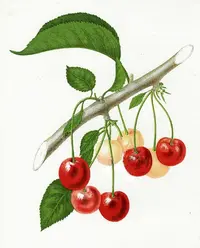
Once fruits reach cherry size, remove about half of them by hand so the remaining cherries size up better and the branches do not snap under excess weight.

Branch support

Before a heavy crop develops, prop or tie down long, fruit-laden branches to sturdy stakes or a horizontal support to reduce the risk of limb breakage in wind or under rain load.

Canker monitoring

Inspect branches monthly for sunken, oozing, or cracked lesions and promptly prune 15–20 cm below affected tissue during dry weather, disinfecting tools between cuts to slow spread of bacterial and fungal cankers.

Bird protection

Drape fine, soft bird netting over a frame around the tree just before fruits begin to color, securing it at the base so birds cannot access ripening cherries.

Trunk collar care

Keep grass, mulch, and soil pulled back 5–8 cm from the trunk to keep the graft union dry and visible, which reduces collar rot and makes caring for Prunus × gondouinii easier long term.

Common Pests and Diseases

Brown rot

This disease causes blossom blight, twig dieback, and brown, shriveled fruits that often remain mummified on the tree. Symptoms include tan to brown spots on flowers and fruit that expand and may show grayish spore masses in humid weather.

Solution

Remove and discard all infected blossoms, twigs, and mummified fruits during and after the season, and prune to keep the canopy open for good airflow. During wet springs, apply a labeled fungicide for stone fruit at early bloom and petal fall according to local recommendations to reduce infections on Prunus × gondouinii care instructions.

Bacterial canker

This disease causes sunken, gummy cankers on branches and trunk, along with dieback of twigs and premature leaf drop. Symptoms include amber gum oozing from infected areas and dark, water-soaked lesions around buds and pruning cuts.

Solution

Prune out cankered branches during dry weather, cutting well into healthy wood and disinfecting tools between cuts, and avoid heavy pruning in late fall or early spring when trees are most susceptible. Keep the tree vigorous by avoiding drought stress, preventing mechanical injury, and, in high-risk areas, consider using copper-based sprays in late winter if allowed locally.

Cherry leaf spot

This disease produces small purple to reddish spots on leaves that turn brown, often causing leaves to yellow and drop prematurely from mid-summer onward. Severe infection can weaken the tree and reduce flowering and fruiting the following year.

Solution

Rake and dispose of fallen leaves in autumn to reduce overwintering spores and maintain an open canopy to improve drying after rain. Where the disease is persistent, use a registered fungicide program starting at petal fall and repeating as directed, especially in wet seasons or humid regions.

Black cherry aphid

These insects cluster on young shoots and leaf undersides, causing curling, distortion, and sticky honeydew that can lead to sooty mold growth. This pest feeds on sap, which can slow new growth and weaken young trees.

Solution

Spray infested shoots with a strong stream of water to dislodge colonies, and encourage natural predators such as lady beetles by minimizing broad-spectrum insecticides. For heavy infestations on young trees, apply a horticultural soap or neem oil thoroughly to new growth, repeating as needed according to label directions.

Shot hole

This disease creates small purplish to brown spots on leaves that eventually dry up and fall out, leaving a characteristic “shot hole” appearance. Infected twigs and fruit may also show small lesions and cracking, leading to cosmetic damage and some leaf drop.

Solution

Collect and remove fallen leaves and pruned twigs to limit the amount of fungus surviving to the next season, and avoid overhead watering that keeps foliage wet for long periods. In gardens with recurring problems, apply a suitable copper or other labeled fungicide at bud swell and again after petal fall, and maintain good spacing and pruning to improve air movement through the canopy.

Interesting Facts

Hybrid gage plum origin

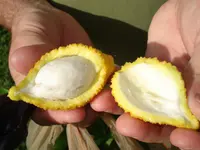
This hybrid arose from crossing a cherry plum type (Prunus cerasifera) with a gage plum (Prunus domestica subsp. insititia), combining traits of both parents in fruit size, flavor, and tree habit.

Old French cultivar group

It belongs to a historically important French group of dessert plums often called greengages or Reine-Claude types, known for very sweet, aromatic flesh rather than high yield.

Self-sterile pollination biology

Most forms are self-sterile, meaning pollen from the same tree cannot reliably set fruit, so compatible pollinators from related plums or gages are required for consistent cropping.

Botan icon

Did you know?

This hybrid is notable in pomology because it helped form the basis for several later European dessert plum selections, demonstrating how controlled interspecific crossing within Prunus can refine fruit quality traits such as sugar content, texture, and flavor balance.

FAQs about Prunus × gondouinii

This ornamental cherry usually flowers in early to mid spring, often before full leaf-out. Blossoms last about 1–3 weeks depending on weather. Cool, mild conditions extend flowering; heat, wind, and heavy rain shorten it.

Grow Healthy Plants with Botan Care

Keep your plants happy and healthy with plant identification, disease detection, and easy care guidance.

Botan plant care app — identify plants on mobile

Explore More Plants