Wind‑firm training
In the first 2–3 years, tip-prune long, whippy shoots and select 3–5 well-spaced main branches to create a strong, wind-resistant framework that reduces limb breakage as the tree matures.

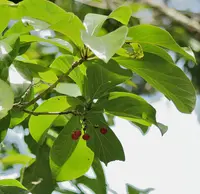
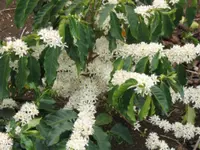
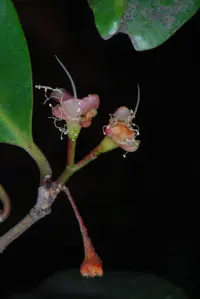
Mucilage manjack (Cordia sulcata) is a small to medium tropical tree from the Caribbean, often found in coastal forests and dry to moist lowland areas. It has simple green leaves, small white to cream flowers, and fleshy fruits that are sticky with mucilage.
The tree has a relatively fast growth habit in warm climates and can form a rounded crown, making it useful for light shade or as a minor ornamental. Its tolerance of wind, salt spray, and variable rainfall generally makes it robust outdoors in suitable regions.
Those wishing to care for mucilage manjack should note that it prefers warm conditions, good sunlight, and well-drained soil with consistent, moderate moisture.

Care Difficulty
Moderate Care

Light Preference
Full Sun

Water Requirements
Moderate Water

Temperature Preference
Tropical / Frost Sensitive

Hardiness Zone
11–13

Soil Texture
Sandy, Loamy, Organic-rich

Soil pH
Acidic (5.5–6.5), Slightly acidic (6.5–7.0)

Soil Drainage
Moist but well-drained

Fertilization
Minimal (feed rarely)
Scan your plant to receive care tips personalized for your specific plant
Available on iOS and Android
Cordia sulcata thrives as a sun-loving tropical tree but handles some shade in hot climates.
Cordia sulcata prefers evenly moist, well-drained soil and does not tolerate prolonged saturation.
This tropical tree needs consistently warm conditions and is very sensitive to cold and frost.
Cordia sulcata prefers moderate humidity but usually tolerates typical household air if not extremely dry.
Cordia sulcata grows best in loose, well-aerated, slightly acidic to neutral soil that drains freely.
This species can be grown in large containers, mainly while young or in space-limited sites.
Cordia sulcata grows steadily in reasonably fertile soil but benefits from modest feeding in poor or heavily containerized substrates.
Cordia sulcata responds well to light structural pruning that maintains a healthy canopy and safe form.
This species is usually grown as a landscape tree, so care focuses on correct transplanting rather than frequent repotting.
Cordia sulcata is usually propagated from seeds, with vegetative methods used less often in home settings.
Cordia sulcata is a tropical to subtropical tree that lacks true frost tolerance and needs protection in cooler climates.

Plant Health Check
Not sure what's wrong with your plant? Check your plant's health inside the app.
This tree is native to the Lesser Antilles and nearby islands, where it typically grows in low to mid‑elevation moist forests and seasonal woodlands rather than in deep rainforest or very dry scrub.
Mature trees develop a distinctly rough, fissured bark surface, which likely contributes to its species name sulcata, meaning furrowed or grooved, and helps distinguish it from other Caribbean Cordia species.
Its small, fleshy fruits are eaten by local birds and other fauna, which disperse the seeds and help maintain native forest structure and regeneration dynamics.

Cordia sulcata is one of the characteristic native tree species used in some Caribbean island reforestation projects, because it establishes relatively reliably in secondary forests and supports local biodiversity through fruit production and habitat structure.
This species is moderately fast-growing in warm climates, often adding 30–60 cm of height per year once established. Growth slows in poor soil, dry conditions, or if roots are restricted. Young plants usually grow faster than mature trees.
Keep your plants happy and healthy with plant identification, disease detection, and easy care guidance.