Rangoon Creeper Care (Combretum indicum)

Also known as: Chinese honeysuckle, Quisqualis
Rangoon Creeper

About Rangoon Creeper

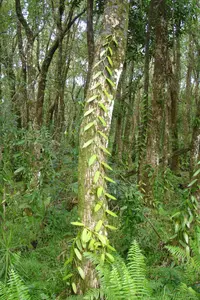
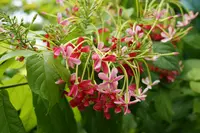
Rangoon creeper, Combretum indicum, is a fast-growing tropical woody vine valued for its fragrant, tubular flowers that change from white to pink and deep red as they age. It is usually grown on fences, pergolas, or trellises, where it can form a dense, flowering screen.

This species is native to South and Southeast Asia and thrives in consistently warm, frost-free climates. It prefers full sun to light shade, evenly moist but well-drained soil, and benefits from a sturdy support structure.

Once established, it is vigorous and relatively low-maintenance, but its rapid growth and strong roots mean it can become invasive in ideal conditions. Gardeners who learn how to care for Rangoon Creeper can manage its growth and enjoy long seasonal flowering.

Main Plant Requirements

Care Difficulty

Moderate Care

Light Preference

Full Sun

Water Requirements

Regular Water

Temperature Preference

Tropical / Frost Sensitive

Hardiness Zone

10–11

Soil Texture

Sandy, Loamy, Organic-rich

Soil pH

Acidic (5.5–6.5), Slightly acidic (6.5–7.0)

Soil Drainage

Moist but well-drained

Fertilization

Light (every 4–6 weeks)

Get Personalized Care Plan

Scan your plant to receive care tips personalized for your specific plant

Available on iOS and Android

How to Care for the Rangoon Creeper

Combretum indicum grows best in bright, warm conditions with plenty of direct sun.

  • Provide 6–8 hours of direct sunlight daily, ideally with morning sun and light afternoon shade in very hot climates.
  • Tolerates light or dappled shade for part of the day, but flowering of Rangoon Creeper decreases if it receives less than 4–5 hours of direct sun.
  • In summer, protect from intense late-afternoon sun in regions above 90°F (32°C) to reduce leaf scorch and moisture stress.

Combretum indicum prefers evenly moist, well-drained soil and reacts quickly to prolonged dryness or saturation.

  • Water when the top 3–5 cm of soil feels dry, applying a deep soak so moisture reaches the root zone rather than frequent light splashes.
  • Ensure soil drains freely; persistent wetness, sour smell, and yellowing lower leaves indicate overwatering and risk of root rot.
  • During hot active growth, you may need to water more often, while in cooler months reduce watering as growth slows and soil dries more slowly.

This species is a tropical vine that thrives in consistently warm temperatures and suffers in cold conditions.

  • Optimal growth occurs at 70–90°F (21–32°C), where flowering and new shoots are most vigorous.
  • Plant growth slows below 60°F (16°C), and the vine is damaged or killed by frost around 32°F (0°C); protect roots in marginal climates.
  • Combretum indicum tolerates brief heat up to about 100°F (38°C) if soil moisture is maintained and the roots are mulched to reduce temperature swings.

This vine prefers moderately humid air but often adapts to typical indoor levels if not extremely dry.

  • Aim for 40–60% humidity; prolonged air below 30% can slow growth and reduce flowering in Rangoon Creeper.
  • Crisp leaf edges, bud drop, and curled new growth indicate humidity stress rather than underwatering.
  • Use grouped plants, a nearby humidifier, or a wide pebble tray with water below the pot base to gently raise humidity.

This species grows best in loose, aerated soil that drains quickly but still holds some moisture.

  • Use a mix of roughly 50% loam or all‑purpose potting mix, 25% coarse sand, and 25% compost to combine structure, drainage, and nutrients.
  • Target slightly acidic to neutral soil, around pH 6.0–7.0, which supports nutrient uptake and steady flowering in Combretum indicum.
  • Improve drainage and aeration by blending in coarse sand or fine gravel rather than relying only on peat‑heavy media.
  • Avoid heavy clay, compacted soil, or potting mixes that stay wet for more than 2–3 days after watering, as roots are prone to rot.

This vigorous climber can be grown successfully in containers if the pot and support are chosen carefully.

  • Select a deep, heavy container to anchor the plant and prevent tipping as the vine gains height and mass.
  • Provide a strong trellis or railing fixed directly into or behind the container to keep stems supported and reduce wind damage leverage on the roots.
  • Use a pot material that matches the climate: terracotta for very humid or wet areas, and thicker plastic for hot, dry sites to slow water loss.

Combretum indicum responds well to moderate feeding during the warm growing season.

  • Use a balanced NPK fertilizer (around 10-10-10) or well-rotted compost for caring for Rangoon Creeper in fertile but not overly rich soil.
  • Apply a diluted liquid or slow-release fertilizer every 4–6 weeks from late spring to early fall.
  • Use half-strength doses for container plants to avoid root burn and excessive leafy growth.
  • Stop feeding in late fall and during winter dormancy, especially in cooler climates.

Combretum indicum benefits from thoughtful pruning to manage size and flowering performance.

  • Carry out main pruning in late winter or very early spring before vigorous new growth starts.
  • Remove dead, damaged, tangled, or inward-growing stems to improve light penetration and air movement.
  • Shorten overly long shoots to control spread and encourage more branching and flower clusters.
  • Use clean, sharp pruners and make angled cuts just above healthy outward-facing buds or side shoots.

This vigorous climber is more often transplanted outdoors than maintained long term in containers.

  • Transplant in late spring when soil is warm and frost risk has passed, choosing a sunny, sheltered site.
  • Move or up-pot when roots circle the container, drainage slows, or top growth stalls despite good care.
  • Typically transplant every 2–3 years in containers, stepping up only 1 pot size to limit shock.
  • Water deeply before and after moving, keep the root ball intact, and shade the plant lightly for several days.

Combretum indicum is commonly propagated by semi-ripe cuttings and sometimes from seed in warm conditions.

  • Take semi-ripe stem cuttings in late spring or summer, 8–12 cm long, with 2–3 leaf nodes.
  • Insert cuttings in a moist, free-draining mix under high humidity and 70–80°F bottom warmth.
  • Use rooting hormone on cut ends and remove lower leaves to reduce moisture loss.
  • Sow fresh seeds in warm, bright conditions, keeping the medium evenly moist until germination.

Combretum indicum is frost-tender and needs protection in regions with cold winters.

  • In USDA zones colder than 10, grow in containers and move indoors before temperatures drop below 40°F.
  • Provide bright light, reduced watering, and no feeding indoors while growth slows.
  • In mild climates, apply a 5–8 cm mulch layer around the root zone, keeping it away from the stems.
  • Where occasional light frost occurs, wrap vulnerable stems with frost cloth or horticultural fleece on cold nights.

Care Tips

Early vine training

Install a sturdy trellis, pergola, or wires early and loosely tie young shoots horizontally so the plant forms a dense flowering screen instead of a tall, bare stem.

Flowering flush management

After a heavy bloom flush, lightly trim back spent flower clusters and tip-prune excessively long shoots to encourage new lateral growth that produces more flowers.

Root zone mulching

Apply a 5–8 cm layer of organic mulch around the root zone, keeping it a few cm away from the main stem, to stabilize soil moisture and protect surface roots from heat stress.

Cold-season protection

In marginal climates, add a thicker mulch layer over the root area and wrap the lower stems with breathable horticultural fleece before the first frost to improve survival and regrowth in spring.

Preventing pest buildup

Inspect undersides of leaves and young shoots every 1–2 weeks during warm months and hose off early aphid or mite colonies before they establish, which simplifies caring for Rangoon Creeper over the long term.

Common Pests and Diseases

Aphids

This pest feeds on young shoots and flower buds, causing distorted growth and sticky honeydew on leaves and stems.

Solution

Prune off heavily infested shoot tips, then hose down vines with a strong stream of water to dislodge insects. If needed, apply insecticidal soap or a light horticultural oil in the early morning, repeating at 5–7 day intervals until new growth appears clean; this is a core part of Combretum indicum care instructions in warm, humid climates.

Red spider mites

These insects thrive in hot, dry conditions and cause fine stippling, dull foliage, and fine webbing on the undersides of leaves.

Solution

Increase humidity around the plant and rinse leaf undersides with water at least weekly to break the mite cycle. For persistent infestations, use insecticidal soap or a miticide labeled for spider mites, making sure to cover the undersides of leaves and improving airflow to reduce reinfestation.

Leaf spot

This disease produces small brown or black spots on leaves, sometimes with yellow halos, leading to premature leaf drop in severe cases.

Solution

Remove and discard affected leaves and any fallen debris to reduce the source of infection. Improve spacing and airflow, water at the base instead of overhead, and apply a copper-based or other labeled ornamental fungicide if new spots continue to appear during warm, wet weather.

Powdery mildew

This disease appears as a white, powdery coating on leaves and young stems, which can cause leaf curling and reduced flowering.

Solution

Increase light and airflow around the vine and avoid overhead watering to keep foliage dry. At early signs, remove heavily affected leaves and treat with a sulfur-based or other labeled powdery mildew fungicide, repeating as directed until new growth develops cleanly.

Interesting Facts

Color-changing blossoms

The flowers open white at dusk, turn pink by the next day, and deepen to red on the second or third day, a shift linked to pollinator attraction as the flower ages.

Twining woody vine

This species develops a woody liana-like stem with age and climbs by twining, allowing it to scramble over trees, fences, or trellises in tropical and subtropical climates.

Fragrant evening blooms

The tubular flowers release a strong, sweet fragrance especially at night and early morning, which helps attract nocturnal pollinators such as moths.

Botan icon

Did you know?

In some parts of South and Southeast Asia, this species has become naturalized and can behave invasively, forming dense thickets that smother other vegetation if not managed carefully.

FAQs about Rangoon Creeper

Poor flowering often comes from insufficient maturity, pruning at the wrong time, or nutrient imbalance. Avoid heavy pruning in late spring, prevent excess nitrogen fertilizer, and ensure the plant experiences a distinct warm season to trigger bud formation.

Grow Healthy Plants with Botan Care

Keep your plants happy and healthy with plant identification, disease detection, and easy care guidance.

Botan plant care app — identify plants on mobile

Explore More Plants