Pinch For Bushiness
Pinch out soft shoot tips in late winter and again after the first flush of flowers to encourage a denser, more wind-resistant shrub with heavier blooming on lateral stems.

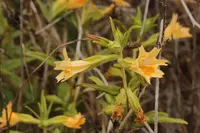
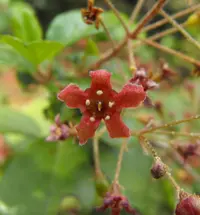
The orange bush monkeyflower (Diplacus aurantiacus) is a compact, evergreen shrub native to coastal and foothill regions of California and parts of Oregon. It typically forms a rounded mound with narrow, sticky leaves and showy tubular flowers in shades of orange to yellow. These blooms attract hummingbirds and pollinators and appear mainly in spring and summer. This species is adapted to dry, rocky, or sandy slopes and natural chaparral, so it tolerates drought once established. It prefers sun to light shade and well-drained soil, which makes care for orange bush monkeyflower easier in low-water gardens. However, it can be short-lived or prone to root issues in heavy or poorly drained soils.

Care Difficulty
Moderate Care

Light Preference
Full Sun

Water Requirements
Low Water

Temperature Preference
Warm Climate

Hardiness Zone
8–10

Soil Texture
Sandy, Loamy, Rocky

Soil pH
Slightly acidic (6.5–7.0), Neutral (7.0)

Soil Drainage
Well-drained

Fertilization
Minimal (feed rarely)
Scan your plant to receive care tips personalized for your specific plant
Available on iOS and Android
This sun-loving shrub thrives in bright, open sites typical of dry coastal and foothill habitats.
This drought-tolerant shrub prefers infrequent, deep watering in fast-draining soil.
This species is adapted to mild, Mediterranean-type climates with dry summers and cool, frost-light winters.
This species is adapted to dry, Mediterranean-type conditions and rarely needs extra humidity attention.
Diplacus aurantiacus prefers lean, fast-draining soil that never stays waterlogged.
This shrub can adapt well to container growing when drainage and stability are carefully managed.
This drought-tolerant California native needs only light feeding, as orange bush monkeyflower is adapted to lean soils.
Pruning Diplacus aurantiacus maintains a compact form and encourages better flowering.
This shrub is usually grown in the ground, so care focuses on planting and occasional transplanting rather than frequent repotting.
Diplacus aurantiacus is commonly propagated by semi-hardwood cuttings and by seed for garden use.
This shrub is moderately frost tolerant but benefits from simple winter protection in colder climates.

Plant Health Check
Not sure what's wrong with your plant? Check your plant's health inside the app.
This shrub is native to California and parts of southwestern Oregon, where it is especially common in dry chaparral and coastal scrub, often growing on rocky, nutrient-poor slopes that many other species cannot tolerate.
In its native range, it often resprouts from the base after wildfire, using stored energy in its woody root crown to quickly reclaim burned hillsides and stabilize soil.
Its tubular orange flowers are rich in nectar and are pollinated mainly by hummingbirds, which can drive high seed set in wild populations and help maintain genetic diversity over large areas.

Genetic and morphological evidence has led botanists to reclassify this species from the old genus Mimulus into Diplacus, making it one of the better-known examples of recent taxonomic revision in North American wildflowers.
This shrub is highly attractive to hummingbirds, native bees, and some butterflies. Tubular orange flowers provide nectar over a long season, making it valuable in wildlife gardens and restoration plantings that support local pollinator populations.
Keep your plants happy and healthy with plant identification, disease detection, and easy care guidance.