Slope-friendly planting
On banks or slopes, plant slightly higher than the surrounding grade and mulch well so the arching stems can quickly root along the surface and stabilize soil as they spread.

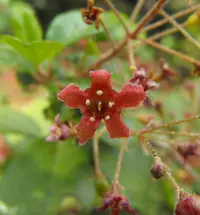
Island gooseberry, Ribes viburnifolium, is an evergreen shrub native to coastal southern California and Baja California. It typically grows low and spreading, forming a dense groundcover.
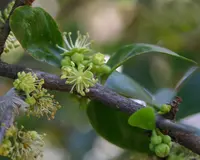
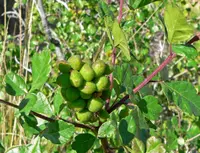
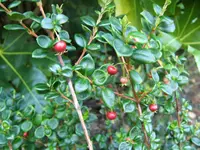
The plant has glossy, rounded leaves and small, reddish flowers that can attract pollinators, followed by red berries. Its arching stems often root where they touch the soil, helping it slowly expand.
In its natural habitat, it thrives on dry slopes and under light shade, which makes it well suited to drought-tolerant and low-maintenance gardens. Understanding how to care for island gooseberry starts with providing good drainage and avoiding heavy, waterlogged soil.
It is often used under trees or on banks where many other shrubs struggle, thanks to its shade tolerance and moderate growth rate.

Care Difficulty
Easy Care

Light Preference
Partial Shade

Water Requirements
Moderate Water

Temperature Preference
Cold Hardy

Hardiness Zone
7–10

Soil Texture
Sandy, Loamy, Organic-rich

Soil pH
Acidic (5.5–6.5), Slightly acidic (6.5–7.0)

Soil Drainage
Well-drained

Fertilization
Minimal (feed rarely)
Scan your plant to receive care tips personalized for your specific plant
Available on iOS and Android
Ribes viburnifolium prefers bright but not harsh exposure, similar to a woodland edge site.
Ribes viburnifolium prefers soil that stays lightly moist but never saturated.
This shrub favors mild, frost-free to lightly frosty climates for best growth.
This shrub tolerates a wide humidity range and usually does not need special humidity management.
Ribes viburnifolium prefers loose, well-drained, slightly acidic to neutral soil with moderate organic matter.
This species adapts well to container growing outdoors when root space and drainage are managed carefully.
This drought-tolerant shrub needs modest feeding, so aim to support steady growth rather than push lush foliage.
Ribes viburnifolium benefits from light, thoughtful pruning to maintain a dense, healthy form.
This shrub is usually grown in the ground, so focus on careful site transplanting rather than frequent container repotting.
Ribes viburnifolium is commonly propagated from semi-ripe cuttings or natural layering for consistent plants.
This species is generally cold hardy in mild-winter climates and usually needs only minimal winter care.

Plant Health Check
Not sure what's wrong with your plant? Check your plant's health inside the app.
This evergreen shrub is native to Santa Catalina and San Clemente islands off the coast of California, where it grows in dry chaparral and coastal scrub on rocky slopes and canyon walls.
Unlike many other gooseberries and currants, it often forms a low, arching or creeping subshrub that can root where stems touch the soil, creating spreading mats in its native habitat.
Small reddish flowers appear in late winter to early spring and release a noticeable spicy fragrance, which attracts early-season pollinators when few other shrubs are blooming nearby.

Genetic and biogeographic studies suggest this species is closely tied to the unique flora of the California Channel Islands, where isolation and dry, maritime conditions have shaped its distinct creeping growth form compared with mainland currant relatives.
This species is evergreen in mild climates, holding its small, glossy leaves year-round. In colder areas it may thin slightly in winter but usually does not fully defoliate unless exposed to hard freezes.
Keep your plants happy and healthy with plant identification, disease detection, and easy care guidance.