Kei apple Care (Dovyalis caffra)

Also known as: Umkokola, Dingaan's Apple, Dingaan's Apricot
Kei apple

About Kei apple

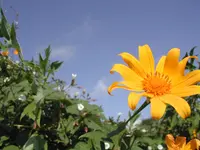
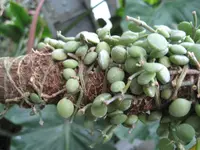
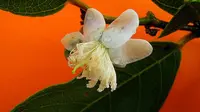
Kei apple, Dovyalis caffra, is a dense, thorny shrub or small tree valued for its sour, apricot-like fruits and strong hedging ability. It often forms an impenetrable barrier with its stiff, spiny branches and small glossy leaves.

This species is native to southern Africa, where it grows in dry woodland and scrub. It adapts well to warm, sunny climates and tolerates drought once established, but fruiting improves with regular moisture and well-drained soil.

Its toughness, heat tolerance, and low water needs make it suitable for low-maintenance landscapes. Understanding how to care for Kei apple mainly involves managing its thorns and vigorous growth habit, especially in smaller gardens.

Main Plant Requirements

Care Difficulty

Moderate Care

Light Preference

Full Sun

Water Requirements

Moderate Water

Temperature Preference

Warm Climate

Hardiness Zone

9–11

Soil Texture

Sandy, Loamy, Rocky

Soil pH

Acidic (5.5–6.5), Slightly acidic (6.5–7.0)

Soil Drainage

Well-drained

Fertilization

Minimal (feed rarely)

Get Personalized Care Plan

Scan your plant to receive care tips personalized for your specific plant

Available on iOS and Android

How to Care for the Kei apple

This shrub prefers bright, open conditions similar to its native sunny habitats.

  • Provide 6–8 hours of direct sun daily; in hot inland areas, give Kei apple light afternoon shade to reduce leaf scorch.
  • In coastal or mild climates, full sun all day supports dense growth and better fruiting, while bright, lightly filtered light is acceptable.
  • Avoid deep shade, which causes weak, spindly shoots and poor flowering; in winter, trim nearby shade-casting plants to maintain exposure.

This drought-tolerant shrub prefers infrequent, deep watering once established.

  • Outdoors in the ground, water only when the top 5–8 cm of soil are dry; soak the root zone thoroughly, then let the soil dry again.
  • Use fast-draining soil; standing water or heavy clay that stays wet leads to root rot, yellowing leaves, and dieback in Dovyalis caffra.
  • In hot, dry summers, monitor for wilting or dull, folding leaves as a cue to water; reduce watering sharply in cool or rainy seasons.

This species thrives in warm, frost-free to light-frost climates.

  • Optimal growth occurs around 68–86°F (20–30°C), where new shoots harden well and flowering is reliable.
  • Mature plants tolerate brief drops to about 24–26°F (-4 to -3°C), but young plants are damaged below 30°F (-1°C) and need frost protection.
  • Heat tolerance is high up to about 100°F (38°C) if soil moisture is adequate; mulch and avoid reflected heat to limit stress in prolonged heatwaves.

This species handles a wide humidity range and rarely needs special humidity management.

  • Aim for 30–60% humidity; typical indoor or outdoor air in most homes and gardens is adequate for Kei apple.
  • It tolerates dry air well, but prolonged hot, very dry winds can cause leaf tip browning and minor leaf drop.
  • Increase humidity only in extremely arid climates by placing nearby water trays or grouping plants, rather than misting foliage.

Dovyalis caffra prefers well-aerated, fast-draining, slightly sandy soil that does not stay wet.

  • Use a mix such as 50–60% loam or sandy topsoil, 20–30% coarse sand, and 10–20% compost to provide both structure and nutrients.
  • Ensure sharp drainage; water must percolate through within seconds, not pool on the surface or leave the pot soggy afterward.
  • Target a slightly acidic to neutral pH around 6.0–7.0, avoiding strongly alkaline or saline conditions that restrict nutrient uptake.
  • Improve aeration by incorporating coarse materials like perlite, pumice, or fine gravel, and avoid heavy clay that compacts around roots.

This species can be grown successfully in containers when given enough root volume and stability.

  • Choose a deep, heavy pot that resists tipping as the canopy becomes dense and potentially thorny.
  • Select a container material with moderate moisture retention, such as thick-walled terracotta, to balance quick drainage with root cooling in summer.
  • Raise the pot slightly on feet or bricks so drainage holes remain clear and excess water escapes rapidly after heavy irrigation or rainfall.

Dovyalis caffra benefits from modest, targeted feeding rather than heavy fertilization.

  • Apply a balanced slow-release fertilizer (around 10-10-10) at half strength once in early spring and again in midsummer for outdoor Kei apple.
  • Use a thin layer of compost over the root zone annually to support soil biology and gradual nutrient release.
  • Avoid high-nitrogen products that cause soft, leggy growth and may reduce fruiting potential.
  • Stop feeding in late summer in cooler climates so new growth hardens before winter dormancy.

Pruning Dovyalis caffra helps manage its thorny structure, improve light penetration, and maintain fruiting wood.

  • Carry out main pruning in late winter or very early spring before active growth starts.
  • Remove dead, damaged, crossing, or inward-growing branches first, using clean, sharp bypass pruners or loppers.
  • Thin congested interior shoots to open the canopy, which improves air flow and fruit quality.
  • Shorten overly vigorous shoots to shape the plant and keep fruiting branches reachable, avoiding heavy cutting in midsummer.

This species is usually grown in the ground, so management focuses on careful transplanting rather than frequent repotting.

  • Plan major transplanting of Dovyalis caffra for late winter or early spring while the plant is relatively dormant.
  • Move young plants when roots circle the pot or growth slows, typically every 2–3 years in containers.
  • Dig a wide planting hole, disturbing roots as little as possible and setting the plant at the same soil level.
  • Water deeply after planting, then keep soil evenly moist and shaded at the base for 2–4 weeks to reduce transplant stress.

Dovyalis caffra is commonly propagated from both seeds and semi-hardwood cuttings, depending on whether fruit quality must match the parent.

  • Sow fresh seeds in late winter–spring in a well-drained mix at 70–80°F, keeping the surface just moist.
  • Take semi-hardwood cuttings in late summer, 10–15 cm long, with at least 2 nodes and minimal leaves.
  • Dip the cut base in rooting hormone, then place in a coarse, free-draining medium under bright, indirect light.
  • Maintain high humidity and gentle bottom warmth if possible; rooting may take several weeks to a few months.

This plant has moderate frost tolerance but benefits from some winter protection in regions with hard freezes.

  • Mulch the root zone with 5–8 cm of organic material in late fall, keeping it slightly away from the trunk.
  • In areas below about 20°F, wrap young trunks with breathable frost cloth or burlap to limit bark damage.
  • Grow Dovyalis caffra in large containers in colder climates and move them to a cool, bright, frost-free space for winter.

Care Tips

Windbreak planning

Plant Kei apple behind a fence, hedge, or artificial windbreak in windy sites to reduce branch breakage and fruit drop, especially in the first 3–4 years.

Thorn‑safe handling

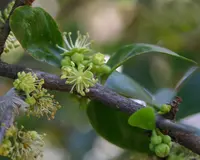
Use thick leather gloves and long sleeves when pruning or harvesting, and keep a dedicated long‑handled fruit picker to avoid injuries from the very sharp spines.

Living security hedge

For an impenetrable hedge, plant shrubs 60–90 cm apart in a staggered double row and allow inward‑facing branches to develop instead of pruning them out.

Fruit thinning strategy

In heavy crop years, remove excess young fruits so that remaining fruits size up better and branches are not overloaded and prone to snapping.

Bird and animal control

Install bird netting over fruiting branches and use sturdy wire mesh at the base if needed, as wildlife is strongly attracted to the ripe fruit when growing Kei apple.

Common Pests and Diseases

Scale insects

This pest feeds on sap and commonly colonizes stems and older branches, causing yellowing, leaf drop, and reduced vigor. Symptoms include small, dome-shaped or flat bumps that do not move when touched and may exude sticky honeydew.

Solution

Prune and discard heavily infested twigs, then wipe remaining scale by hand with a cloth or cotton pad dipped in 70% isopropyl alcohol. For larger shrubs or orchard plantings, use a horticultural oil spray that thoroughly coats branches and the undersides of leaves, applying during mild weather and repeating as needed according to label directions.

Whiteflies

These insects gather on the undersides of young Kei apple leaves and fly up in a small cloud when disturbed, causing leaf yellowing and reduced growth. This pest also produces honeydew, which can lead to black sooty mold on foliage and fruit.

Solution

Hose down plants to physically remove adults and nymphs, focusing on the undersides of leaves, then use yellow sticky traps around the canopy to monitor and reduce adult populations. For ongoing problems, apply insecticidal soap or a light horticultural oil, making sure to contact the undersides of leaves and repeating at 5–7 day intervals until new growth is clean.

Fruit fly infestation

This pest targets developing Kei apple fruits, laying eggs under the skin so larvae tunnel inside, causing internal breakdown, premature fruit drop, and small puncture marks on the surface. Symptoms include soft, sunken spots and decaying fruit on the tree or ground.

Solution

Collect and dispose of all fallen and visibly infested fruit in sealed bags to break the life cycle, and avoid leaving damaged fruit on the tree. Use fruit fly bait traps or lure-based traps placed around the canopy before fruit ripens, and where pressure is high, consider fine insect netting around developing fruit clusters while ensuring good airflow.

Leaf spot

This disease produces small, dark, circular to irregular lesions on Kei apple leaves that may enlarge and merge, leading to partial defoliation during humid or rainy periods. Symptoms include spots with pale centers and darker margins, often more severe on lower, shaded foliage.

Solution

Remove and discard fallen and heavily spotted leaves to reduce fungal spores, and prune dense interior growth to improve light penetration and airflow. If the problem is recurring or severe, apply a copper-based or other labeled fungicide at the start of wet periods, covering both leaf surfaces and repeating according to product instructions.

Powdery mildew

This disease appears as a white to gray powdery coating on young leaves, shoots, and sometimes fruit, leading to distorted growth and reduced vigor in dense or shaded Kei apple plantings. Symptoms include curled leaves, stunted new growth, and a dusty surface that can be wiped off with a finger.

Solution

Thin congested branches to improve airflow and sun exposure, and avoid overhead watering that keeps foliage damp in the evening. Remove badly affected shoots and, if needed, use a labeled sulfur or potassium bicarbonate fungicide, applying to all green surfaces at the first sign of infection and repeating during extended warm, dry periods when powdery mildew thrives.

Interesting Facts

Spiny living fence

This species naturally forms an extremely dense, thorny hedge, and in southern Africa it is widely planted as a living fence to contain livestock and discourage intruders.

Vitamin C rich fruit

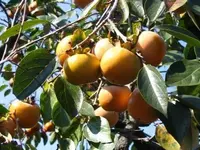
The small yellow-orange fruits are very acidic and notably rich in vitamin C, so in its native range they are commonly processed into jams, jellies, and juices rather than eaten fresh.

Hybrid parentage role

It has been used in breeding programs as a parent of the hybrid called tropical apricot or ketcot, combining its tart flavor and hardiness with smoother-textured fruit from related species.

Botan icon

Did you know?

In some parts of its native range, this shrub is so effective as a stock-proof barrier that long, continuous hedges of it have replaced wire fencing on farms, creating permanent, wildlife-friendly property boundaries.

FAQs about Kei apple

Yes, this shrub can be grown in large, sturdy containers with good drainage. Use a deep pot to accommodate its root system, prune regularly to control size, and repot when roots circle the container tightly.

Grow Healthy Plants with Botan Care

Keep your plants happy and healthy with plant identification, disease detection, and easy care guidance.

Botan plant care app — identify plants on mobile

Explore More Plants