Height control pinch
Pinch out soft shoot tips every 3–4 weeks during active growth to keep plants dense, prevent lanky stems, and encourage continuous production of fresh, colorful foliage.

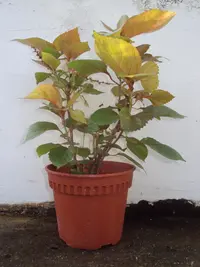
Copperleaf, Acalypha wilkesiana, is a tropical evergreen shrub valued for its colorful foliage rather than its flowers. It typically has large, textured leaves in mixes of copper, red, pink, and green.
In warm climates it forms dense, upright hedges or accent shrubs, while in cooler areas it is often grown in containers and kept indoors over winter. Understanding how to care for Copperleaf starts with stable warmth, bright light, and protection from cold drafts.
The plant prefers evenly moist, well-drained soil and does not tolerate drying out or chilling. Its fast growth and clear visual signals of stress make it manageable for attentive beginners and intermediate growers.

Care Difficulty
Moderate Care

Light Preference
Partial Sun

Water Requirements
Regular Water

Temperature Preference
Tropical / Frost Sensitive

Hardiness Zone
10–11

Soil Texture
Sandy, Loamy, Organic-rich

Soil pH
Acidic (5.5–6.5), Slightly acidic (6.5–7.0)

Soil Drainage
Moist but well-drained

Fertilization
Moderate (every 2–4 weeks)
Scan your plant to receive care tips personalized for your specific plant
Available on iOS and Android
This tropical shrub needs bright light to maintain strong color and compact growth.
This species prefers evenly moist, well‑drained soil rather than cycles of drought and saturation.
Consistent warmth is essential for reliable growth and leaf color.
This species prefers consistently warm, moderately humid air and reacts quickly to dry conditions.
This plant grows best in airy, moisture-retentive but free-draining soil.
This species is well suited to container growing, especially in warm climates and patios.
Nutrient-rich soil supports strong growth and leaf color in Copperleaf, especially in containers.
Thoughtful pruning helps Acalypha wilkesiana maintain dense foliage and a neat outline.
Container-grown plants benefit from timely repotting to support ongoing growth.
New plants are most often produced from stem cuttings rather than seed.
This tropical shrub is frost-tender and needs protection in cool climates.

Plant Health Check
Not sure what's wrong with your plant? Check your plant's health inside the app.
This species develops its striking multicolored leaves genetically, not from viral variegation, with pigments like chlorophyll, carotenoids, and anthocyanins combining to produce stable patterns of red, bronze, pink, and green.
The plant is native to the Pacific islands region, especially Fiji and nearby areas, where it grows as a warm-climate shrub in lowland, humid coastal habitats rather than in cool highland forests.
Each plant carries separate male and female flowers on the same individual, with the showier, tassel-like spikes being the male inflorescences that produce pollen, while the female flowers are smaller and less conspicuous on the stems.

Many ornamental forms grown today descend from early selections and hybrids made in the late 19th and early 20th centuries in Pacific and Asian gardens, which is why such a wide range of leaf colors, shapes, and cultivars exists for Acalypha wilkesiana.
Brown leaf edges usually come from low humidity, hot dry wind, fertilizer burn, or irregular watering. Check soil moisture, flush excess fertilizer, and increase ambient humidity. Damaged tissue will not recover, but new growth should improve.
Keep your plants happy and healthy with plant identification, disease detection, and easy care guidance.