Prosthechea vitellina Care

Prosthechea vitellina

About Prosthechea vitellina

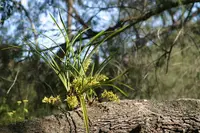
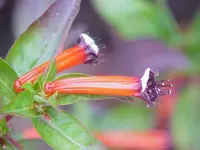
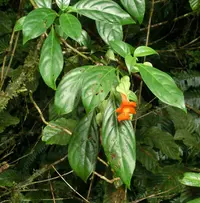
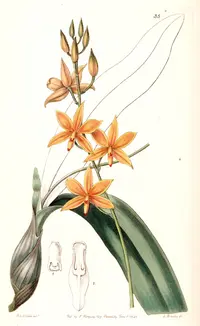
Prosthechea vitellina is a compact epiphytic orchid that forms small clumps of pseudobulbs topped with narrow, medium-green leaves. It produces bright orange to yellow star-shaped flowers that stand out clearly against the foliage. This species is native to cloud forests of Mexico and Central America, where it grows on trees in cool to mild, humid conditions with good air movement. In cultivation it prefers bright, filtered light, regular moisture around the roots, and a free-draining orchid mix. Its moderate temperature needs and preference for stable humidity make it slightly more demanding than many common houseplants, but still manageable for patient growers who learn how to care for Prosthechea vitellina.

Main Plant Requirements

Care Difficulty

Moderate Care

Light Preference

Bright Indirect Light

Water Requirements

Moderate Water

Temperature Preference

Tropical / Frost Sensitive

Hardiness Zone

11–12

Soil Texture

Peaty, Organic-rich, Loamy

Soil pH

Acidic (5.5–6.5)

Soil Drainage

Well-drained

Fertilization

Light (every 4–6 weeks)

Get Personalized Care Plan

Scan your plant to receive care tips personalized for your specific plant

Available on iOS and Android

How to Care for the Prosthechea vitellina

This orchid prefers bright, gentle light that mimics high-elevation forest conditions.

  • Provide 4–6 hours of bright, indirect light daily, such as dappled shade under taller plants or a sheer-curtained east or west window for Prosthechea vitellina.
  • Allow soft morning sun but protect from strong midday and afternoon sun with shade cloth or filtered light to prevent leaf scorch and yellow, leathery patches.
  • In winter, increase light exposure slightly or move closer to the light source, ensuring leaves stay medium green rather than dark (too little light) or pale (too much).

Watering should keep roots moist but never stagnant or waterlogged.

  • Water when the medium is almost dry, letting the top 2–3 cm feel dry while lower layers remain slightly damp; frequency often decreases in cool or low-light conditions.
  • Use a fast-draining orchid mix and water thoroughly so excess drains away, preventing roots from sitting in collected water that leads to rot and mushy pseudobulbs.
  • Reduce watering slightly after flowering or in cooler months, and watch for wrinkled pseudobulbs (too dry) or blackened, soft roots (too wet) on Prosthechea vitellina.

This species prefers cool to intermediate temperatures with stable, gentle fluctuations.

  • Aim for daytime temperatures of 65–75°F (18–24°C) and nights of 55–60°F (13–16°C), which supports steady growth and flowering.
  • Avoid temperatures below 45°F (7°C), as the plant is not frost-tolerant and can suffer tissue damage and root loss from brief cold snaps.
  • In hot periods above 85°F (29°C), increase air movement and humidity and shade more strongly, since combined heat and intense light can cause leaf stress and bud drop.

This orchid prefers moderate to high humidity and reacts quickly to very dry air.

  • Aim for 50–70% humidity, using a hygrometer to avoid levels dropping below 40%.
  • Crisping leaf tips, wrinkled pseudobulbs, and buds aborting before opening indicate humidity stress.
  • Increase humidity with a pebble tray under the pot, grouping plants, or a small cool-mist humidifier while keeping air movement gentle.

This epiphytic orchid needs a very airy, fast-draining potting medium rather than dense soil.

  • Use a mix of medium orchid bark, perlite, and a little sphagnum moss to balance drainage and moisture retention.
  • Ensure large air spaces around roots so the medium dries within 3–5 days after watering, preventing root suffocation and rot.
  • Keep pH slightly acidic to neutral (about 5.5–6.5), which suits typical orchid bark-based mixes used for Prosthechea vitellina.
  • Avoid garden soil, peat-heavy mixes, or any compact medium that stays wet or packs tightly around the roots.

This species grows well in containers when given an airy setup similar to its natural epiphytic conditions.

  • Choose a slotted orchid pot or mesh basket so excess water drains rapidly and roots receive ample air contact.
  • Fill only the lower part of a deeper pot with medium, allowing upper roots to stay drier and reducing suffocation risk.
  • Use a heavier outer cachepot or weight the base if flower spikes make the plant top-heavy to prevent tipping.

This orchid benefits from light, consistent feeding during active growth for reliable flowering.

  • Use a balanced orchid fertilizer (around 20-20-20) diluted to 1/4–1/2 strength in low-mineral water.
  • Feed Prosthechea vitellina every 2–3 weeks during spring–early fall when new roots and leaves are developing.
  • In winter or rest periods, reduce feeding to once a month or pause if growth stops.
  • Flush the pot with plain water monthly to prevent fertilizer salt buildup on roots.

Pruning needs are minimal and focus on cleanliness and maintaining healthy growth.

  • After flowering, cut spent flower spikes at the base without damaging pseudobulbs on Prosthechea vitellina.
  • Remove only dead, shriveled pseudobulbs and yellow or diseased leaves with sterilized scissors or pruners.
  • Avoid cutting green, firm pseudobulbs, as they store water and nutrients and support future flowering.
  • Disinfect tools before and after use to reduce the risk of transmitting fungal or bacterial diseases.

Repotting is infrequent but important to maintain airy, fresh medium around the roots.

  • Repot every 2–3 years, or when roots circle the pot, medium breaks down, or growth slows.
  • Plan repotting for spring, just as new root tips appear, to help Prosthechea vitellina reestablish quickly.
  • Choose a snug pot and fresh orchid bark mix, spreading roots gently over the medium without packing tightly.
  • Water lightly after repotting, keep humidity higher, and shade slightly for 1–2 weeks to reduce transplant stress.

Propagation is usually done by division, timed with repotting of mature clumps.

  • Divide only well-established plants with at least 6–8 healthy pseudobulbs to avoid setback to Prosthechea vitellina.
  • In spring, separate sections with 3–4 pseudobulbs each, using a sterilized knife to cut the rhizome cleanly.
  • Plant each division in fresh orchid bark, anchoring firmly so new roots can attach and stabilize the plant.
  • Provide warm temperatures, bright filtered light, and steady humidity to support new root and shoot development.

This orchid is not frost hardy and requires mild conditions and shelter in winter.

  • Keep temperatures above 50°F, ideally 55–65°F, to prevent cold damage to leaves and pseudobulbs.
  • Move container plants indoors or into a heated greenhouse before the first frost if grown outdoors seasonally.
  • Maintain bright, indirect light and slightly drier medium in winter, avoiding waterlogged roots in cool conditions.
  • Ensure gentle air movement indoors to reduce fungal problems while the plant experiences slower winter growth.

Care Tips

Mounting technique

Use a cork slab or hardwood mount with a thin pad of long-fiber sphagnum just around the roots, then secure the plant with soft plastic-coated wire or cotton string so new roots can attach firmly without being constricted.

Pseudobulb monitoring

Check pseudobulbs monthly for shriveling or soft spots; slightly wrinkled but firm bulbs usually indicate mild dehydration, while soft or blackened bulbs suggest rot and should be removed with a sterile tool.

Air movement management

Position a small oscillating fan on a low setting to keep gentle air moving around the foliage and roots, which reduces fungal spotting on leaves and helps mounted plants dry evenly after watering.

Seasonal rest adjustment

After flowering, gradually lengthen the interval between waterings and reduce fertilizer for several weeks, then resume more frequent watering as soon as new root tips or shoots appear to synchronize care with the plant’s growth cycle.

Targeted pest checks

Inspect leaf undersides, sheath bases, and the junctions between pseudobulbs and roots every 1–2 weeks for scale or mites, and isolate and treat promptly with an appropriate horticultural oil if pests are found to keep caring for Prosthechea vitellina manageable over time.

Common Pests and Diseases

Scale insects

This pest often colonizes pseudobulbs and leaf bases, sucking sap and causing yellowing, stunting, and sticky honeydew on surfaces. Symptoms include slowed growth and sooty mold growing on the honeydew in humid orchid conditions.

Solution

Isolate the plant, then wipe affected areas with cotton pads dipped in 70% isopropyl alcohol, repeating weekly until no scales are seen. Improve air movement, avoid overfertilizing with high nitrogen, and use a targeted horticultural oil or insecticidal soap on all plant surfaces and pot crevices, keeping sprays off open flowers when possible.

Spider mites

This pest thrives in warm, dry air and often affects the undersides of Prosthechea leaves, causing fine stippling, dull foliage, and fine webbing near leaf tips. Symptoms include reduced vigor and leaves that feel rough or speckled to the touch.

Solution

Increase humidity to 50–70%, rinse foliage thoroughly under a gentle shower, and wipe leaves with a damp cloth to remove mites and webs. Follow with repeated applications of insecticidal soap or a miticide labeled for orchids every 5–7 days until new growth appears clean, and avoid letting the plant sit in very dry, stagnant air.

Mealybugs

These insects hide in the tight leaf bases and around pseudobulbs, appearing as white cottony clusters that suck sap and weaken the plant. Symptoms include distorted new growth, sticky residue, and declining flower performance when spikes emerge.

Solution

Inspect all leaf axils and pseudobulb sheaths, then remove visible mealybugs with cotton swabs dipped in 70% isopropyl alcohol. For heavier infestations, combine mechanical removal with several rounds of insecticidal soap or systemic insect control labeled for orchids, and consider repotting to discard infested bark while following careful Prosthechea vitellina care instructions.

Bacterial soft rot

This disease rapidly attacks pseudobulbs and leaf bases, causing water-soaked, foul-smelling lesions that collapse tissue. Symptoms include mushy, translucent areas that spread quickly in warm, stagnant, high-humidity conditions.

Solution

Immediately remove and discard all affected tissue with a sterile blade, cutting well into healthy tissue, then dust cut surfaces with ground cinnamon or a bactericidal product safe for orchids. Improve air circulation, avoid water sitting in leaf bases, keep foliage dry overnight, and temporarily reduce overhead misting to limit spread.

Fungal leaf spots

This disease appears as small, dark, often circular lesions on Prosthechea leaves that may enlarge and coalesce under cool, damp, low-airflow conditions. Symptoms include cosmetic damage at first, but severe infections can reduce photosynthesis and weaken the plant over time.

Solution

Remove and discard heavily spotted leaves, and prune lightly affected areas with sterile tools, avoiding cutting during very humid periods. Improve spacing and airflow, water in the morning so leaves dry quickly, and if spotting continues, apply a fungicide labeled for ornamental orchids according to label rates, treating both upper and lower leaf surfaces.

Interesting Facts

High-altitude specialist

This species is naturally found in cool, moist montane forests of Mexico and Central America, often growing as an epiphyte on trees at elevations where nights are quite chilly compared to many other orchids.

Distinctive yolk-colored blooms

Its flowers are an intense egg-yolk orange to yellow, a color that inspired the epithet vitellina, which comes from Latin for yolk, and helps distinguish it from related Prosthechea species with paler flowers.

Cool-loving epiphytic growth

In nature it anchors to tree branches with a coarse root system and experiences strong air movement and bright, filtered light, conditions that shape most practical Prosthechea vitellina care instructions for cultivated plants.

Botan icon

Did you know?

In the wild, this orchid often flowers during the cooler, drier season at high elevations, using its bright orange flowers and elevated perch on tree branches to stand out to pollinators in a forest canopy where few other plants are blooming at the same time.

FAQs about Prosthechea vitellina

Lack of flowers often comes from insufficient light, no distinct cool, dry rest in winter, or inadequate fertilization. Provide bright but filtered light, a slight temperature drop and lighter watering in winter, plus regular balanced orchid fertilizer in active growth.

Grow Healthy Plants with Botan Care

Keep your plants happy and healthy with plant identification, disease detection, and easy care guidance.


Botan plant care app — identify plants on mobile

Explore More Plants