Jumellea triquetra Care

Jumellea triquetra

About Jumellea triquetra

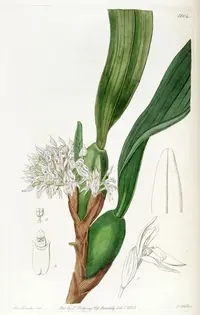
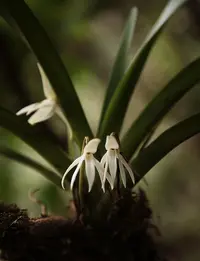
Jumellea triquetra is a small epiphytic orchid that usually grows attached to tree branches, forming neat clumps of narrow, upright leaves. It produces delicate, pale flowers with long spurs that are often night-scented, adapted to moth pollination.

This species is native to humid forests in Madagascar and nearby islands, where it benefits from moving air and frequent, gentle moisture. In cultivation, it is considered moderately demanding because it dislikes stagnant conditions, drying out completely, or heavy, compact media.

Growers who learn how to care for Jumellea triquetra focus on providing bright but indirect light, consistent humidity, and a very open, fast-draining orchid substrate.

Main Plant Requirements

Care Difficulty

Hard Care

Light Preference

Bright Indirect Light

Water Requirements

Keep Soil Moist

Temperature Preference

Tropical / Frost Sensitive

Hardiness Zone

12–13

Soil Texture

Peaty, Organic-rich, Sandy

Soil pH

Strongly acidic (4.5–5.5), Acidic (5.5–6.5)

Soil Drainage

Moist but well-drained

Fertilization

Light (every 4–6 weeks)

Get Personalized Care Plan

Scan your plant to receive care tips personalized for your specific plant

Available on iOS and Android

How to Care for the Jumellea triquetra

This orchid prefers bright, gentle light similar to bright forest shade.

  • Provide 8–10 hours of bright, filtered light daily, such as dappled sun under taller plants or 30–50% shade cloth outdoors.
  • Allow soft morning sun but protect from direct midday and afternoon rays, which can scorch leaves and cause yellowing or sunburn patches.
  • In winter, when light levels drop, move Jumellea triquetra to a slightly brighter position, watching that leaves stay medium green rather than very dark.

Watering should keep the roots moist but never stagnant.

  • Water when the surface and upper 2–3 cm of the mix feel just barely dry, then soak thoroughly so water runs through and drains away completely.
  • In warm, active growth, this may mean watering every few days; in cooler months, extend intervals but do not let roots stay dry and brittle.
  • Signs of excess water include mushy roots and sour smell, while wrinkled leaves and very dry, silvery roots indicate the plant needs more frequent watering.

Stable, mild to warm temperatures support steady growth and flowering.

  • Aim for 65–80°F (18–27°C) during the day and 60–70°F (16–21°C) at night for best growth.
  • Avoid temperatures below 55°F (13°C); brief dips may be tolerated, but frost will severely damage foliage and roots.
  • In hot spells above 86°F (30°C), increase air movement and humidity and keep the plant shaded, as prolonged heat stress can slow growth and reduce flowering.

This epiphytic orchid benefits from consistently high humidity for stable growth.

  • Aim for 60–80% humidity, as prolonged levels below 50% lead to slow growth and leaf tip dieback.
  • Watch for curled or leathery leaves and stalled root tips as early signs of humidity stress.
  • Increase humidity with a nearby humidifier, grouped plants, or an evaporative tray, rather than misting flowers directly.

This species prefers an airy, fast-draining orchid medium rather than standard potting soil.

  • Use a mix of medium orchid bark, chunky perlite, and a little sphagnum moss to combine moisture retention with high aeration.
  • Aim for slightly acidic conditions, around pH 5.5–6.5, which support nutrient uptake and healthy root growth.
  • Ensure the mix drains fully within seconds after watering; waterlogged, compact, or peat-heavy substrates quickly damage fine roots.
  • Avoid dense, soil-based mixes and instead refresh bark components regularly to prevent breakdown and loss of structure for Jumellea triquetra.

This orchid is well suited to container growing, especially in slatted baskets or ventilated orchid pots.

  • Choose a shallow, wide container to spread the root system, which prefers to run horizontally rather than deeply.
  • Use slatted wood baskets or pots with side vents so air can move freely through the root zone and dry it evenly.
  • Select a heavier pot or hang the basket securely to prevent tipping as foliage and aerial roots create an unbalanced weight.

This epiphytic orchid benefits from light, consistent feeding rather than heavy doses.

  • Use a balanced orchid fertilizer (around 20-20-20) diluted to 1/4–1/2 strength in low-mineral water.
  • Feed every 2–3 weeks during active growth in spring and summer, skipping applications if roots stay cool and growth slows.
  • Reduce feeding to once every 4–6 weeks in fall and winter, or pause if Jumellea triquetra is resting.
  • Leach the pot or mount with plain water monthly to prevent salt buildup and root burn.

Pruning needs are minimal and mainly focus on hygiene and maintaining a tidy plant.

  • Carry out light pruning after flowering, when new root tips and leaves are just starting to extend.
  • Remove only dead, yellowed, or damaged leaves and spent flower spikes at their base with sterilized scissors or snips.
  • Avoid cutting healthy roots; trim only shriveled or blackened sections to maintain plant health and airflow.
  • Limit shaping cuts, since excessive removal of green tissue can reduce future flowering and stress the plant.

This orchid prefers stability, so repotting or remounting is done infrequently and only when necessary.

  • Look for roots circling tightly, medium breaking down into fine mush, or slow, declining growth as signals to repot.
  • Plan repotting for late winter to early spring, just before active growth, usually every 2–3 years.
  • Move Jumellea triquetra into a slightly larger pot or fresh mount with open, airy orchid mix to keep roots well aerated.
  • Handle roots gently, trim only dead or mushy parts, then keep humidity high and light moderate for 1–2 weeks to reduce stress.

Propagation is possible but slow and usually reserved for experienced growers and conservation-focused collections.

  • Vegetative propagation is mainly by division, separating clumps that have several healthy growths and active roots.
  • Divide in late winter or early spring, when new roots are starting, to support quick establishment.
  • Plant divisions in fresh, airy orchid mix or on mounts and maintain high humidity (60–80%) with gentle air movement.
  • Seed propagation requires sterile in vitro techniques and is typically handled by specialized orchid labs.

This species is not frost hardy and needs controlled conditions during cold months.

  • Keep temperatures around 60–70°F in winter, avoiding exposure below 50°F to prevent chilling damage.
  • For container plants, move indoors to a bright, draft-free spot before outdoor night temperatures drop near 55°F.
  • Maintain moderate humidity (50–70%) with good air movement, using trays or humidifiers rather than misting cold foliage.
  • Water slightly less in winter, allowing the medium to approach dryness between waterings while never staying cold and soggy.

Care Tips

Mounting technique

Mount the plant on a rough-barked slab (such as cork or hardwood) with a thin pad of long-fiber sphagnum only around the roots, leaving the crown exposed so new roots can attach and air can circulate freely.

Root zone aeration

Use a small fan on a low, indirect setting near the plant to keep air moving across the roots, which reduces bacterial rot risk and helps epiphytic roots dry evenly between waterings.

Night fragrance check

Inspect the plant during evening hours when flowers are fragrant and open, as this is the best time to spot early thrips or other flower pests hiding in the corolla and spur.

Fertilizer flush routine

Every 3–4 weeks, rinse the mount or basket thoroughly with plain water until it runs clear to remove accumulated fertilizer salts that can burn fine roots.

Seasonal light adjustment

Shift the plant slightly farther from bright windows or under a finer shade cloth in mid-summer, then return it a little closer to the light in autumn to keep growth compact and stable when growing Jumellea triquetra.

Common Pests and Diseases

Scale insects

This pest feeds on orchid leaves, pseudobulbs, and flower spikes, drawing out sap and causing yellowing, sticky honeydew, and a decline in vigor.

Solution

Remove visible scale with a cotton swab dipped in 70% isopropyl alcohol, then rinse the plant with lukewarm water and increase airflow; for heavier infestations on caring for Jumellea triquetra, use a labeled systemic insecticide or horticultural oil, repeating treatments every 7–10 days until new growth is clean.

Spider mites

These insects thrive on Jumellea foliage in warm, dry air, causing fine webbing, pale stippling, and a dull, dusty appearance on leaves.

Solution

Rinse the plant thoroughly under a gentle shower or tap, focusing on leaf undersides, then raise humidity to 60–70% and improve air movement; if mites persist, apply an orchid-safe miticide or insecticidal soap in repeated treatments, keeping the plant out of direct sun until foliage is dry.

Soft rot (bacterial)

This disease causes rapidly spreading, water-soaked, foul-smelling lesions on leaves and stems, which can collapse tissue in a short time under warm, humid conditions.

Solution

Immediately remove and discard all affected tissue with a sterile blade, dust or spray cut surfaces with a bactericide or cinnamon powder, then reduce watering, improve air circulation around the roots, and avoid overhead watering that keeps foliage wet for long periods.

Leaf spot (fungal)

This disease shows as small, dark, often circular spots on leaves that may enlarge and coalesce, especially when foliage stays wet and air movement is low.

Solution

Trim off badly marked leaves with sterile tools, dispose of them, and adjust watering to keep leaves dry while improving ventilation; apply a labeled fungicide for orchids if new spots keep appearing, and space plants so that leaves do not touch during drying.

Interesting Facts

Nocturnal moth pollination

In its native habitats in Madagascar and surrounding regions, this species is pollinated primarily by nocturnal hawkmoths that are attracted to its night-scented white flowers and can reach deep into the long floral spur to access nectar.

Epiphytic growth habit

This orchid typically grows as an epiphyte on tree branches and trunks, anchoring itself with thick roots on bark rather than in soil, which allows it to access brighter light and better air movement in humid forests.

Long-spurred flowers

The flowers develop a characteristically long nectar spur, an evolutionary adaptation that matches the proboscis length of specific moth pollinators and helps ensure relatively specialized pollen transfer.

FAQs about Jumellea triquetra

This species usually performs best in a protected, controlled environment such as a warm greenhouse, shadehouse, or bright bathroom. Outdoors is only suitable in consistently warm, humid, frost-free climates that resemble its native conditions.

Grow Healthy Plants with Botan Care

Keep your plants happy and healthy with plant identification, disease detection, and easy care guidance.

Botan plant care app — identify plants on mobile

Explore More Plants