Tillandsia paleacea Care

Tillandsia paleacea

About Tillandsia paleacea

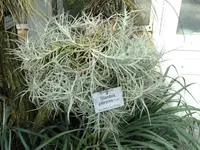
Tillandsia paleacea is a small air plant species in the bromeliad family that grows without traditional soil, using its roots mainly for anchoring. It forms soft, narrow, silvery-gray leaves that create delicate clumps or trailing mats over time.

This species is native to arid and high-altitude regions of South America, where it experiences strong light, good air movement, and limited rainfall. Its drought tolerance and slow, steady growth habit make it relatively easy to manage indoors once you understand how to care for Tillandsia paleacea.

It prefers bright, indirect light, regular but brief moisture, and very fast drying conditions, which suits many indoor environments when ventilation is good.

Main Plant Requirements

Care Difficulty

Moderate Care

Light Preference

Partial Sun

Water Requirements

Low Water

Temperature Preference

Tropical / Frost Sensitive

Hardiness Zone

10–12

Soil Texture

Rocky, Sandy, Organic-rich

Soil pH

Acidic (5.5–6.5)

Soil Drainage

Well-drained

Fertilization

Light (every 4–6 weeks)

Get Personalized Care Plan

Scan your plant to receive care tips personalized for your specific plant

Available on iOS and Android

How to Care for the Tillandsia paleacea

This species prefers bright, indirect light that mimics high, open habitats with good air movement.

  • Provide 6–8 hours of bright, filtered light daily; gentle morning sun is ideal, while harsh midday and afternoon sun should be softened by shade cloth or dappled shade.
  • In very sunny climates, place Tillandsia paleacea where it receives early sun then bright shade, as prolonged direct summer sun can cause leaf scorching and bleaching.
  • If light is too low, leaves elongate and turn dull green; move closer to a bright window, under a skylight, or to a lightly shaded outdoor spot in the growing season.

Water needs are moderate and strongly linked to air movement, humidity, and temperature.

  • Soak or thoroughly mist every 3–7 days, allowing leaves to dry fully within 2–3 hours; adjust toward the 3-day end in hot, dry, windy conditions.
  • Signs of underwatering include curling, folding, or very brittle leaves; increase soak duration slightly rather than watering every day.
  • If the center stays wet for many hours, or leaves turn limp and dark at the base, rot may be starting; reduce frequency and improve airflow around the plant.

This air plant prefers mild, stable conditions but tolerates a reasonable range if kept dry and well ventilated.

  • Aim for 65–80°F (18–27°C) for active growth, with slightly cooler nights; this range supports steady metabolism and balanced leaf hydration.
  • Short exposures down to about 40°F (4°C) are usually tolerated if kept dry, but repeated cold or any frost can damage tissues and lead to delayed rot.
  • In hot spells above 90°F (32°C), increase shade, airflow, and watering frequency, then allow faster drying to prevent heat stress and fungal problems.

This air plant prefers moderately dry air but benefits from controlled humidity indoors.

  • Aim for 40–60% humidity, as very high humidity without airflow encourages rot on the leaf bases.
  • It tolerates short periods of drier air, but leaf tips curling or turning crispy indicate humidity stress.
  • Increase humidity by placing it near other plants, using a fine mist in the morning, and ensuring strong air circulation.

This epiphytic species does not need conventional soil but benefits from a structured, highly aerated mounting medium.

  • Use no soil; instead secure the plant to cork bark, hardwood, or a wire frame with a thin layer of sphagnum or coarse bark if needed.
  • Ensure rapid drainage and airflow around the base so water dries within 2–4 hours after soaking or misting.
  • Keep any mounting material slightly rough and open-textured; avoid dense moss pads or compacted organic matter that stay wet.
  • Do not bury Tillandsia paleacea in potting mix, and avoid peat-heavy, clay, or water-retentive substrates that trap moisture around the leaves.

This species can be grown in containers if they are used more as supports or display vessels than as traditional pots.

  • Choose shallow, wide containers or open bowls so the plant can sit above the rim with maximum air movement around all sides.
  • Use inert materials like gravel, large bark, or decorative stones in the base only to stabilize the plant, not to cover or bury it.
  • Select unglazed ceramic or mesh-sided holders when possible, as these allow faster evaporation and reduce moisture buildup under the plant.

This epiphytic air plant absorbs most nutrients from water and dust, so fertilizer use should stay light and infrequent.

  • Use a low-nitrogen balanced air-plant fertilizer or dilute balanced NPK (around 20-20-20) to 1⁄4–1⁄8 strength in water.
  • Feed Tillandsia paleacea every 4–6 weeks during spring–summer, misting or briefly soaking, then allowing thorough drying.
  • Skip or greatly reduce feeding in fall–winter when growth slows, especially in cooler indoor conditions.
  • Avoid fertilizer with urea-based nitrogen or added copper, which can damage delicate leaf tissues.

This species needs only minimal pruning to keep the clump tidy and healthy.

  • In any season, gently remove dry, brown, or damaged leaves by pulling downward along their natural line.
  • After flowering, trim spent flower spikes close to the base with clean, sharp scissors or snips to maintain appearance.
  • Thin out densely crowded or shaded interior shoots to improve air flow and reduce moisture retention.
  • Always handle the plant gently to avoid breaking healthy trichome-covered leaves, which are essential for water and nutrient uptake.

Tillandsia paleacea is usually mounted rather than potted, so transplanting focuses on remounting or repositioning rather than root disturbance.

  • Consider remounting when clumps overgrow their mount, shading themselves or detaching, or when growth stalls despite good care.
  • Best timing is spring to early summer, when temperatures are stable and light is increasing, supporting recovery.
  • Gently separate the clump from its mount, keeping basal connections intact, and tie or glue it to a new, dry, non-toxic surface.
  • After remounting, mist lightly for 1–2 weeks instead of long soaks, and provide bright, indirect light to reduce stress.

This air plant is most often propagated by division of offsets, with seed used mainly by specialists or breeders.

  • Divide offsets in spring–summer once they reach about 1⁄3–1⁄2 the size of the parent, ensuring each pup has a firm base.
  • Gently twist or cut pups away with a sterile blade, avoiding damage to the shared basal tissues.
  • Place divisions in bright, indirect light with good air movement and follow standard Tillandsia paleacea care instructions for watering.
  • For seed, sow on a clean, moisture-retentive but free-draining surface and keep in warm, bright, humid conditions for slow germination.

This species is frost-tender and must avoid freezing conditions in most climates.

  • Move outdoor mounts or containers indoors before temperatures drop near 40°F, choosing a bright, airy spot.
  • Maintain indoor temperatures around 55–75°F with strong indirect light or supplemental grow lights if needed.
  • Reduce soaking frequency in winter, relying more on light misting so plants dry within 3–4 hours.
  • Keep air moving gently to prevent rot, especially when windows stay closed and humidity rises.

Care Tips

Shake-dry Routine

After each soaking or heavy misting, gently shake the plant upside down to remove trapped water from leaf bases and minimize the risk of rot in the dense leaf clusters.

Airflow Zoning

Mount plants in positions that receive consistent, gentle air movement from a fan or open window, but out of the direct path of strong drafts, to help foliage dry quickly and maintain healthy gas exchange.

Bright Dust Control

Every 2–4 weeks, rinse the leaves under a brief, lukewarm shower or sink spray to remove dust that can block light from the fine trichomes, then let the plant dry fully in bright, indirect light.

Non-metal Mounting

Attach plants to inert, non-corrosive materials such as cork, hardwood, or plastic-coated wire instead of bare metal, which can corrode over time and stress the roots and leaf bases.

Seasonal Light Shifts

Reposition displays 2–3 times per year to maintain similar light intensity as the sun’s angle changes, especially if caring for Tillandsia paleacea in window setups that become much brighter or dimmer between seasons.

Common Pests and Diseases

Mealybugs

This pest appears as small white cottony clusters lodged between leaf bases and along the sheltered inner parts of the rosette. Symptoms include slowed growth, yellowing patches, and sticky honeydew that can attract sooty mold.

Solution

Isolate the plant, then rinse thoroughly under a strong but controlled stream of lukewarm water, focusing on leaf axils. Follow with spot treatment using a cotton swab dipped in isopropyl alcohol, and improve air circulation and light levels to make conditions less favorable for reinfestation.

Scale insects

These insects form small, dome-shaped brown or tan bumps that adhere tightly to leaf surfaces, especially on sheltered inner leaves. Symptoms include pale, stressed foliage and sticky residue on nearby surfaces.

Solution

Manually remove visible scales with a soft brush or cotton swab dipped in isopropyl alcohol, then rinse the plant well. Maintain bright light, good airflow, and avoid overfertilizing, since soft, lush growth is more vulnerable to new infestations.

Spider mites

This pest is favored by very dry indoor air and poor airflow, causing fine stippling on leaves, dull gray-green coloration, and sometimes delicate webbing in leaf joints. Symptoms include gradual decline in vigor and increased susceptibility to desiccation.

Solution

Rinse the plant thoroughly under running water, paying attention to inner leaf bases, and repeat every few days for 2–3 weeks to break the life cycle. Increase humidity slightly around the plant while keeping strong air movement, and avoid placing it in stagnant, very warm, dry locations to reduce future outbreaks.

Bacterial soft rot

This disease causes localized wet, translucent, and foul-smelling patches at the base of leaves, which can quickly collapse tissues in the dense central tuft. Symptoms include mushy leaves that detach easily and rapid spreading in poorly ventilated, overly wet conditions.

Solution

Immediately remove and discard all affected leaves and any completely collapsed plants, then allow remaining plants to dry quickly in strong airflow and bright, indirect light. Reduce soaking frequency, avoid letting water sit in leaf bases for long periods, and space plants so air can move freely between them, following conservative Tillandsia paleacea care instructions to prevent recurrence.

Leaf spot fungi

This disease produces small brown, purplish, or almost black spots on leaves, sometimes with a pale halo, especially where water lingers on the surface. Symptoms include cosmetic damage and, in severe cases, gradual thinning and drop of older leaves.

Solution

Increase airflow and reduce prolonged leaf wetness by shortening soak times and ensuring plants dry within 2–3 hours after watering. Remove heavily spotted leaves if practical, keep the plant in brighter light to help leaves dry faster, and avoid overhead misting in cool, stagnant conditions where fungal spores spread more easily.

Interesting Facts

Fog-harvesting trichomes

This species has dense, hair-like trichomes that efficiently capture moisture from fog and coastal mist in its native Andean habitats, allowing it to survive where rainfall is very low.

High-altitude air plant

It naturally grows on rocky slopes and shrubs at high elevations in Peru, Bolivia, and northern Chile, tolerating strong light, large temperature swings, and dry air that many other air plants cannot handle.

Scented night flowers

Its tubular violet to lilac flowers often release a noticeable evening fragrance, which is thought to help attract nocturnal pollinators such as moths in its native range.

Botan icon

Did you know?

Tillandsia paleacea frequently forms large, cushion-like mats in the wild, where overlapping rosettes create a shared microclimate that stabilizes humidity and temperature for the entire clump, improving survival in harsh, exposed Andean environments.

FAQs about Tillandsia paleacea

This species usually blooms after reaching maturity, often taking several years. Inadequate light intensity, temperature fluctuations, or irregular hydration can delay flowering. Stable bright conditions, consistent moisture cycles, and patience are the main factors in how to take care of Tillandsia paleacea for blooms.

Grow Healthy Plants with Botan Care

Keep your plants happy and healthy with plant identification, disease detection, and easy care guidance.

Botan plant care app — identify plants on mobile

Explore More Plants