


Deep pot choice
Use a slightly deeper, heavy terracotta pot so the long, fleshy roots can anchor well and the weight prevents toppling as the rosette elongates over time.

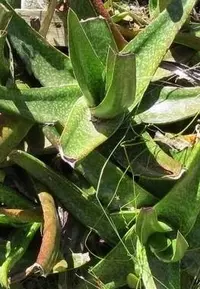
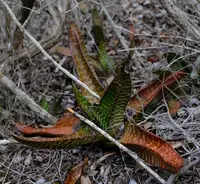
Gasteria acinacifolia, commonly called coast oxtongue, is a small succulent from coastal areas of South Africa. It typically forms low rosettes of thick, tongue-shaped leaves. The leaves are usually dark green with lighter spots or bands and can develop a rough texture with age. In season, arching flower stalks carry tubular, pinkish flowers that attract pollinators. This species is slow-growing and stays compact, which suits windowsills and small indoor collections. It generally prefers bright, indirect light, infrequent watering, and very well-drained, gritty soil. Its toughness and drought tolerance make it forgiving for beginners who want to learn how to care for Coast Oxtongue.

Care Difficulty
Easy Care

Light Preference
Partial Shade

Water Requirements
Low Water

Temperature Preference
Tropical / Frost Sensitive

Hardiness Zone
10–11

Soil Texture
Sandy, Loamy, Rocky

Soil pH
Acidic (5.5–6.5), Slightly acidic (6.5–7.0)

Soil Drainage
Well-drained

Fertilization
Minimal (feed rarely)
Scan your plant to receive care tips personalized for your specific plant
Available on iOS and Android
This succulent prefers bright, indirect light with limited direct sun exposure.
Water sparingly and let the soil dry partly between waterings.
This species favors mild, frost-free conditions with stable temperatures.
This succulent tolerates a wide humidity range and rarely needs special humidity control indoors.
Use a very fast-draining, mineral-rich mix to protect Gasteria acinacifolia roots from rot.
This species is well suited to container growing due to its compact, shallow root system.
This slow-growing succulent needs modest feeding to support healthy foliage and root development.
Pruning Gasteria acinacifolia is minimal and mainly focused on removing old or damaged material.
This species grows slowly and prefers slightly snug containers, so repotting is infrequent.
This succulent is most commonly multiplied through offsets, with seeds used mainly by collectors.
This succulent is not frost-hardy and benefits from controlled conditions during cold months.

Plant Health Check
Not sure what's wrong with your plant? Check your plant's health inside the app.
This species has long, flat, sword‑like leaves that can reach over 60 cm in length in habitat, a much larger and more elongated form than most other Gasteria species, which usually stay compact and thickly tongue‑shaped.
It is naturally restricted to a narrow belt of South African coastal cliffs and dunes in the Eastern and Western Cape, where it often grows in crevices and on rocky slopes exposed to maritime winds and salt‑laden air.
Young plants form a distichous rosette, with leaves arranged in two opposite ranks, but as they mature the rosette becomes more spreading and sometimes slightly spiraled, a marked developmental change useful for field identification and for Gasteria acinacifolia plant care planning.

In the wild, this species sometimes forms almost shrub‑like clumps with hundreds of rosettes linked by a shared root system, allowing long‑lived colonies to persist for many years on the same stretch of rocky coastline despite harsh wind and salt exposure.
Brown leaf tips or patches usually result from underwatering, prolonged direct sun, or fertilizer/salt buildup. Check roots for rot, flush the potting mix with clean water, trim damaged areas, and adjust watering and light exposure.
Keep your plants happy and healthy with plant identification, disease detection, and easy care guidance.

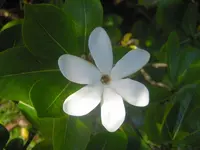
Tahitian Gardenia
Gardenia taitensis
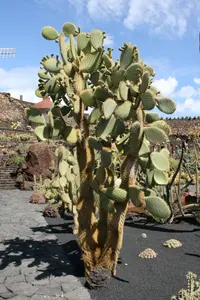
Galápagos Prickly Pear
Opuntia galapageia
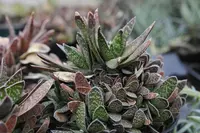
Gasteria obliqua
Gasteria obliqua
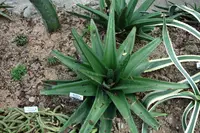
Blade Oxtongue
Gasteria excelsa
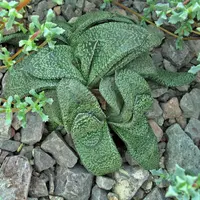
Shiny Oxtongue
Gasteria nitida
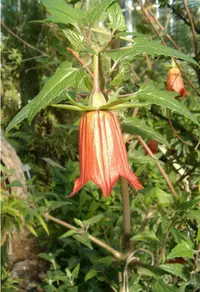
Canary Bellflower
Canarina canariensis
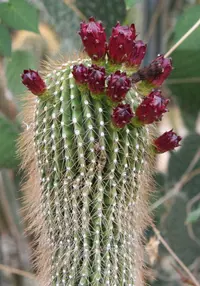
Cephalocereus polylophus
Cephalocereus polylophus
Bredasdorp Gasteria
Gasteria carinata var. carinata