


Rotate For Symmetry
Turn the pot 90° every 2–3 weeks so the rosette stays compact and even rather than stretching toward a single light source.

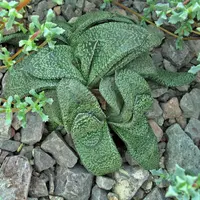
Shiny oxtongue (Gasteria nitida) is a compact succulent from South Africa, valued for its glossy, tongue-shaped leaves and neat rosette or fan-like growth. The leaves are usually deep green with a smooth surface, sometimes with faint spotting, and older plants may form short, branching clumps over time.
In its natural habitat it grows on rocky slopes and well-drained soils, coping with bright light, heat, and periods of drought. These adaptations make it a forgiving houseplant, especially for those who want to learn how to care for Shiny Oxtongue without complex routines.
It generally prefers bright, indirect light, infrequent watering, and gritty, fast-draining soil, which helps prevent root problems and keeps the plant compact and healthy.

Care Difficulty
Easy Care

Light Preference
Bright Indirect Light

Water Requirements
Low Water

Temperature Preference
Tropical / Frost Sensitive

Hardiness Zone
10–11

Soil Texture
Sandy, Loamy, Rocky

Soil pH
Acidic (5.5–6.5), Slightly acidic (6.5–7.0)

Soil Drainage
Well-drained

Fertilization
Minimal (feed rarely)
Scan your plant to receive care tips personalized for your specific plant
Available on iOS and Android
This succulent prefers bright, indirect light with limited direct sun exposure.
This species stores water in its leaves and prefers infrequent, thorough watering.
This succulent prefers mild, frost-free conditions with stable temperatures.
This succulent handles typical indoor humidity well and rarely needs special humidity care.
This species needs a very fast-draining, mineral-rich mix that prevents water from sitting around the roots.
This species is very suitable for container growing due to its compact, shallow root system.
Gasteria nitida benefits from modest feeding during its active growing season but remains sensitive to excess nutrients and salts.
Gasteria nitida needs minimal pruning, mainly for cleanliness and shaping clumps in containers.
This slow-growing succulent usually needs infrequent repotting, with attention focused on root health and fast-draining soil.
Gasteria nitida is commonly propagated from offsets, with seed used mainly by collectors or breeders.
This succulent is not frost hardy and needs simple indoor care in cold climates during winter.

Plant Health Check
Not sure what's wrong with your plant? Check your plant's health inside the app.
This species develops firm, glossy leaves that help reflect intense South African sun while limiting water loss through the leaf surface.
In the wild it often grows on rocky outcrops and cliffs in the Eastern Cape, anchoring its roots into crevices where water drains quickly but moisture lingers deeper down.
Leaf color can shift from deep green in shade to reddish or purplish tones in strong sun due to increased protective pigments called anthocyanins.

Gasteria nitida is one of the few species in its genus known to hybridize naturally with certain Aloe species in South Africa, forming intergeneric hybrids once classified in the nothogenus Gasteraloe.
This species adapts well to both, provided it avoids harsh midday sun, prolonged frost, and heavy rain. In many climates, Shiny Oxtongue indoor care is easier to control, especially light, temperature, and watering.
Keep your plants happy and healthy with plant identification, disease detection, and easy care guidance.

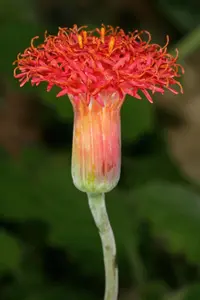
Kleinia stapeliiformis
Kleinia stapeliiformis
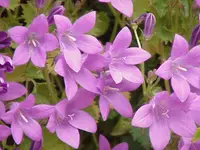
Dalmatian bellflower
Campanula portenschlagiana
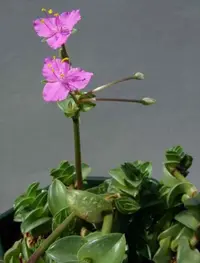
Chain plant
Callisia navicularis
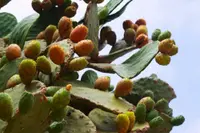
Stenocereus pruinosus
Stenocereus pruinosus
 POPULAR
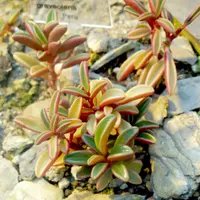
Ruby Glow
Peperomia graveolens
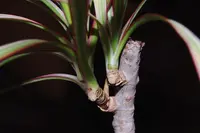
Dragon Tree
Dracaena reflexa var. angustifolia 'Tricolor'

Japanese Fatsia
Fatsia japonica 'Spider's Web'
 POPULAR
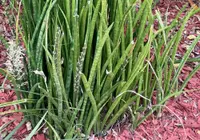
Cylindrical snake plant
Dracaena angolensis